
How Much Does PSA Grading Cost in 2026? Your Guide to Grading Pokémon Cards

Eneba Hub contains affiliate links, which means we may earn a small commission if you make a purchase through them—at no extra cost to you. Learn more



Recent update
This list is regularly updated to match what’s trending and in-demand among gamers.
So, how much does PSA grading cost? If you own valuable Pokémon cards or want to protect your collection, understanding PSA (Professional Sports Authenticator) pricing is essential. PSA is one of the most trusted card grading companie and it examines your cards and assigns them a grade on a 10-point scale, based on condition factors like centering, corners, edges, and surface quality.
PSA encases graded cards in tamper-proof holders with certification labels, which boosts both value and buyer trust. But grading costs money, and pricing varies based on card value, service speed, and submission tier. Many collectors start by asking how much does PSA grading cost before committing to their first submission.
In this guide, I’ll break down how much does it cost to grade a Pokémon card. You’ll learn what affects pricing, how to get Pokémon cards graded, and whether the investment pays off. By the end, you’ll know exactly what to expect when deciding to grade your collection.
Jump to:
How Much Does PSA Grading Cost?
PSA grading costs range from about $19 to over $10,000 per card, depending on the service level you choose and how quickly you need your cards back. The pricing can seem confusing at first because PSA offers various service tiers, each with different turnaround times and declared value limits.
The declared value is what you estimate your card will be worth after grading, and PSA uses this for insurance purposes. Before submitting cards for grading, you should know how to check Pokémon card value to determine if grading makes financial sense.
If you’re asking how much PSA grading costs at each tier, the table below breaks down PSA grading prices and details for every service level as of February 2026:
| Tier | Price per card | Turnaround time | Max Insured Value |
|---|---|---|---|
| Value Bulk | $7.50 | 95 business days | $500 |
| Value | $9.90 | 75 business days | $500 |
| Value Plus | $15.00 | 45 business days | $500 |
| Value Max | $19.50 | 35 business days | $1,000 |
| Regular | $24.00 | 25 business days | $1,500 |
| Express | $149 | 15 business days | $2,500 |
| Super Express | $299 | 7 business days | $5,000 |
| Walk-Through | $599 | 7 business days | $10,000 |
| Premium 1 | $999 | 7 business days | $25,000 or less |
| Premium 2 | $1,999 | 7 business days | $50,000 or less |
| Premium 3 | $2,999 | 7 business days | $100,000 or less |
| Premium 5 | $4,999 | 7 business days | $250,000 or less |
| Premium 10 | $9,999+ | 7 business days | $250,001 or higher |
Now that you can see how much does PSA grading cost per tier, the right choice depends on your card’s value and how soon you need it back.
The Value Bulk, Value, Value Plus, and Value Max are the most popular options for Pokémon collectors wondering how much does PSA grading cost on a budget. However, the Value Bulk option requires a minimum of 20 cards and a PSA Collectors Club membership.
How to Get Your Pokémon Cards Graded with PSA
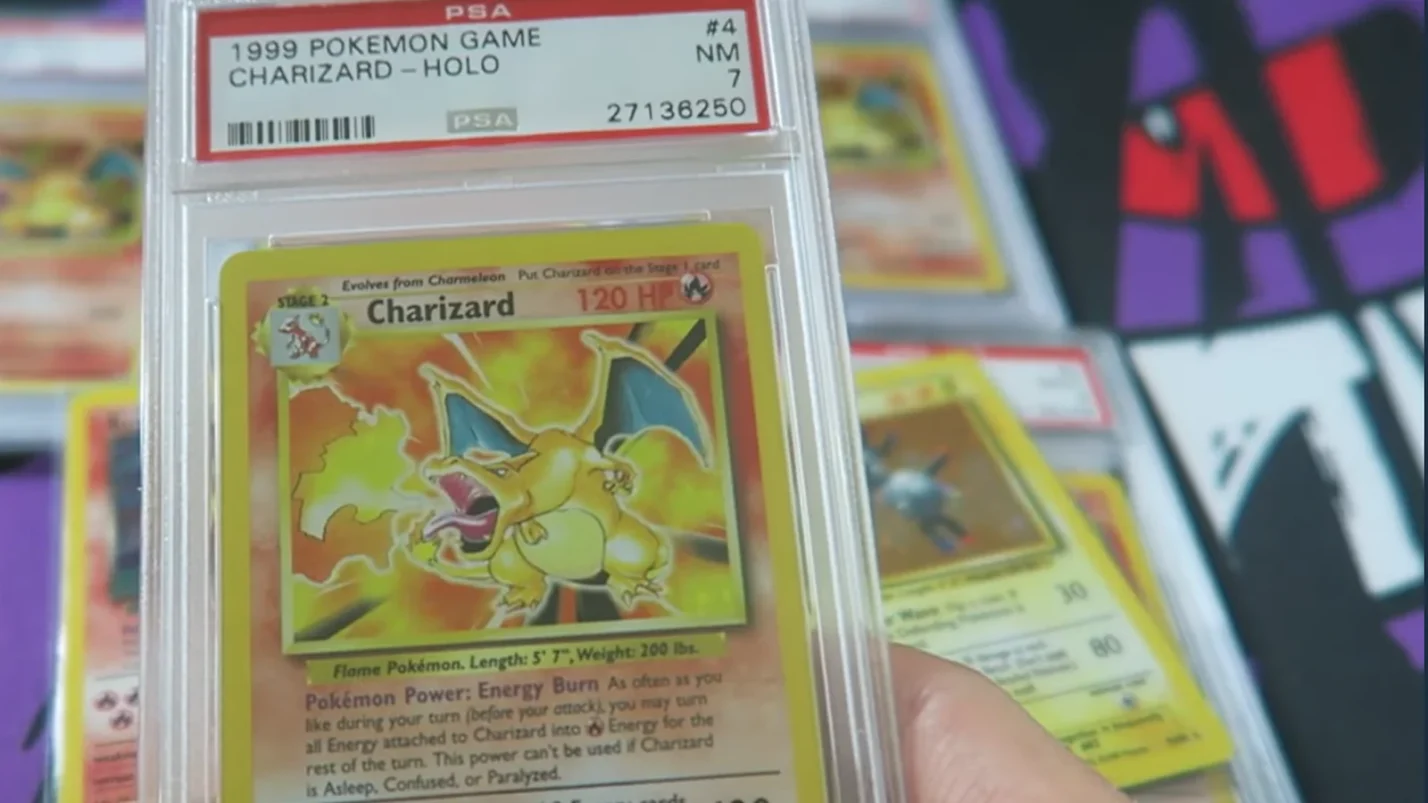
If you’re wondering how to grade Pokémon cards, the process is straightforward. Also, understanding how much does PSA grading cost upfront helps you choose the right service tier for your budget.
- Step 1: Create an account. Register on PSA’s website with your email, name, and address, or work with authorized dealers to skip submission forms and card minimums.
- Step 2: Select your grading service. How much does PSA grading cost at each tier varies significantly, and Value Bulk is the cheapest but requires 20 cards and a PSA club membership, while Regular, Express, and Premium tiers cost more but deliver faster. Using any of these services will help you know the best Pokémon packs to buy for profit.
- Step 3: Prepare your cards. Use penny sleeves and card savers (not toploaders), handle cards with clean hands to avoid fingerprints, and pack tightly with cardboard dividers and bubble wrap to prevent shipping damage.
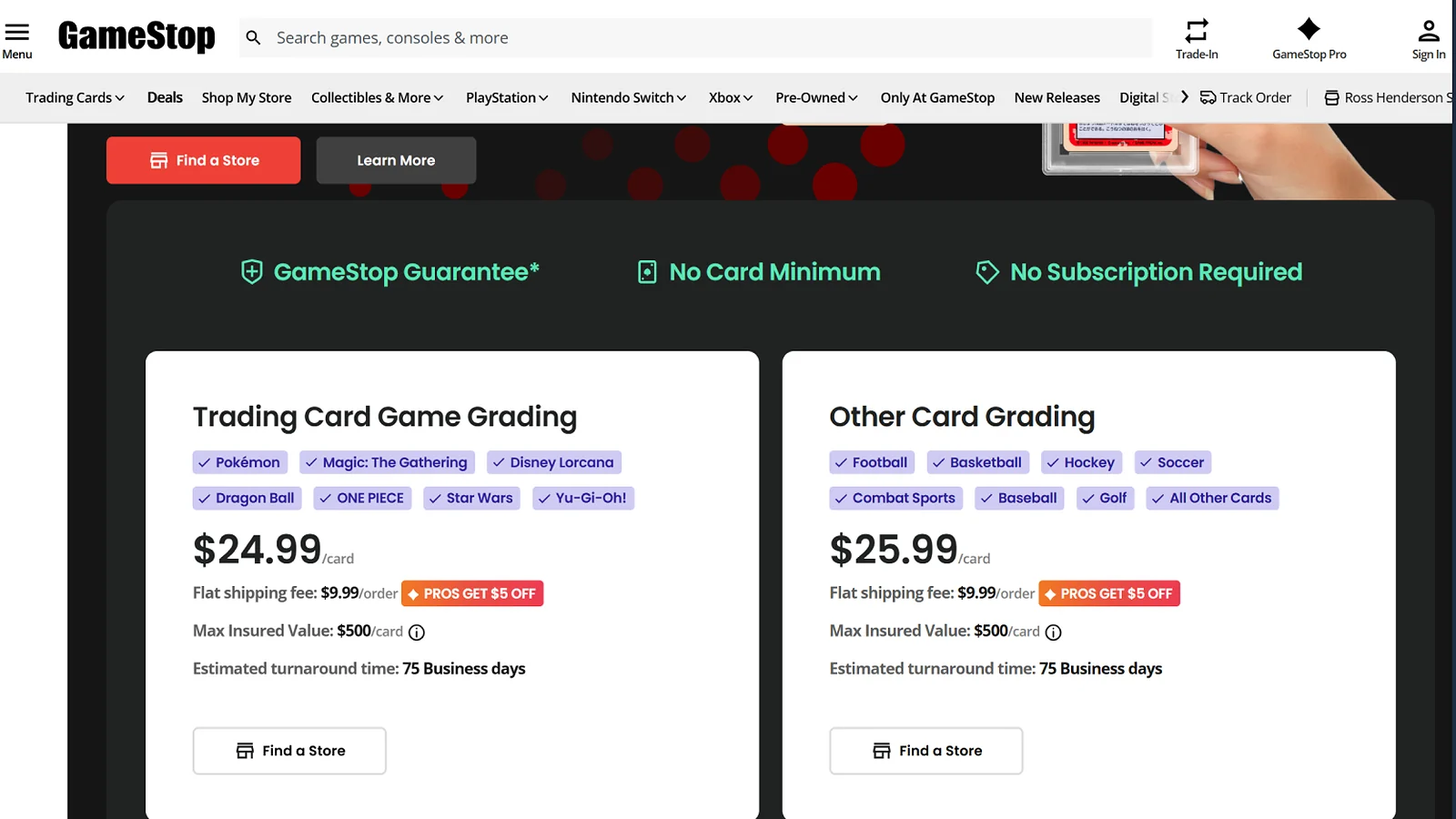
- Step 4: Submit and pay. Fill out PSA’s online form with card details (year, set, number, character), calculate how much does PSA grading cost in total, including grading fees, membership, and insured shipping, then pay through your PSA account or use GameStop’s $7.50/card option with trade credits.
- Step 5: Wait for grading. Processing takes from a week up to 95 business days, depending on service level, and you can track progress through your PSA account with email updates at each stage.
The entire process from submission to receiving graded cards typically takes 1-3 months for standard services. While waiting feels long, PSA’s thorough examination ensures accurate grading that protects your investment and maximizes resale value.
Once you’ve confirmed how much does PSA grading cost for your chosen tier, you can plan your full submission budget from the start.
Where Can You Get Pokémon Cards Graded?
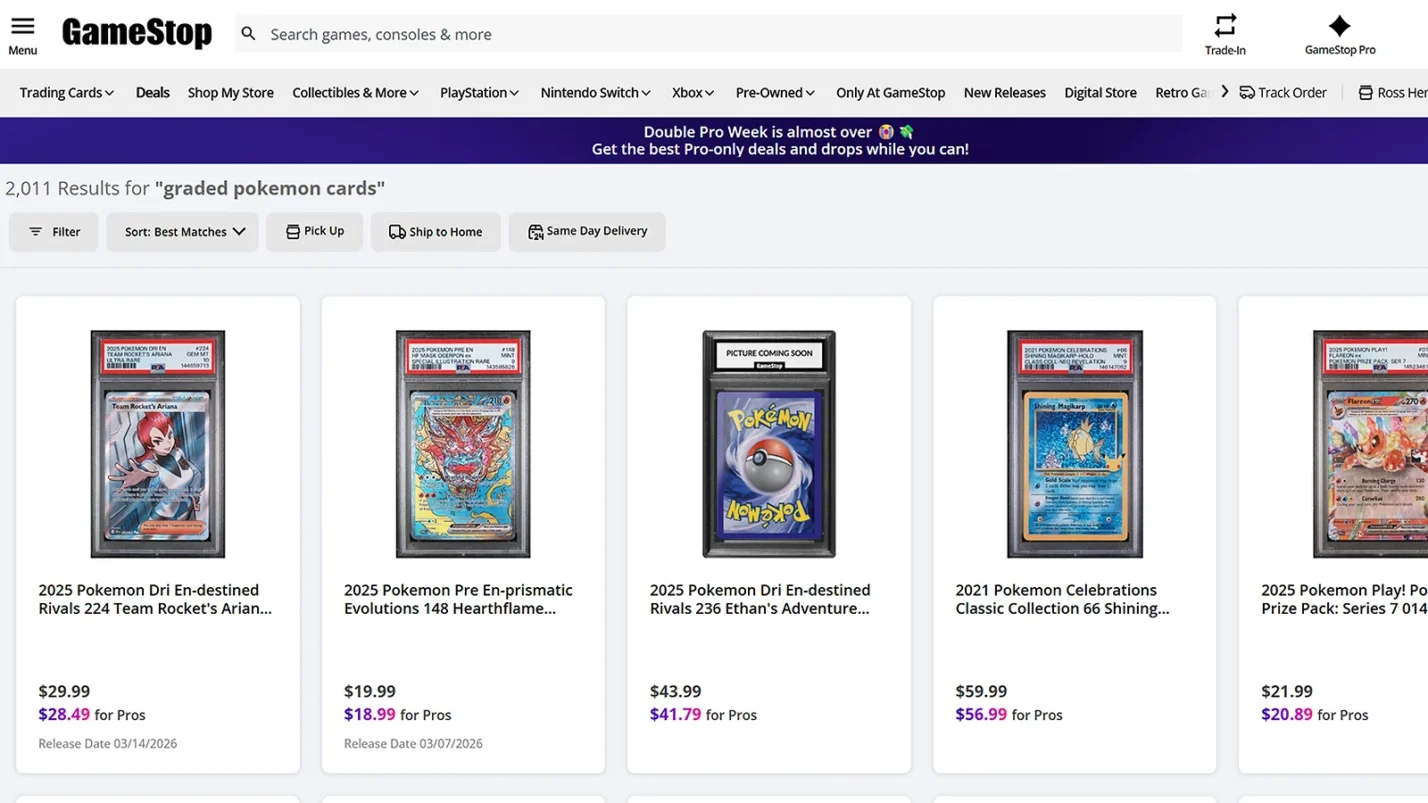
A common question alongside how much does PSA grading cost is where you can actually submit your cards. If you prefer in-person service, GameStop, Concept Grading, and authorized local card shops partner with PSA to handle submissions for you. These dealers typically charge around $24 – $200 per card, depending on its value, on top of PSA’s base fees, which affects how much PSA grading costs overall.
You might also be wondering, “How much does it cost to get a card graded by PSA in person?” Or, how much does PSA grading cost compared to standard mail submissions? PSA grading prices start at $150 per card for Collector’s Club members, $250 for the general public, if you want same-day grading at major card shows. This is convenient but expensive compared to standard mail submissions.
Mailing directly to PSA is the most cost-effective option. For first-timers grading one or two cards, however, paying a local dealer’s fee for guidance makes sense, even if it increases how much does PSA grading cost overall.
How Long Does PSA Grading Take?
Once you’ve settled on how much does PSA grading cost for your tier, the next thing to plan for is turnaround time. Typical turnaround times for Pokémon PSA grading range from 95 business days for Value services down to 7 business days for Premium services.
Business days exclude weekends and holidays, so you need to account for that when planning. A 65-business-day estimate, for example, translates to roughly four months of calendar time.
PSA processed over 19 million items in 2025, which makes it the most popular grading service by volume. This large submission volume means turnaround times can fluctuate. During peak seasons like after new Pokémon set releases or around the holidays, processing slows down as PSA receives more submissions than usual. This is worth factoring in when calculating how much does PSA grading cost in terms of time investment, not just money.
Is PSA Grading Worth the Cost?
Graded cards can see value increases of 2,400% or more when they achieve PSA 10 compared to raw copies, which makes understanding the PSA grading cost an important first step before deciding to submit. These increases make PSA grading prices worth paying for the right cards. The authentication and sealed holder provide long-term protection, especially for vintage cards and modern chase cards like alternate arts.
However, when asking how much does PSA grading cost, it’s also important to consider your expected ROI (return on investment), and not just the sticker price. At $7.50 minimum for bulk submissions, plus shipping and insurance, you’re losing money if your card only gains $10-$15 in value post-grading.
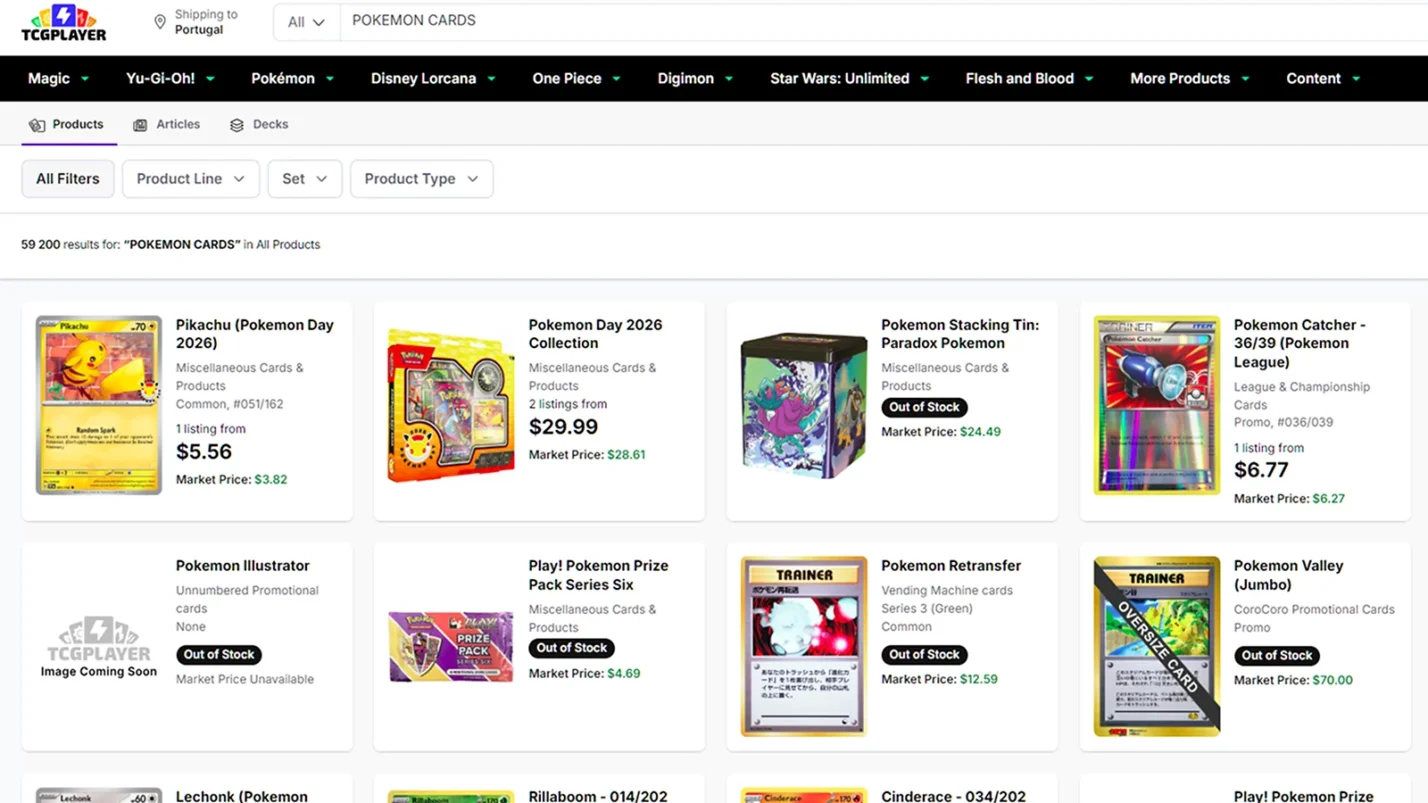
Research sold listings on eBay and TCGPlayer before deciding how to grade Pokémon cards. Compare raw prices versus graded prices at different grades. If a PSA 9 only sells for $20 more than raw, but how much does PSA grading cost comes to $30 all-in, skip it. Only submit cards where the PSA grading prices are clearly justified by a meaningful value increase.
Once you have graded cards, you’ll want to know the best place to sell graded Pokémon cards. Online marketplaces like eBay, Whatnot, PWCC Marketplace, and Goldin Auctions typically offer the best prices for PSA-graded cards. Whatnot is particularly strong for graded Pokémon because it’s a live auction platform where collectors compete in real time, which often drives prices above standard listing platforms.
Meanwhile, if you have ungraded cards, the best place to sell bulk Pokémon cards is typically through local card shops or bulk buyers who can process large quantities efficiently.
Meanwhile, if you have ungraded cards, the best place to sell bulk Pokémon cards is typically through local card shops or bulk buyers who can process large quantities efficiently.
Alternatives to PSA Grading
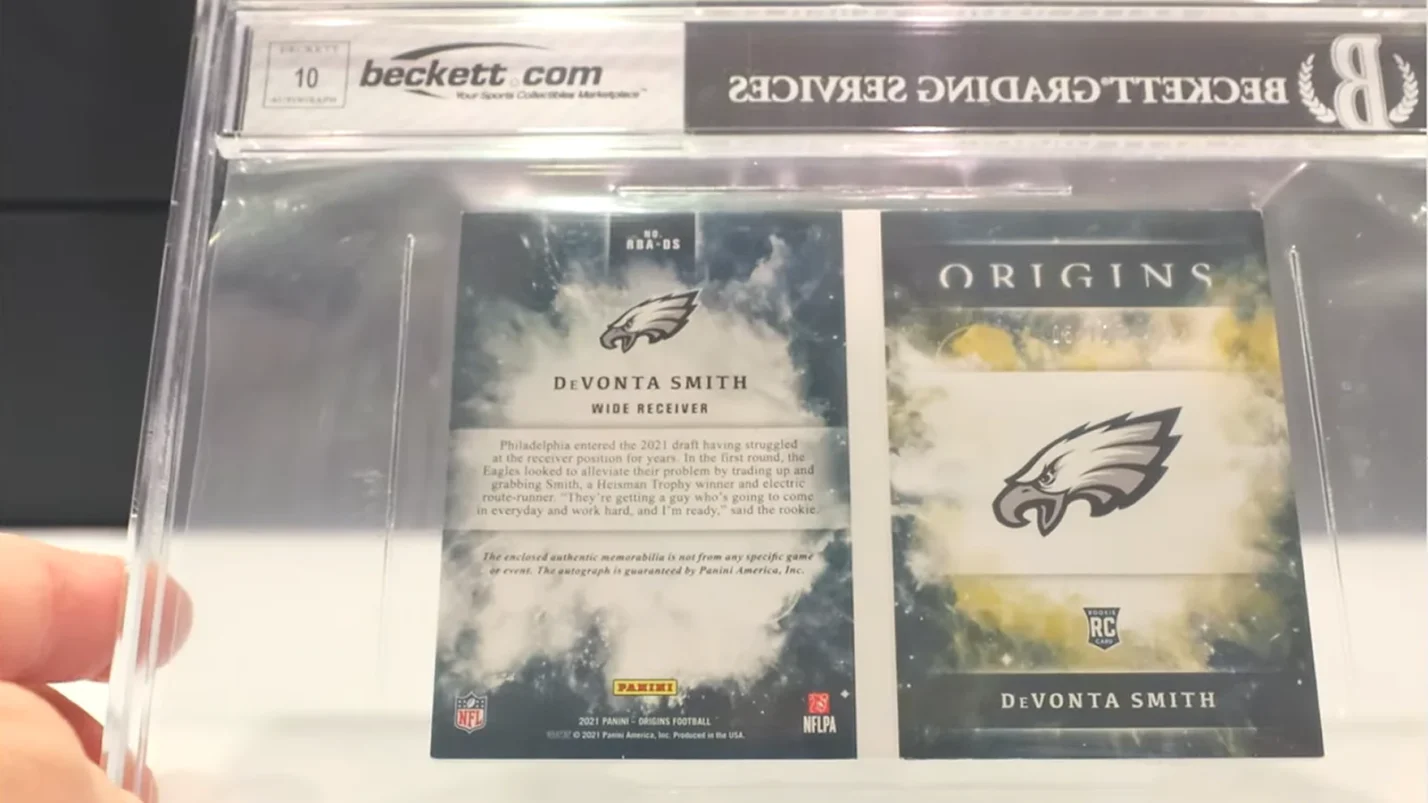
When looking for options on how to grade Pokémon cards, PSA isn’t the only one. If you’ve researched how much does PSA grading cost and feel the price is too steep, Beckett Grading Services (BGS) and Certified Guaranty Company (CGC) offer alternative pricing structures worth considering.
BGS is known for detailed subgrades, while CGC provides budget-friendly rates. However, collectors looking for rare Pokémon cards for sale often prefer PSA-graded cards because of the service’s reputation and market recognition.
Here’s how they compare:
| Service | Pricing (Per Card) | Turnaround | Best For |
|---|---|---|---|
| PSA | $7.50 – $9,999+ | 7 – 95 business days | Pokémon, sports cards |
| BGS | $4.48 – $37.48 | 5 – 75+ business days | Sports cards, MTG |
| CGC | $15 – $300+ | 5 – 50 business days | Comics, Pokémon cards |
PSA offers the highest resale value and market recognition, but costs more. BGS provides detailed subgrades and coveted “Black Label” 10s but commands lower resale for Pokémon. CGC is the most budget-friendly option with a growing reputation but is less established in the Pokémon market.
For modern cards I’m collecting (not selling), I use CGC to save money. But for vintage cards or anything resale-focused, PSA remains my first choice due to market dominance and higher resale values.
Start Grading Your Pokémon Cards with Confidence
Now you know the answer to how much does PSA grading cost, and it is from $7.50 for bulk submissions to Premium tiers exceeding $9,999 per card.
Also, how much PSA grading costs at each tier ultimately comes down to how fast you need your cards back and how much they’re worth. Understanding PSA grading prices and the submission process helps you make informed decisions about protecting your collection’s long-term value.
The PSA grading cost Pokémon collectors pay is an investment in authentication, protection, and potential value increase. Not every card needs grading, but for special pulls or vintage treasures, Pokémon PSA grading offers peace of mind and market credibility that raw cards can’t match.
If you want to figure out how to grade Pokémon cards, find where to sell Pokémon cards after grading, or simply preserve your collection, PSA provides a standardized solution recognized worldwide. Create a free PSA account and start your first submission today.ial pulls or vintage treasures, PSA grading offers peace of mind and market credibility that raw cards simply can’t match.
FAQs
PSA grading prices vary between $7.50 and $9,999 per card, depending on the service level and turnaround time you choose. Higher-value cards require more expensive service tiers with different declared value limits.
PSA grading is worth it for valuable, rare, or vintage Pokémon cards where professional authentication and a high grade can increase market value by a significant amount. Cards can see value increases of hundreds or even thousands of percent when they achieve high grades like PSA 10.
PSA grading turnaround times range from 5 business days for Premium service to 95 business days for Value submissions, though these are estimates and actual times may vary. Submission volume and seasonal demand affect processing speeds.
You can submit cards through certain service levels without a PSA Collectors Club membership, though membership is required for Value Bulk submissions.
PSA authenticates cards before grading and will not grade counterfeit cards. Authentication is part of the grading process, so if PSA has graded your card, that means it’s genuine.
The PSA grading scale runs from 1 to 10, with PSA 10 representing Gem Mint condition and PSA 1 representing Poor condition. The scale evaluates centering, corners, edges, and surface quality to determine each card’s grade.
The cost depends on your chosen service level, desired turnaround time, and declared card value after grading. Cards with higher declared values require more expensive service tiers, and faster turnaround times cost significantly more.
GameStop charges $7.50 per Pokémon card with a declared value of $200 or more, plus a flat shipping fee of $3.00.