Best Place to Sell CS:GO Skins: Where to Cash Out in 2026

The CS2 skin market stands at an impressive $3.5-4 billion valuation, meaning countless players are sitting on virtual assets worth actual cash. Finding the best place to sell CS:GO skins becomes crucial when you realize Steam’s marketplace locks funds into your wallet while charging around 15% in total fees.
Third-party platforms have revolutionized skin trading by providing real money withdrawals, significantly lower commission rates (2-8% typically), and faster transaction processing. These marketplaces now handle millions in monthly volume while providing security features that rival traditional payment processors.
This guide examines the top CS2 skin selling platforms available in 2026, comparing fee structures, payout methods, security protocols, and user experiences. You’ll learn which platforms maximize profits for different inventory types, from budget skins to high-value knives worth thousands.
The platforms we’ll explore have collectively processed billions in transactions, maintain strong security ratings, and support diverse withdrawal options from cryptocurrency to PayPal. Understanding these differences helps you choose the right marketplace for your specific needs and priorities.
Jump to:
Our Top Picks: Best Places to Sell CS2 Skins Right Now
Based on comprehensive analysis of fees, security, and user experience, three platforms stand out as optimal choices for most sellers in 2026. These selections balance competitive rates with reliable service and diverse payout options.
Skinport leads in instant delivery systems and volume handling with 2.39 million monthly visitors. The platform processes transactions through automated trading bots, eliminating wait times for seller acceptance while maintaining 6-8% seller fees.
ShadowPay excels for sellers prioritizing speed, with its automated bot system providing instant buyouts. The CS2 specialization means pricing algorithms stay between 70-85% of market value to remain competitive for quick sales. Security features including two-factor authentication and API monitoring.
DMarket excels in cross-game flexibility with support for multiple titles beyond CS2. The consistent 2% seller fee structure applies across all price points, while diverse withdrawal methods accommodate international users facing regional payment restrictions.
These platforms represent different optimization strategies. High-volume sellers benefit from Skinport’s speed, profit-focused traders prefer CSFloat’s minimal fees, and diversified inventory holders appreciate DMarket’s multi-game support.
can start by converting existing CS2 inventories through these trusted marketplaces. For broader strategies beyond skin selling, explore our guide on how to make money playing video games and how to earn money online playing simple games.
Best Place to Sell CS2 Skins: Top Platforms Compared
Selecting the best website to sell CS:GO skins requires understanding your priorities as different platforms excel in specific areas. Speed, security, fees, and payment flexibility all factor into the optimal choice for your situation.
The following platforms represent tested, verified marketplaces with established track records. Each has processed millions in transactions while maintaining security standards that protect both buyers and sellers from common scam techniques prevalent in unregulated spaces. This comprehensive comparison helps you identify the most suitable marketplace for your CS2 skin inventory.
Skinport – Best for Instant Delivery and High Volume
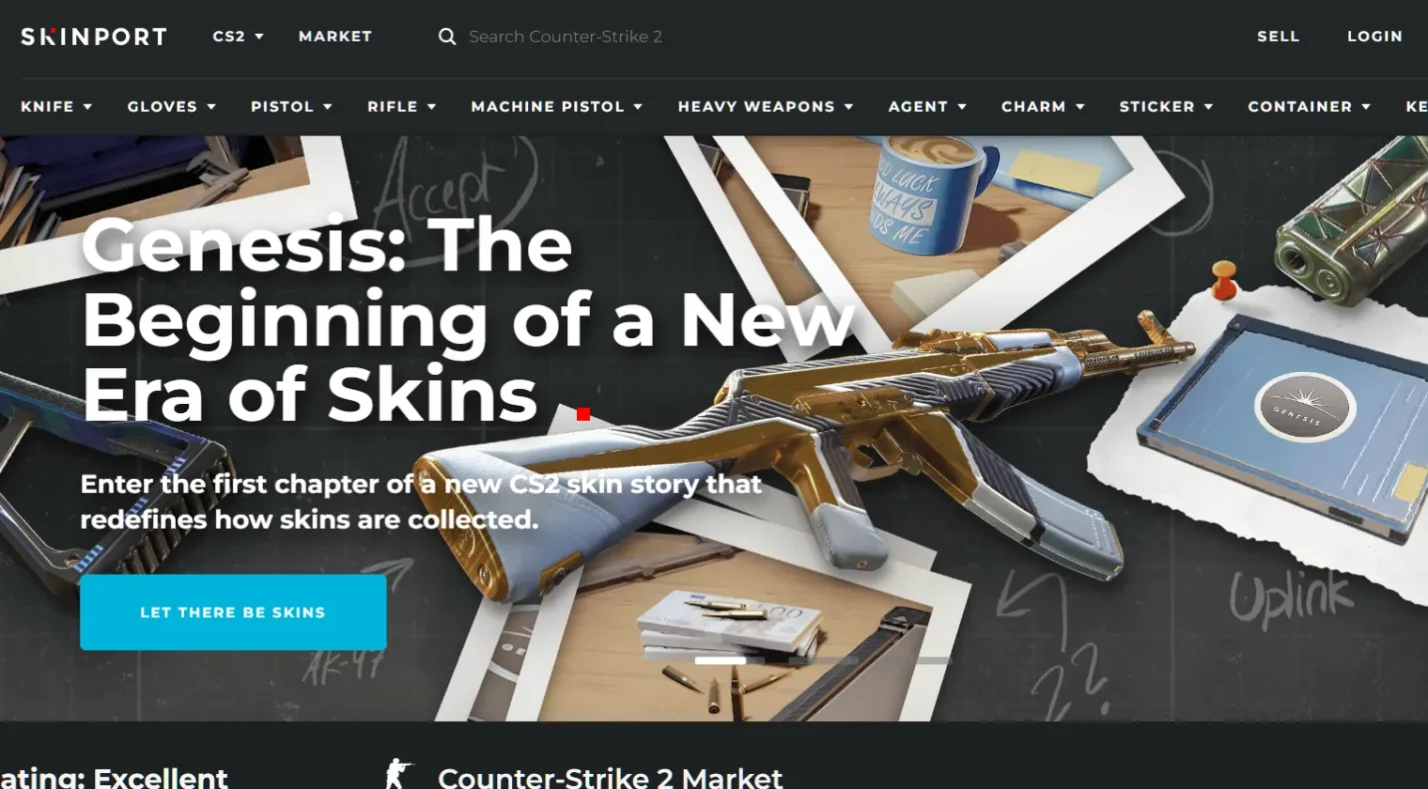
Skinport processes over 2.39 million monthly visits while maintaining 2.54 million CS2 items in active listings. The platform’s automated bot delivery system eliminates human delays, completing trades within minutes of acceptance rather than requiring manual seller confirmation that can take hours or days.
Fee structures range from 6-8% for standard public sales depending on item value, with premium private listing options available at just 2%. This graduated system rewards high-value transactions while remaining competitive for regular inventory turnover across all price brackets.
The platform supports 47 fiat currencies for global accessibility, accommodating sellers across Europe, Asia, and the Americas. Zero-fee instant cashouts through Skrill and Payoneer make Skinport particularly attractive for users of these payment services who can access funds immediately without additional processing charges.
Cross-game support extends beyond CS2 to include Dota 2, Team Fortress 2, and Rust, allowing sellers to consolidate multiple inventories under one account. Security features include Steam Guard integration and mandatory two-factor authentication for all withdrawals preventing unauthorized access even if login credentials become compromised.
Enable price tracking alerts to sell during market peaks. Skinport’s historical data shows skins often appreciate 15-30% during major tournament seasons, maximizing your return on popular items.
ShadowPay – Best for Cryptocurrency Traders
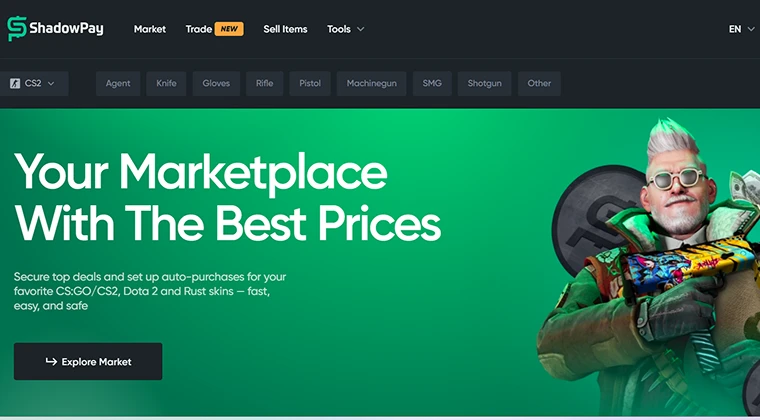
ShadowPay positions itself as the premier crypto-first marketplace for CS2 skins, supporting Bitcoin, Ethereum, USDT, and numerous altcoins. This focus attracts advanced traders comfortable with blockchain transactions and cryptocurrency volatility who prefer decentralized payment methods.
The peer-to-peer pricing model gives sellers complete control over listing prices, avoiding forced market rates that sometimes undervalue rare items. Manual price setting allows strategic positioning above or below platform averages based on item condition and float values for maximum profit optimization.
Withdrawal processing through cryptocurrency typically completes within 10-15 minutes, significantly faster than traditional banking methods that can take 1-5 business days. Low transaction fees (1-3% for crypto) combined with rapid processing make this an excellent choice for experienced crypto users.
Account verification through Know Your Customer (KYC) protocols adds security layers while potentially limiting accessibility in certain jurisdictions. The platform blocks users from select countries due to regulatory compliance requirements, so verify availability before committing to this marketplace for your skin sales.
DMarket – Best for Cross-Game Trading
DMarket stands out by supporting multiple gaming ecosystems including Dota 2, Rust, and Team Fortress 2 alongside CS2 skins. This cross-platform approach attracts 2.6 million monthly visitors with diversified gaming inventories who appreciate consolidated account management.
The consistent 2% seller fee and 2.5% buyer fee structure applies uniformly regardless of item value or game title. This transparency simplifies profit calculations, particularly for sellers managing inventories across multiple supported games without complex fee tier systems to navigate.
Available withdrawal methods span from 0-2% fees depending on selection, with cryptocurrency options typically charging minimal amounts while traditional banking services extract slightly higher percentages. Processing times vary from instant (crypto) to 3-5 business days (bank transfers) based on chosen method.
The peer-to-peer marketplace model enables direct pricing control, allowing sellers to set competitive rates based on real-time market analysis. DMarket’s extensive item database with 1.3 million available skins provides comprehensive pricing data for informed listing decisions. When you sell CS:GO skins here, you gain access to one of the industry’s most liquid marketplaces.
SkinBaron – Best for European Players
SkinBaron originated as a German marketplace and maintains particularly strong presence throughout the European Union. The platform’s infrastructure optimizes for European banking systems, payment processors, and regional currency preferences that often complicate transactions on globally-focused platforms.
Competitive fee structures align with industry standards while providing reliable customer support in multiple European languages including German, French, Spanish, and Italian. German data protection regulations add extra security layers that appeal to privacy-conscious European sellers concerned about personal information handling.
Regional payment optimization includes SEPA bank transfers with minimal fees and fast processing for EU residents. This regional focus results in consistently high user satisfaction ratings among European players seeking reliable platforms without international transaction complications or unfavorable exchange rates.
The platform maintains trustworthy reputation markers including verified business registration, transparent terms of service, and responsive dispute resolution systems. Consistent positive feedback across independent review platforms confirms reliable payout processing and fair market pricing for sellers across all inventory value ranges.
Tradeit.gg – Best for Volume and Giveaways
Tradeit.gg boasts impressive metrics with over 60 million completed trades and 800,000+ CS2 skins currently available in inventory. This high volume indicates active market liquidity, meaning most items sell relatively quickly compared to smaller platforms with limited buyer pools.
The platform differentiates itself through regular giveaway programs and promotional events that reward active users. These community engagement initiatives create additional value beyond standard trading services, particularly for sellers who maintain consistent platform presence and participate in community activities.
Competitive fee structures remain market-appropriate while fast customer support response times address issues that inevitably arise in high-volume trading environments. The team’s composition includes active gamers who understand the ecosystem from personal experience rather than purely commercial perspectives, creating user-friendly policies.
User interface design emphasizes simplicity without sacrificing essential features, making the platform accessible to first-time sellers while providing depth for experienced traders. Mobile optimization ensures smooth transactions from smartphones and tablets alongside traditional desktop usage for convenience across all device types.
CSFloat – Best for Lowest Fees and P2P Trading
CSFloat revolutionizes the fee structure with just 2% seller commissions and 0% buyer fees, significantly undercutting most competitors who charge 5-10%. This dramatic reduction means sellers keep substantially more profit from each transaction compared to higher-fee alternatives.
The comprehensive 1.5 billion CS2 skins database includes detailed float value tracking, essential information for collectors seeking specific condition states. Float values determine weapon wear levels, dramatically impacting prices for identical skin patterns in different conditions from Factory New to Battle-Scarred.
Monthly traffic exceeds 3.2 million visitors, demonstrating strong market adoption and healthy trading volume across all price points. This liquidity ensures most items find buyers within reasonable timeframes rather than sitting indefinitely in low-traffic marketplaces with limited exposure.
Fee reductions scale further for high-value sales, dropping to just 0.5% on larger transactions. This tiered system particularly benefits sellers moving expensive knives or gloves worth thousands, where even small percentage differences translate into significant dollar amounts. This represents one of the best CS:GO skin selling sites for profit-conscious traders.
The dramatic fee advantage combined with zero buyer costs creates optimal conditions for both parties. Sellers maximize profits while buyers save money, increasing transaction volume and marketplace liquidity for everyone involved.
BitSkins – Best for Established Reputation
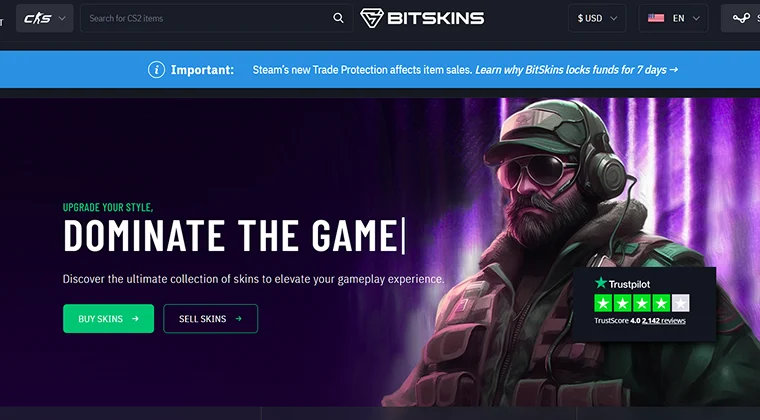
BitSkins has operated continuously since 2015, building substantial credibility through nearly a decade of consistent service. The platform maintains approximately 500,000 monthly visitors and holds a strong 4.3/5 rating on Trustpilot based on thousands of verified reviews from actual users.
The escrow and bot-based system provides additional security against common scam techniques by holding items and funds separately until both parties confirm transaction completion. This neutral third-party approach reduces fraud risk compared to direct peer-to-peer exchanges without intermediary protection.
Fee structures range from 5-10% for public listings with additional 3-4% withdrawal fees depending on chosen payout method. While higher than some competitors, these rates include comprehensive buyer and seller protections that justify the premium for security-conscious users prioritizing safety.
Mandatory KYC verification for real-money withdrawals adds regulatory compliance but may deter users seeking anonymous transactions. Identity verification requirements align with anti-money laundering regulations while confirming account ownership to prevent unauthorized access from compromised credentials.
The platform’s tournament sponsorships and esports involvement demonstrate long-term commitment to the CS2 community beyond pure commercial interests. This cultural integration builds trust among serious players who recognize the brand from competitive gaming contexts and professional tournament coverage.
Steam Market – Best for Wallet-Only Sales
Steam Market charges approximately 15% total fees broken down as 10% Steam commission plus 5% publisher cut. These charges significantly reduce realized value compared to third-party alternatives, making it the least profitable option for cash seekers wanting actual money rather than platform credit.
Earnings lock permanently into Steam Wallet funds with no direct cash withdrawal options available. This restriction limits utility to purchasing other Steam products rather than converting skins into usable money for external expenses like bills or savings.
The platform benefits from faster selling timelines since trades execute immediately without the 7-day protection lock imposed by Valve in July 2025. This exemption makes Steam Market slightly quicker for wallet-to-wallet transactions despite a significantly worse value proposition for real-money needs.
Convenience factors favor Steam Market for casual sellers unwilling to navigate third-party platforms or set up external payment processors. The familiar interface and integrated listing process require minimal learning curve compared to specialized marketplaces with additional account creation steps.
SkinSwap – Best for Speed
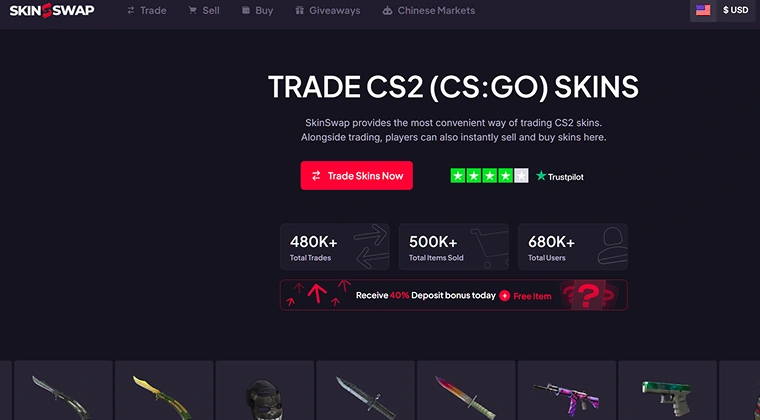
SkinSwap prioritizes transaction velocity above all other factors, processing most sales within minutes of acceptance. The streamlined workflow eliminates unnecessary steps between listing items and receiving payment confirmation for users who value speed over marginal profit optimization.
Instant or near-instant cashout flows appeal to sellers needing immediate liquidity rather than optimizing for maximum profit margins. The speed premium means slightly reduced prices compared to platforms where sellers control timing and pricing more precisely with manual negotiation options.
Fee structures and payment methods align with industry standards while maintaining the rapid processing that defines the platform’s core value proposition. Supported withdrawal options include major credit cards, PayPal, and select cryptocurrencies processed within minutes rather than days.
The platform particularly suits beginners who prioritize simplicity over profit optimization, as minimal configuration requirements reduce potential confusion during initial sales. This accessibility makes SkinSwap the best place to sell CS:GO skins for cash for users valuing convenience and speed above fee minimization strategies.
SkinWallet – Best for Simple Withdrawals
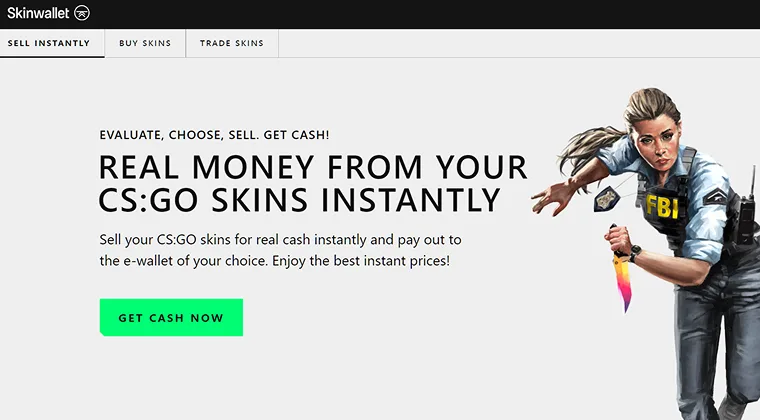
SkinWallet focuses on straightforward selling procedures with emphasis on hassle-free cash conversion. The platform’s interface guides users through minimal steps from inventory selection to completed payout without complex pricing strategies or market analysis requirements.
Payment method variety includes PayPal, major credit cards, and regional options tailored to specific geographic markets. This flexibility accommodates users with limited banking access or preferences for particular financial services not supported by all competitors.
Fee structures and pricing flexibility fall within standard industry ranges while the simplified process reduces friction for casual sellers. The platform sacrifices some advanced features and price control in exchange for reduced complexity that appeals to first-time sellers.
The beginner-friendly design makes SkinWallet ideal for players making their first skin sales or those seeking occasional cashouts rather than active trading. Limited configuration options prevent overwhelming new users while potentially frustrating experienced traders seeking optimization through detailed market analysis tools.
Steam Market vs. Third-Party Platforms: Why You Should Switch
Steam Market’s 15% total fee structure breaks down as approximately 10% Steam commission plus 5% Counter-Strike publisher fees. This substantial cut reduces a $100 skin sale to $85 in wallet funds, then locks those earnings permanently within Steam’s ecosystem without any cash withdrawal mechanism.
Third-party platforms typically charge 2-8% seller fees depending on the specific marketplace and item value. A $100 skin generates $94-98 in actual withdrawable cash, representing 10-15% more realized value than Steam’s wallet-locked system. This difference compounds dramatically across multiple sales or high-value inventories worth thousands.
The July 16, 2025 update introducing 7-day trade protection added complexity to third-party transactions but exempted Steam Market entirely. Third-party platforms adapted by implementing 8-day escrow periods (seven day Valve lock plus one processing day), while Steam Market maintains immediate wallet transfers for users prioritizing speed over cash access.
Price pressure on Steam creates additional challenges as the high fees force sellers to list higher, reducing competitive appeal. Third-party platforms often price identical items 20-35% below Steam listings due to lower overhead, attracting more buyers and generating faster sales through improved price competitiveness.
Real-world comparisons demonstrate the financial impact clearly. That $100 skin nets $85 in locked Steam credit versus $94-98 in actual cash from third-party alternatives. For serious traders dealing with inventories worth $1,000+, this translates into $100-150 additional profit using optimal platforms.
Choosing optimal third-party platforms can yield 10-30% more actual cash in your pocket compared to Steam Market. This significant margin justifies the minimal extra effort required to establish accounts and navigate slightly more complex but ultimately more rewarding transaction processes.
Regional restrictions affect approximately 41% of potential sellers on various platforms, but multiple alternatives ensure most users can access at least one viable marketplace. The competitive landscape forces continuous improvement in fees, security, and payment options as platforms compete for market share.
Players interested in competitive gaming can explore Counter-Strike esports opportunities while building valuable skin inventories. Similar monetization strategies work across other competitive titles as detailed in our guides on how to make money playing Call of Duty.
Fee Structures Explained: How to Calculate Your Real Profit
Different platforms employ varying fee models including percentage-based commissions, fixed charges, tiered structures, and combined approaches. Understanding these variations helps sellers calculate actual profit before committing to specific marketplaces and prevents unpleasant surprises during withdrawal.
Example calculations demonstrate real-world impact across major platforms. A $100 skin on Skinport with 6% fees yields $94 received, while the same item on CSFloat at 2% fees produces $98 payout. Steam Market’s 15% cut leaves just $85 locked in wallet credit without cash access.
Hidden fees frequently catch new sellers by surprise. Deposit requirements (rare but present on some platforms), withdrawal processing charges (0.5-3% typically), currency conversion fees for international users (1-3%), and minimum withdrawal thresholds ($0.15 to €30) all impact final proceeds beyond advertised commission rates.
Payment method selection significantly affects total costs. Cryptocurrency withdrawals usually incur 0-2% fees with 10-15 minute processing, bank transfers may include 1-3% currency conversion plus one to five day delays, PayPal withdrawals often add 2-3% service charges, and card payments can take one to five business days with variable fees. This makes it essential to choose the best place to sell CS:GO skins for real money based on your preferred payment method.
Lower fees compound substantially over time for active traders. The difference between 2% and 8% fees means an extra $6,000 retained on $100,000 in annual sales volume. This six-percentage-point spread justifies platform comparison for anyone selling regularly rather than making occasional one-time cashouts.
Security and Avoiding Scams When Selling CS2 Skins
Platform legitimacy concerns require careful vetting before trusting any marketplace with valuable inventory. Red flags include missing SSL encryption or HTTPS protocols, recently created domains (check via WHOIS lookup), poor or nonexistent customer reviews, vague or incomplete terms of service, and absent official social media presence.
Documented fraud cases like Skin.place chargebacks demonstrate risks of unvetted platforms. That particular site processed payments then reversed them after receiving items, stealing inventory without payment. Similar scams proliferate across unregulated marketplaces targeting inexperienced sellers who skip verification steps.
Security features of legitimate platforms include Steam API integration through official Valve authentication, mandatory two-factor authentication (2FA) support for account protection, device verification systems preventing unauthorized access, escrow-style trades protecting both transaction parties, and transparent KYC verification processes.
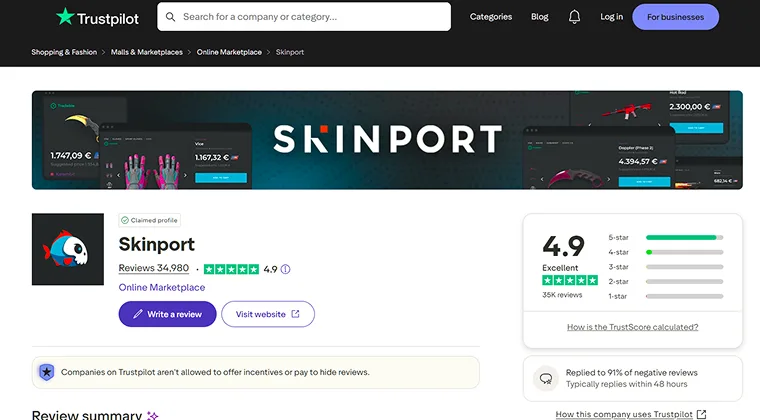
High Trustpilot ratings (4.3-4.9 out of 5) based on thousands of verified reviews indicate consistent positive experiences. These independent verification platforms prevent manipulation while aggregating user feedback across extended periods, revealing long-term reliability patterns.
Common scam types plague CS2 skin trading including API key theft through convincing phishing sites, fake trade offers replacing legitimate ones at last second, platforms severely undervaluing items then disappearing, chargeback fraud after payment processing, and fake screenshots of successful transactions.
Practical security measures protect against most threats. Always verify exact URL spelling before login attempts (scammers register similar domains), enable Steam Guard and 2FA on all connected accounts, start with small test transactions when trying new platforms, thoroughly check seller and platform reputation through multiple independent sources, and never share API keys or Steam credentials under any circumstances.
Verified marketplaces including Skinport, CSFloat, DMarket, and BitSkins maintain significantly stronger security than unknown platforms. Their established reputations create accountability while extensive security teams actively monitor for fraudulent activity and respond quickly to user reports.
Geographic blocks sometimes indicate regulatory compliance rather than suspicious activity. Platforms blocking specific countries often do so due to legal requirements rather than malicious intent, though users should verify reasoning through official support channels before assuming platform legitimacy.
The best place to sell skins CS:GO combines strong security features with competitive pricing, creating safe environments for high-value transactions. Never compromise security for marginally better fees when dealing with expensive inventory worth hundreds or thousands of dollars.
Payment Methods and Withdrawal Options
Withdrawal diversity spans traditional and modern financial systems. Traditional methods include PayPal for instant account deposits, credit and debit card transfers, and bank transfers via SEPA (Europe) or SWIFT (international). Cryptocurrency options encompass Bitcoin, Ethereum, USDT, USDC, and Litecoin for decentralized payments.
Regional payment systems add localized convenience through services like Revolut, Skrill, Payoneer, Apple Pay, and Alipay. These specialized processors often charge lower fees than international alternatives while processing faster within their primary markets due to optimized regional infrastructure.
Each withdrawal method presents distinct tradeoffs. Cryptocurrency provides fastest processing (10-15 minutes typically) with lowest fees (0-2%) but requires wallet setup and exposes users to price volatility. Bank transfers deposit directly to accounts with 1-3 business day processing but may include 1-3% currency conversion fees.
PayPal transactions complete instantly to account balance yet extract 2-3% service fees. Card withdrawals take 1-5 business days with variable processing charges depending on issuing bank and card network policies that differ across regions.
Regional restrictions impact roughly 41% of potential sellers globally. Some platforms block Asian users from Indonesia and Vietnam, Russian sellers face MasterCard deposit restrictions following international sanctions, VISA withdrawals prove unavailable in multiple countries due to banking regulations, and BitSkins blocks real-money withdrawals to USA, Russia, Canada, Japan, and other jurisdictions.
Minimum withdrawal amounts create accessibility barriers varying dramatically by platform. Some marketplaces allow $0.15 minimums accommodating budget sellers, while others require €30 or higher thresholds before processing payouts. This disparity particularly impacts small sellers unable to reach high minimums with cheap skin sales requiring consolidation strategies.
Skinport’s zero-fee instant cashout for Skrill and Payoneer users represents a significant competitive advantage, eliminating typical 1-3% withdrawal fees while processing immediately. This benefit particularly helps international users who already utilize these payment platforms for other transactions.
Processing speed comparisons reveal cryptocurrency’s dominance at 10-15 minutes, traditional bank transfers requiring one to three business days, PayPal offering instant account deposits, and card withdrawals spanning one to five business days. Consider these timelines when selecting platforms based on urgency needs. For additional income opportunities across gaming, check our guide on how to make money playing Warzone.
How the Seven Day Trade Protection Update Affects Selling
Valve’s July 16, 2025 update fundamentally altered CS2 skin trading by introducing mandatory seven day trade protection for all traded items. This security measure prevents immediate retrading, modification, or consumption of items during the protection period, addressing widespread account compromise issues.
Third-party platforms adapted by implementing eight day escrow periods. Sellers must wait seven days for Valve’s trade lock expiration plus an additional day for platform processing, totaling eight days before receiving funds. This extended timeline eliminates truly instant cashouts previously possible on some marketplaces.
The escrow process now works as follows. Sellers accept trades, items enter a seven day Valve protection lock, platforms hold funds in pending balance during this period, and after this expires, platforms process and release payments within an additional business day.
Steam Community Market received exemption from this protection system, maintaining previous immediate wallet deposit functionality. This exception makes Steam Market marginally faster for wallet-only sales despite maintaining significant fee disadvantages and cash withdrawal restrictions that limit practical utility.
Positive security implications offset timeline inconvenience. The system dramatically reduced successful API key scams, enables trade reversal for compromised accounts within a seven day window, makes stolen items more traceable through extended possession periods, and gives victims time to report thefts before items disappear into circulation.
Market fears of collapsed trading volume proved unfounded as transactions stabilized after the initial adjustment period. The skin market adapted to new timelines while maintaining overall transaction volumes and price stability across major platforms, demonstrating ecosystem resilience.
Players seeking additional income sources can explore opportunities across multiple titles including our guides on how to make money on Roblox and how to make money in Minecraft.
Selling High-Value vs. Low-Value Skins: Platform Recommendations
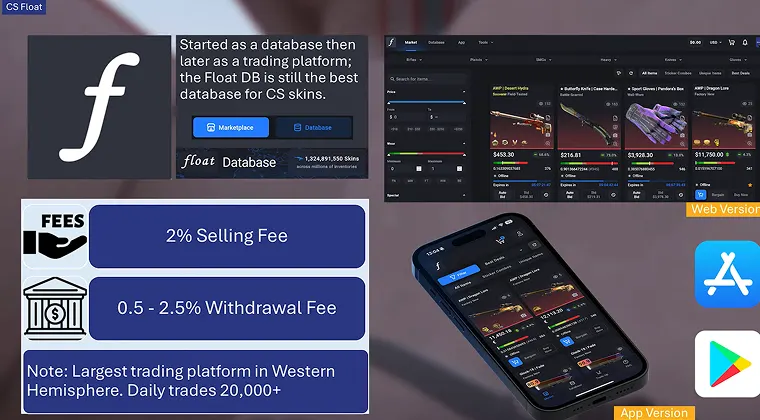
Different price points require different platform strategies for optimal results. High-value skins ($500+) benefit from specific marketplace features while budget items ($50 or less) face different optimization considerations that affect platform selection.
High-value item strategies emphasize fee minimization and security. Skinport reduces fees to 6% for expensive items versus 8% standard rate, CSFloat fees drop to 0.5% for large sales making it ideal for multi-thousand dollar knives, DMarket maintains consistent 2% regardless of value, and peer-to-peer platforms enable direct negotiation for maximum profit.
Private listing services like Skinport’s 2% fee option provide discretion and reduced costs for high-value transactions. These premium services justify minimal charges through enhanced security, direct buyer matching, and professional mediation for five-figure sales requiring additional verification.
Mid-range skin strategies ($50-500) focus on balancing fees with speed. Most platforms maintain competitive rates in this bracket, making Skinport and CSFloat both excellent choices. Fee percentage differences become more meaningful as absolute amounts increase, and instant delivery versus P2P flexibility becomes a personal preference decision.
Low-value skin approaches emphasize minimum withdrawals and bulk selling. Platforms requiring €30 minimums force consolidation of cheap skins before payout, proportionally higher fees impact budget items more severely relative to value, bulk listing reduces per-item effort while reaching withdrawal thresholds, and consolidation strategies combine multiple cheap skins into single marketable lots.
Strategic recommendations by inventory type include using CSFloat or private Skinport listings for high-value knives and gloves, choosing Skinport for speed or CSFloat for fees on regular weapon skins, selecting platforms with low withdrawal minimums for bulk low-value sales, and utilizing Skinport’s convenience with instant delivery for mixed inventories.
Understanding skin values requires external tools like SteamLedger or Pricempire providing real-time market data. These price aggregators compile listings across multiple platforms, revealing true market rates rather than inflated asking prices that don’t reflect actual sale values.
Float value tracking becomes essential for high-end trading as condition state dramatically impacts prices. Identical skin patterns in Factory New versus Battle-Scarred conditions can differ by hundreds or thousands of dollars depending on rarity and demand factors in current market conditions.
Professional traders often combine multiple platforms to optimize different inventory segments. High-value items go to lowest-fee platforms, mid-range skins sell on balanced platforms, and bulk budget items move through services with low minimums.
These represent the best CS:GO skin selling sites when used strategically according to inventory composition. Players expanding into other games can apply similar strategies detailed in guides like how to make money on Fortnite.
Tax Implications and Reporting Your CS2 Skin Sales
Tax obligations vary significantly by jurisdiction but increasingly apply to virtual item sales as governments recognize cryptocurrency and digital asset transactions. Understanding reporting requirements prevents future complications with tax authorities conducting audits.
US tax requirements became more stringent following regulatory updates. Sales exceeding $2,500 annually trigger automatic 1099-K tax forms from platforms like CSFloat and Skinport, reportable as Other Income on Schedule 1 (Form 1040). Each individual skin transaction potentially constitutes a separate taxable event under current IRS interpretations.
Cost basis calculations reduce taxable amounts substantially when properly documented. Original purchase costs offset sale proceeds when calculating taxable income. For example, selling $5,000 worth of skins purchased for $2,000 creates $3,000 taxable income rather than the full $5,000 amount reported on tax forms.
European Union tax considerations introduce additional complexity. Classification as entrepreneur versus casual seller determines Value Added Tax (VAT) obligations, regular income-generating sales may trigger VAT requirements regardless of annual volume, platforms like Skinport cannot fulfill VAT obligations on behalf of individual sellers, and each seller bears responsibility for their own tax compliance and filing.
Documentation requirements protect against audit complications. Maintain detailed spreadsheets tracking purchase dates, sale dates, prices paid, and prices received for each transaction. Preserve records for a minimum of three years depending on local regulations (consult local requirements), and consider automated tracking tools like TraderFyles specifically designed for digital asset transactions.
Regional variations create confusion as tax treatment remains inconsistent globally. Australia, New Zealand, and Singapore each approach virtual items differently, many countries lack specific regulations for digital asset sales creating legal uncertainty, and local tax professionals provide most reliable guidance for specific jurisdictions.
Unreported large transactions risk automatic reporting by platforms to tax authorities. Most major marketplaces now report qualifying transactions (typically $600+ in the US, varies internationally) to prevent tax evasion while complying with regulations requiring merchant payment reporting.
Proper documentation enables accurate reporting while minimizing tax burden through legitimate deductions. The best place to sell CS:GO skins for cash provides clear transaction histories and tax documentation support for users facing reporting requirements in their jurisdictions.
Step-by-Step Guide: How to Sell Your CS2 Skins
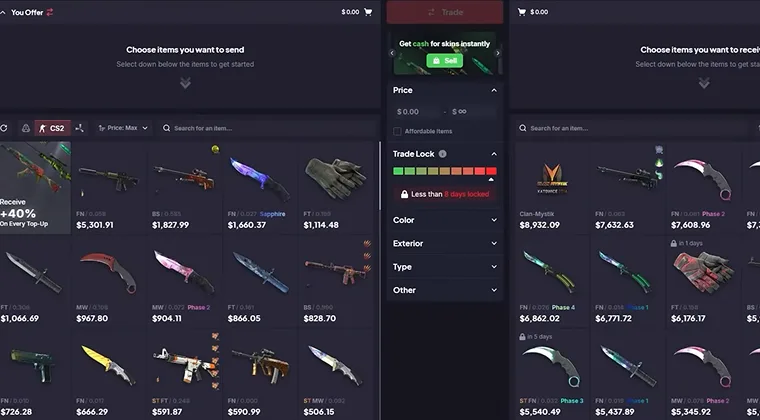
Practical walkthrough using Skinport as primary example demonstrates the typical selling process across major platforms. Most marketplaces follow similar fundamental steps despite interface variations and specific feature differences.
Step 1: Choose Your Platform begins with using comparison information from earlier sections to select based on priorities. Verify the official website URL to avoid phishing sites using similar domain names, check current Trustpilot reviews for recent user experiences and emerging issues, confirm platform availability in your region avoiding blocked territories, and review fee structures for your intended transaction sizes.
Step 2: Create and Verify Your Account requires signing up with email address and strong unique password, completing identity verification (KYC) if required for withdrawals exceeding platform thresholds, enabling two-factor authentication through authenticator app like Google Authenticator or Authy, and verifying Steam account connection through official Valve API integration without sharing credentials.
Step 3: List Your Skins involves navigating to platform’s selling section (usually labeled Sell Items or similar), searching for or manually selecting items from connected Steam inventory, reviewing offered prices (usually slightly below current market rates for instant liquidity), confirming you’re selling correct items before finalizing listings, and setting custom prices if platform allows manual pricing control.
Step 4: Accept the Trade Offer starts when the platform generates automated Steam trade offers. Review the offer extremely carefully verifying all items match listings and destination, accept the trade directly through Steam inventory interface with no external links, wait for trade confirmation (usually instant with automated systems), verify items transferred successfully from inventory, and confirm platform shows pending transaction status.
Step 5: Wait for Trade Lock Period activates Valve’s seven day protection on all traded items automatically. The platform holds corresponding funds in pending balance during this period without possibility of early withdrawal, after seven days pass funds automatically release for withdrawal becoming available balance, and email notifications typically confirm when funds become accessible.
Step 6: Withdraw Your Funds begins by selecting preferred withdrawal method from available options. Enter payment details accurately (PayPal email, bank account, crypto wallet address, etc.), confirm withdrawal amount and verify all recipient information before submitting, double-check cryptocurrency addresses as transactions are irreversible if sent incorrectly, initiate withdrawal request through platform interface, and wait for funds arrival (one to five business days for traditional methods, 10-15 minutes for cryptocurrency).
Step 7: Document for Taxes requires recording sale date and amount for tax reporting purposes, calculating profit or loss if tracking investment performance for cost basis documentation, maintaining organized records in spreadsheet or specialized tracking software for future tax preparation, and preserving transaction confirmations and receipts for audit protection.
Avoiding common mistakes preserves security and ensures smooth transactions. Never rush through trade confirmation screens without careful verification of every detail, and always double-check item details before accepting any trade including float values for high-value items.
Start with small test transactions when first trying new platforms to verify processes, keep two-factor authentication enabled throughout the entire process preventing unauthorized access, verify recipient addresses for cryptocurrency withdrawals character by character, and save screenshots of completed transactions for dispute resolution if issues arise.
Platform-specific variations exist but most follow this general framework. Some require additional verification steps like phone number confirmation, others allow more price control through manual listing systems, and interfaces vary aesthetically while maintaining similar functional steps across marketplaces.
Finding Your Best Place to Sell CS2 Skins
The best place to sell CS:GO skins depends entirely on individual priorities balancing multiple competing factors. No single platform optimally serves all users simultaneously, making informed selection essential for satisfactory experiences and maximum profit realization.
Key decision factors include fee structure determining actual profit percentage after commissions, cashout speed, payment method availability, platform security reputation and track record preventing fraud, minimum withdrawal thresholds affecting budget sellers, and customer support quality for resolving inevitable issues.
Third-party platforms consistently outperform Steam Market regarding fees and real money access. Lower commissions (2-8% versus 15%) combined with actual withdrawable cash rather than wallet credit make specialized marketplaces objectively superior for profit-focused sellers converting skins to usable money.
Skinport, CSFloat, and DMarket represent the safest and most competitive options for most players. These established platforms balance strong security with competitive pricing while maintaining sufficient trading volume for reliable liquidity across all item price ranges.
Price comparison tools like SkinScanner aggregate listings across multiple platforms, revealing where specific items command highest prices. Cross-platform checking can yield 5-15% price variations on identical items, significantly impacting high-value sales worth optimizing.
The landscape continues evolving as new platforms emerge and existing services adjust fees or features. Periodic reevaluation ensures you’re using the currently optimal marketplace rather than outdated previous choices that may have degraded service quality or increased fees.
For comprehensive earning strategies beyond CS2, discover more opportunities through our collection of the best game apps to win real money and check out top ways to make money from home sales for additional income strategies.
FAQs
CSFloat and Skinport lead with 2% and 6-8% fees respectively. CSFloat maximizes profit through minimal commissions while Skinport prioritizes transaction speed.
Platform choice depends on inventory value. High-value items benefit from CSFloat’s 0.5% fees on large sales. Mid-range skins sell competitively on DMarket at 2%.
reate accounts on verified platforms, connect Steam via official API, list items for sale, accept automated trade offers, wait 7-day protection period, then withdraw funds.
CSFloat charges just 2% seller fees with 0% buyer fees, dropping to 0.5% for high-value transactions. DMarket maintains consistent 2% across all price points.
The July 2025 trade protection update mandates 7-day holds plus 1-day processing (8 days total) on third-party platforms. Steam Market processes wallet deposits instantly.