

Resident Evolution



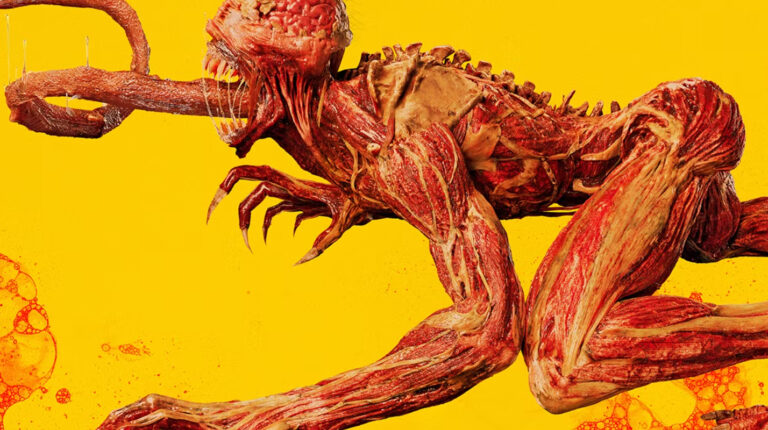
Resident Evil Week continues apace, and I’ve already looked at how the franchise has grown and mutated in different ways, but not just how far it’s spread in terms of other media. Chances are, if you’re a fan of Resident Evil you’ve seen at least one of the movies, whether live action or animated, or even noted references elsewhere.
That’s what I’ll be looking at this time: where Resident Evil has spread across its 30 year history, from homages in British sitcoms through to feature films with lore as convoluted as the games themselves. As with anything related to this series, some are more impactful than others, but they all show just how deep Resident Evil appreciation can run.
Resident Evil references are numerous and, if I were to try and catalogue them all, would technically include things like songs that reference the franchise, and characters in TV shows namedropping the games, things like that. Obviously, that’s an almost impossible task so I’ll stick to some obvious ones, and a few forgotten examples. As such, I’ll start with perhaps the most divisive media Resident Evil has appeared in: movies.
Jump to:
Movie Evil
The first Resident Evil film was released in 2002, and was written and directed by Paul W. S. Anderson, who has made a name for himself by making video game movies. He started with Mortal Kombat in 1995, and Monster Hunter in 2020 is his most recent. He made the first, fourth, fifth and sixth Resident Evil films, all of which feature characters and creatures from the games but, to many gamers’ annoyance, often with weak links to how they appear in the games.
As a snapshot: Milla Jovovich (Anderson’s wife and muse) stars as Alice, who wakes up in the first movie in a version of the Spencer mansion from the 1996 game. She soon crosses paths with soldiers who work for Umbrella, who are there to find out what’s happened in an underground lab. Ostensibly a prequel to the first game, the first movie ultimately plays fast and loose with established canon (such as having one of the film’s characters start to mutate into Nemesis).
Future movies went off the rails as Alice gets cloned, develops super powers, survives multiple apocalypses, and so on. Resident Evil: The Final Chapter (2016) was the last Anderson movie, and it referenced the first movie in an effort to come full circle. Film critic Roger Ebert famously hated the first movie, but fellow critic Peter Sobczynski (who writes for Ebert’s site) said: “Like most films of its type, The Final Chapter is utterly ridiculous in every possible way but…it at least has a healthy sense of its own absurd nature that comes as a blessed relief.”
It could have been very different. Constantin Film, the production company behind the Anderson movies, first approached horror auteur George A. Romero to make a Resident Evil movie. The celebrated director of Night of the Living Dead (1968) had already made a live-action advert for Resident Evil 2 that only aired in Japan, so he had an existing link with Capcom and the game franchise.
A 2025 documentary by Brandon Salisbury promised to shed more light on this, although it erroneously claims the games wouldn’t have existed without Romero (Resident Evil’s creative director Shinji Mikami has said otherwise). What is established fact, though, is that Romero worked up a script that was faithful to the 1996 original game, and even brought in noted horror artist Bernie Wrightson to design monsters, like the Tyrant.
However, Constantin Film reportedly found Romero’s script to be too horror-heavy and intense, which should not have been a surprise. As such, the project was cancelled and relegated to something of an online urban myth for years.
After Anderson took over and made six RE movies, it was the turn of Johannes Roberts (Strangers: Prey at Night, and the recent Primate). Still under the banner of Constantin Film, Roberts created Resident Evil: Welcome to Racoon City in 2021. Where Romero’s script was apparently too faithful to the games, and Anderson went completely mental with game lore, Roberts attempted to strike something of a middle ground: his film combines the first two games into a generally unsatisfying whole.
Poor reviews followed, scuppering plans for a sequel. At the time of writing, Zach Cregger (Weapons, Barbarian) is behind the next Resident Evil movie and it’s been reported that he has complete freedom as to what it’s about, with noted movie site JoBlo saying that it involves a courier who gets caught up in the Racoon City outbreak.
Cregger himself has said “It’s gonna be not at all like Barbarian and Weapons. It’s going to be a rock ’em, sock ’em… it’s for me to play. And turn my brain off and just make an…Evil Dead II…get crazy with the camera. It’s a weird, fun, wild story. This movie follows a person from point A to point B. It’s like a real time journey, where you just go deeper and deeper into the depths of Hell.”
Animated Evil
Where fans of the games have found much more reverential material is in the multiple animated shows. These technically started with Biohazard 4D-Executer, a 20-minute animated film created by Capcom in 2000 and shown in Japanese theme parks. Regarding mainstream, international animation, the first of these was Resident Evil: Degeneration (2008).
This is set seven years after Resident Evil 2 and follows existing original game canon, as Leon Kennedy and Claire Redfield battle zombies in an airport and then a research facility. It also received a spin-off game on Nokia phones that was believed to have been lost to time but was recovered in November last year.
Resident Evil: Damnation followed as a direct movie sequel in 2012, with a “reboot” that’s still set within the game universe, Resident Evil: Vendetta, released in 2017. A four-part animated series, also starring Leon and Claire, debuted on Netflix in 2021. Resident Evil: Infinite Darkness isn’t another reboot nor a continuation – instead, it takes place roughly between Resident Evil 4 and 5. An actual sequel to Vendetta, Resident Evil: Death Island, was released in 2023.
TV Evil
Death Island remains the last animated Resident Evil film; there are currently no plans for a future entry. The franchise hasn’t been dormant on the small screen, though. While what may have been the first overt reference to it on television may have been an episode of UK sitcom Spaced in 1999, an official series also appeared on Netflix 2022.
Edgar Wright (Shaun of the Dead, The Running Man) directed multiple episodes of Spaced, and even back then his love of pop culture references was evident. In this case, the main character Tim (Simon Pegg) plays so much Resident Evil that he starts hallucinating zombies. Wright didn’t just throw actual undead into the show, though; he even echoed scenes from the game, like a shot of Tim’s house accompanied by music from Resident Evil.
While other TV shows over the years, from Smallville to even Breaking Bad, have had characters reference Resident Evil, the franchise wouldn’t receive a dedicated live-action show until a few years ago. Simply titled Resident Evil, it follows a teenage girl whose dad turns out to be series antagonist Albert Wesker, here played by Lance Reddick (Fringe).
Gamers and the general public largely hated it as it bore very little resemblance to the games. Where Anderson’s movies managed to get by on loopy action and big-budget effects while remixing the games’ lore, the TV series was considered “confusing” and an overall disappointment. Netflix cancelled it once viewer numbers took a sharp nosedive.
Book Evil
Somewhere that Resident Evil has flourished is on the page. Marvel released the very first Resident Evil comic in April 1996, as a tie-in/prologue to the first game. It was thought lost for some time but can now be easily read online via Archive.org. The Resident Evil: Official Comics Magazine, published by WildStorm, followed in 1998 and acted as a bridge between the first two games.
Three more followed under the WildStorm imprint, namely Resident Evil: Fire and Ice (2000), Resident Evil: CODE: Veronica (2002) and simply Resident Evil (2009). Fire and Ice followed an Umbrella clean-up crew going after Bio Organic Weapons, Veronica is actually a translation of licensed Chinese comics known as manhua (there were five of these between 1998 and 2003), and Resident Evil is a prequel to Resident Evil 5.
There have also been four official mangas, with the last one being an adaptation of the Death Island animated movie. The others all tie-in to existing games, including Umbrella Chronicles and Resident Evil Revelations 2.
Meanwhile, official tie-in books were written by S.D. Perry and published by Pocket Books, an imprint of Simon and Schuster between 1998 and 2004. Once the rights expired, Titan Books republished them. These include Resident Evil: The Umbrella Conspiracy, Resident Evil: Caliban Cove, Resident Evil: City of the Dead, Resident Evil: Underworld, Resident Evil: Nemesis, Resident Evil: Code Veronica, and Resident Evil: Zero Hour.
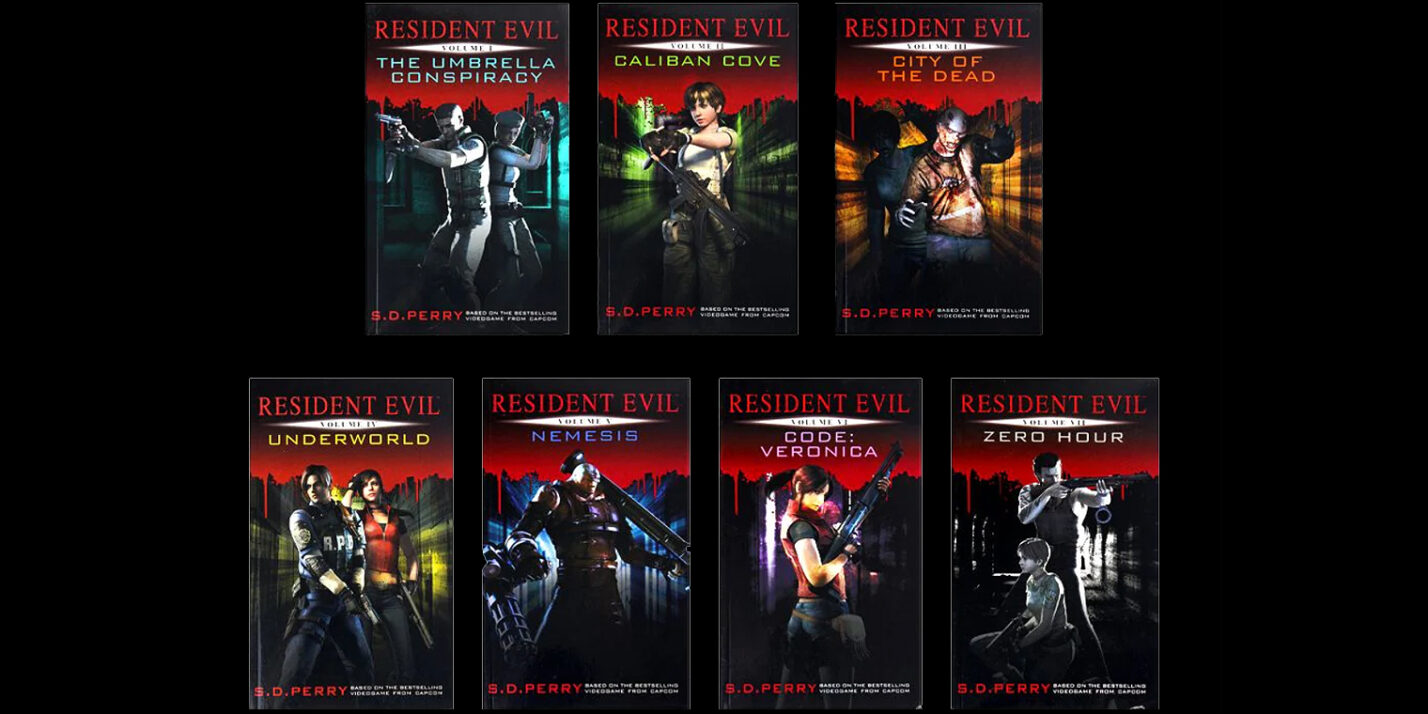
Perry had no access to info from Capcom directly so had to mainly rely on game manuals, her own playthroughs, and other sources for details, leading to adaptations that often veer wildly from established canon. For example, in the books, Victor “Trent” Darius is the mastermind behind a ton of stuff that happens (like hiring Ada Wong), but he doesn’t exist in the world of the games. An interview Perry did in 2016 highlights a lot of the restrictions, and freedom, she experienced writing the novels, as well as offering an interesting insight into the world of writing for hire (for example, she generally had a month to write each book).
Keith R.A. DeCandido then followed with novelizations of most of the Anderson movies, with John Shirley and Tim Waggoner writing novels of Resident Evil: Retribution and Resident Evil: The Final Chapter, respectively. Alongside these, there were four Osamu Makino novels, which were themselves based on the first movie, the Umbrella Chronicles game, and the Damnation movie.
Japan also saw a few Resident Evil stories get published as part of the BIOHAZARD Grand Novel Prize, a writing contest organized by Media Works and Capcom. This ran until August 2001, after which three stories got picked as winners: Rose Blank, To the Liberty, and The Black-Winged Resident.
These have been the main actual novels; Resident Evil has seen many, many guides, design works, and one-off tie-ins like BIO HAZARD The Wicked North Sea by Kyū Asakura (1998).
Resident Ephemera
Resident Evil has also seen a number of very limited real-world events and shows, including BIOHAZARD Cafe & Grill S.T.A.R.S., a restaurant in Tokyo that ran 2012-2013. It featured a life-sized, animatronic Tyrant, “bullet” holes in the furniture, and limited-time menu items themed around the games. Performers dressed as S.T.A.R.S. members held small dance shows.
This was followed by BIOHAZARD THE REAL, a Universal Studios Japan attraction that ran from 2013 to 2015. People got to travel through locations based on the games, such as the Raccoon City Police Department, and shoot zombies.
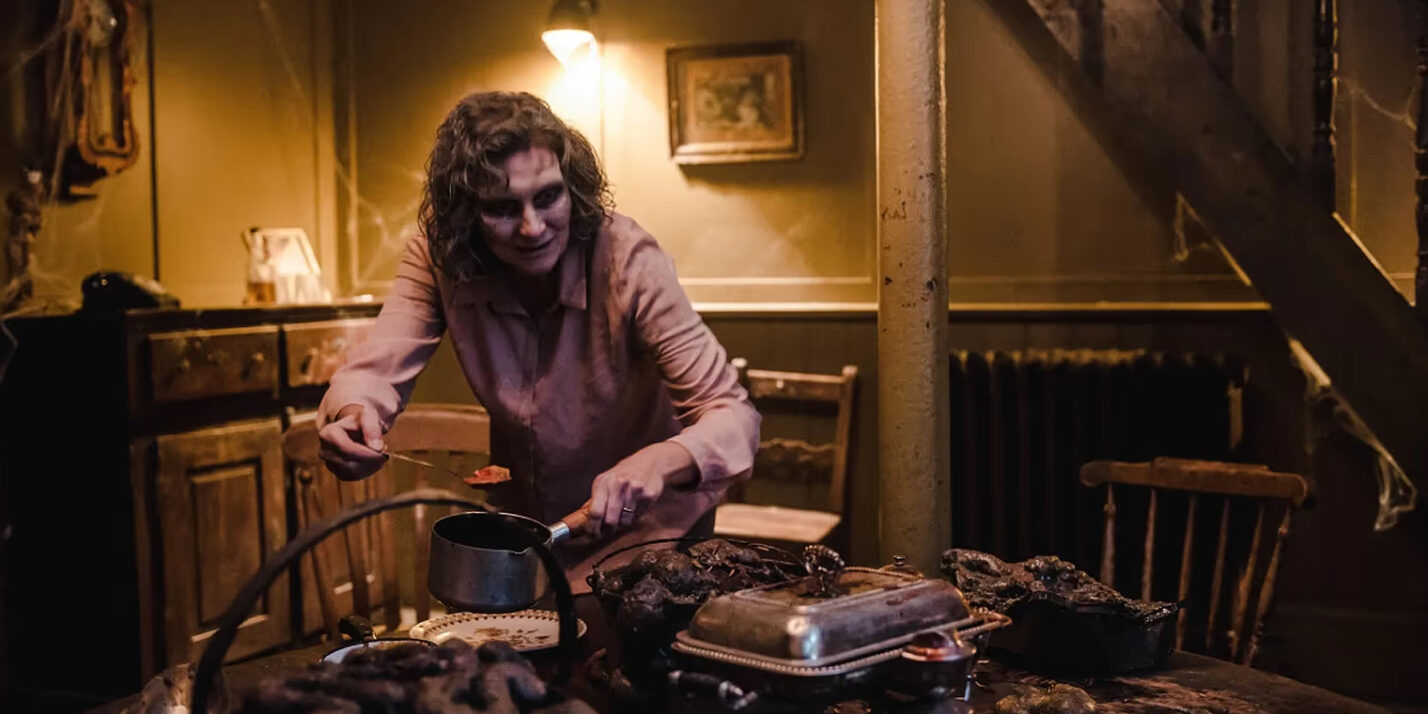
It wasn’t just Japan that got all the fun stuff: London paid host to Resident Evil 7: Biohazard Immersive Experience in 2017. For four days, an old house was turned into a creepy facsimile of the Baker house from that game, and each part of the house was an escape room. Out of 3,000 attendees, only 224 managed to survive not just the house but the roaming Baker family.
Last but not least, Capcom ran a live stage show called BIOHAZARD THE STAGE between October and November 2015 in, you guessed it, Japan. Taking place between Resident Evil 5 and 6, it revolves around an outbreak at an Australian university. Chris Redfield and Rebecca Chambers were the main characters. Clever stage direction allowed notes and journal entries to be projected onto the scenery, as a nice way to reference finding them in the games (so the audience could also read them). It was released on DVD with English subtitles, but you can also find it on YouTube (at lower quality, so keep that in mind).