


Resident Experiments



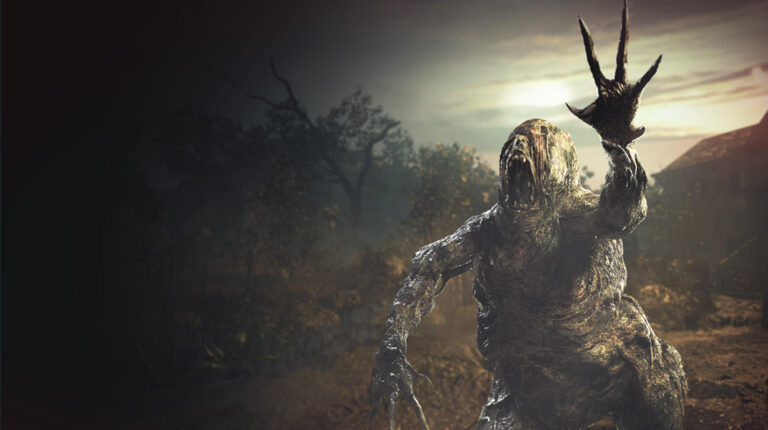
Much like how the franchise’s ubiquitous T-Virus mutates people and animals into new forms, the Resident Evil series has also occasionally changed shape and style. A lot of these experiments have since faded into the hazy mist of nostalgia, whereas others either persisted or experienced a second growth spurt, taking on a new and improved form.
I’ve taken a look at as many of these as is sane to do so. From early first-person experiments to online multiplayer, there’s no shortage of unusual, even misguided, Resident Evil games to examine over its 30 year history.
Jump to:
FPS Evil
So where to start? Capcom played it straight for its first four releases: Resident Evil (1996), a Director’s Cut in 1997, Resident Evil 2 (1998), and Resident Evil 3: Nemesis (1999). However, in 2000, Capcom (and co-developers Tose, a “ghost studio” that’s still going and regularly works on big-name games without receiving public credit) released Resident Evil: Survivor, a lightgun game that didn’t ship with a lightgun in the States (or the UK).
I’ll admit I really have a soft spot for this game. I was in my late-teens when Resident Evil appeared and the games blew my mind, so of course I got hold of each new entry whenever I could. My family had the PlayStation set-up in the conservatory at the back of the house; this had window-walls on three sides, with a small backyard that bordered on miles of farmer’s fields (this was in the north of England). As such, nighttime was very quiet and pitch black in my neighborhood, making for (on one level at least) the perfect environment to play survival horror games.
The first three Resident Evil games had their scary moments, but there was something about the atmosphere in Survivor that I found particularly engrossing. I’m currently replaying it via emulation and the vibe is still there: you play the survivor of a helicopter crash who has to navigate a maze-like nameless town that, concurrent with the events of Resident Evil 2, also has “Bio Organic Weapons” (as the franchise routinely calls the monsters) roaming about.
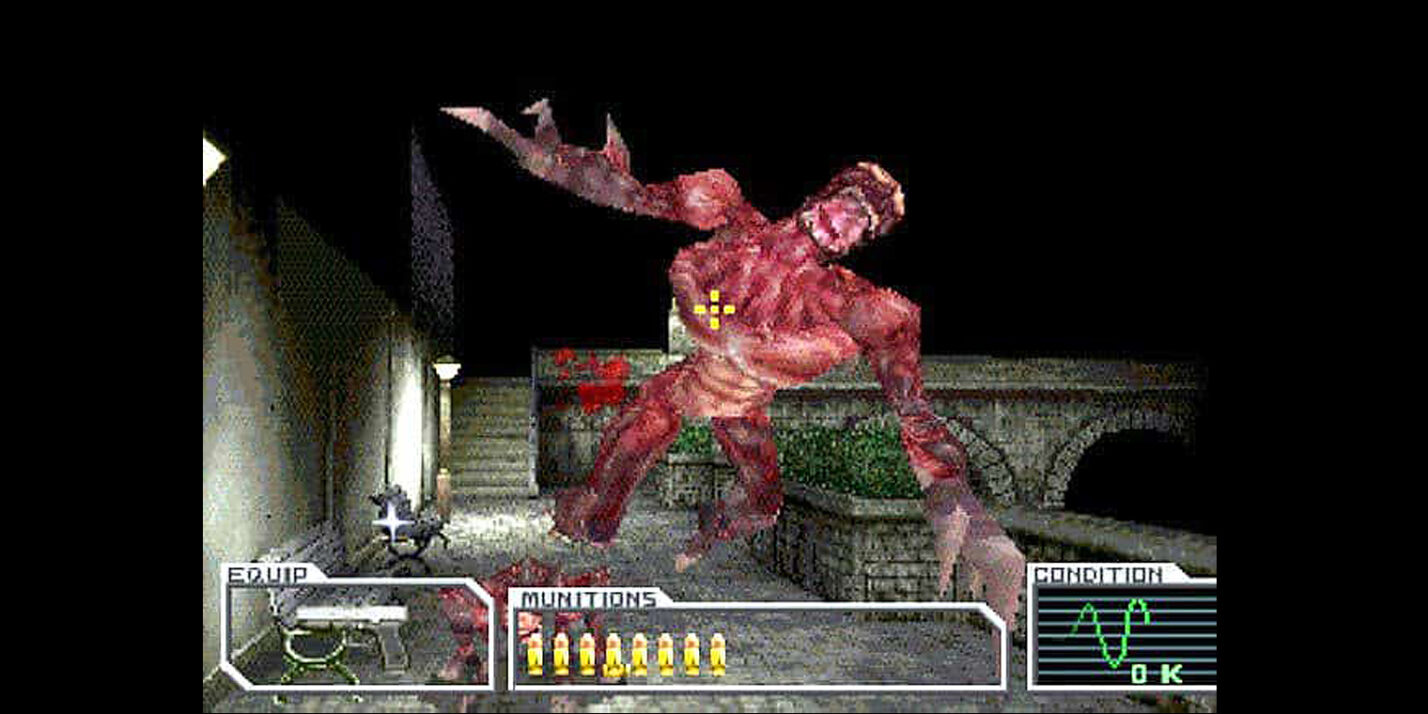
It’s desolate. Environments hold a low-res charm that, sure, you could also call ugly (because it is) but crucially has a weird feeling of abandonment that’s distinct from the mainline series. Levels are very corridor-like, even outside spaces, and there’s an oppressive, constant black sky that makes you feel like you’re trapped in a void.
As an ostensible lightgun game, it’s played in first-person (so part seven wasn’t as innovative as many believe) but in actual gameplay it feels more like an old-school dungeon crawler. You can turn on the spot before you move, for example, although thankfully it’s not grid-based so movement feels fluid. Handgun ammo is infinite, and there’s a range of weapons that all feel distinct but, disappointingly, enemies react the same no matter where on their grotesque bodies you shoot them, no matter the weapon.
This is one of the biggest gripes I have with it, alongside the frankly abysmal writing; the journals you find make absolutely no effort to hide the identity of your character, but this does at least raise a decent philosophical question as to the nature of identity – if you can’t remember being a bad guy, are you still a bad guy?
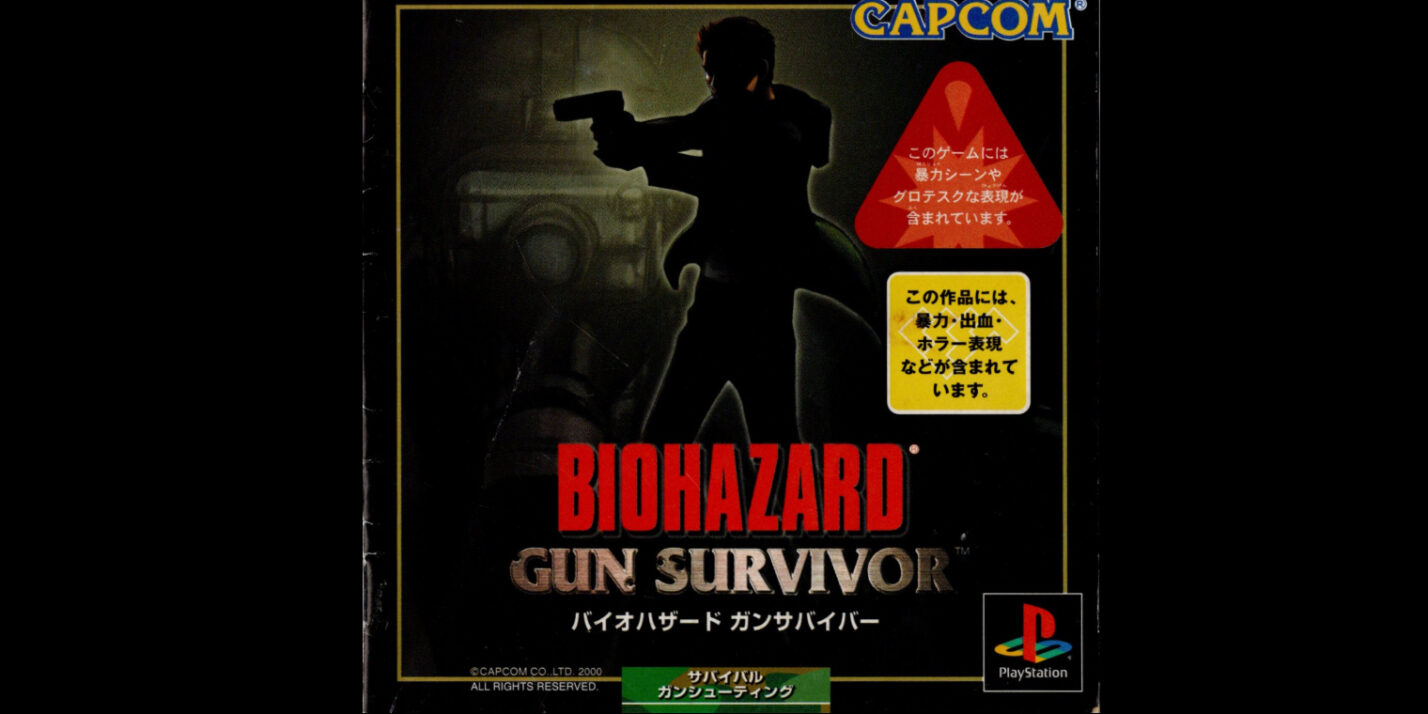
But these are my complaints: game critics in 2000 were savage. IGN gave it 4/10 and called it “the ‘idiots’ version of the series,” while Pocketmags thought the gameplay was “laborious.” Gamespot said “There’s no real reward to playing Survivor, and the Resident Evil universe would be better off without it,” which seems to have been the overriding consensus for the last 26 years.
Headshots Galore
Despite the overwhelmingly negative reviews, Capcom wasn’t deterred from making more Resident Evil lightgun games, and eventually released some with actual gun peripheral support; Survivor was tooled to work without one in the US due to the Columbine school shooting in 1999.
It’s not unreasonable to think that a tragedy like this, combined with poor reviews, might have really sunk any further gun-related experiments, but the PS1 was a relative hotbed of this type of game in the mid-nineties as titles like Time Crisis and Point Blank dominated sales charts. As such, more Resi lightgun games were released, some with actual gun peripheral support; Resident Evil Survivor 2 – Code: Veronica followed in 2001. This took characters from the main Code: Veronica game and stuck them in a non-canon arcade-style shooter (that started life as an actual arcade game). It was also panned on release.
Resident Evil: Dead Aim (2003) and Resident Evil: The Umbrella Chronicles (2007) were also largely ill-received but the final lightgun game, Resident Evil: The Darkside Chronicles (2009), ended the experiment on a high note with decent reviews from critics and players (Eurogamer said “For fans of twitch-gaming this surely ranks up there with the best that this anachronistic sub-genre has to offer.”).
Just the Two of us
Resident Evil: Requiem has drawn attention for offering dual gameplay split between Leon S. Kennedy (who debuted in part two) and Grace Ashcroft (who’s new to the series, but her mother Alyssa appeared in Resident Evil: Outbreak, which I’ll cover below), but this duality is just the latest example of one experiment that Capcom conducted that did take root.
Resident Evil 2 (1998) featured a dual narrative, with half the game following Leon and the other half Claire Redfield (who reappeared in Code: Veronica), but it was Resident Evil 0 on the GameCube, in 2002, that merged dual protagonists into a single playthrough. Taking place before the events of the first game, Resident Evil 0 lets players switch between characters on the fly, with each having unique abilities. Rebecca, for example, can mix herbs, while Billy can move heavy objects.

It was well-received by critics, with Nintendo Power giving it 96% and calling it “A captivating and horrifying journey.” EGM acknowledged that it’s “largely formulaic” but “Capcom still pulls it off better than anyone else out there.” IGN really liked it too, but also noted that the series was already starting to show its age.
Resident Evil 4 would reinvigorate the series just three years later in 2005, and also included a “damsel in distress” in Ashley, who players could order around with simple commands. Resident Evil 5 and 6 were developed with actual co-op play in mind, which Resident Evil Revelations 2, in 2015, also heavily featured, although it’s possible to play it like part zero by switching between characters on the fly.
The first Revelations game also had dual characters, but players can’t switch between them, nor play in co-op. Both Revelations games were also episodic, which is so far the only time Capcom has experimented with this format for this franchise (in terms of being available as separate episodes; other games have used this format as a storytelling device).
Any Port in a Storm
Every mainline entry into the Resident Evil series has been ported to other consoles/systems, with the majority hewing closely to the original versions. While there have been upgrades, remasters, and expanded versions, I’m going to focus on a couple of ports in particular: Deadly Silence and Gaiden.
Resident Evil: Deadly Silence was released for the Nintendo DS in 2006, and while critics may have hated it (Eurogamer called it a “soulless cash-in”), players, and perhaps time, have been kind to it (many claim it’s better than the GameCube’s version of Resident Evil).
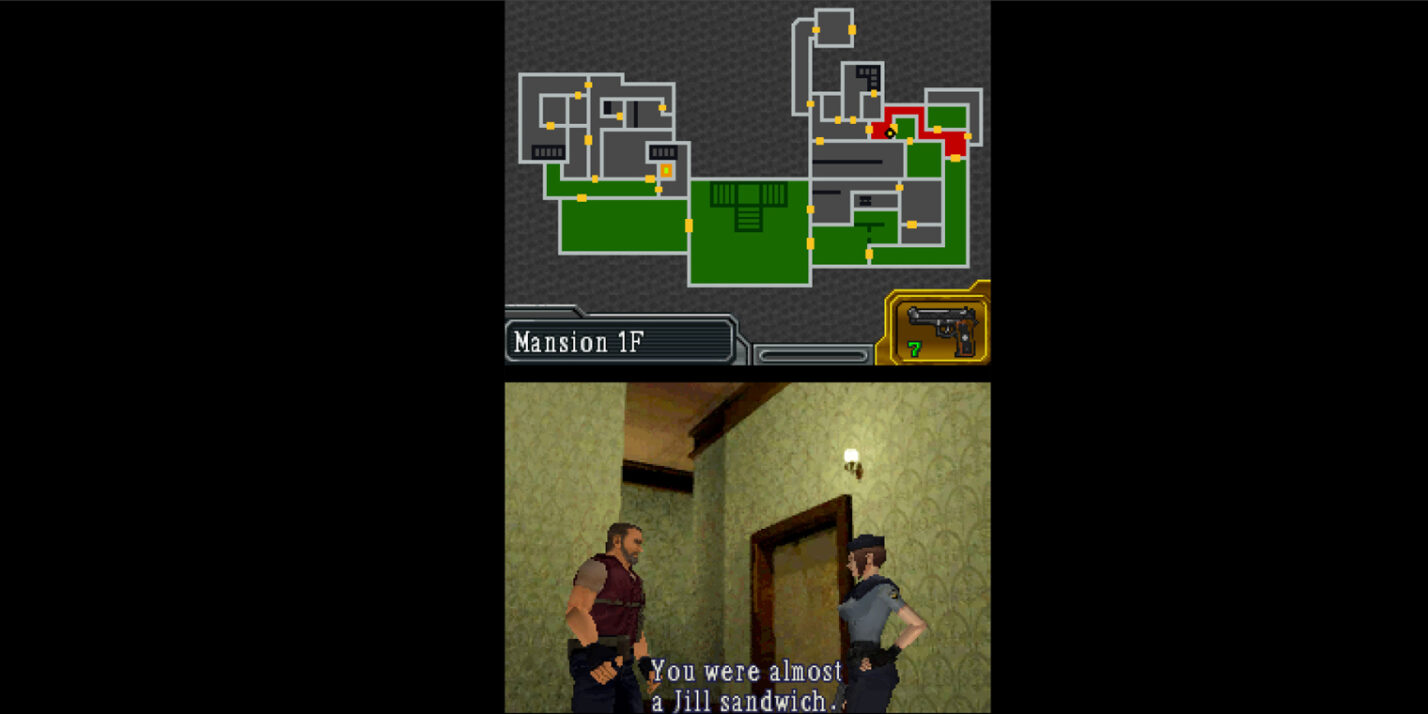
As a direct port of the first game, Deadly Silence carries over all the idiosyncrasies too, such as the fixed camera angles and tank controls. However, it also includes a “Rebirth” mode, which primarily involves a first-person mode that lets players use the DS touchscreen to stab zombies with a knife. Players routinely refer to it as being better than the actual Resident Evil remake from 2002, partly due to things such as removing the loading screen door animations, adding a 180 degree quick turn option, and having the map always open (on the top DS screen). It also doesn’t hurt this game’s reputation as a cult classic having original boxed versions sell for as much as $170 on Amazon.
Now onto Gaiden, which was released on the Game Boy Color in 2001. A straight port of the first Resident Evil was started on the GB Color by another studio but soon got cancelled, meaning Gaiden isn’t technically a port but it’s the closest this handheld came to getting one. Given the hardware limitations of the GB Color, Gaiden takes the form of a top-down adventure game with occasional constrained almost-first-person combat segments. Upon release, it was considered too vast a departure from the established RE template and suffered poor reviews as a result (Gamespot gave it 5/10, IGN a 4).
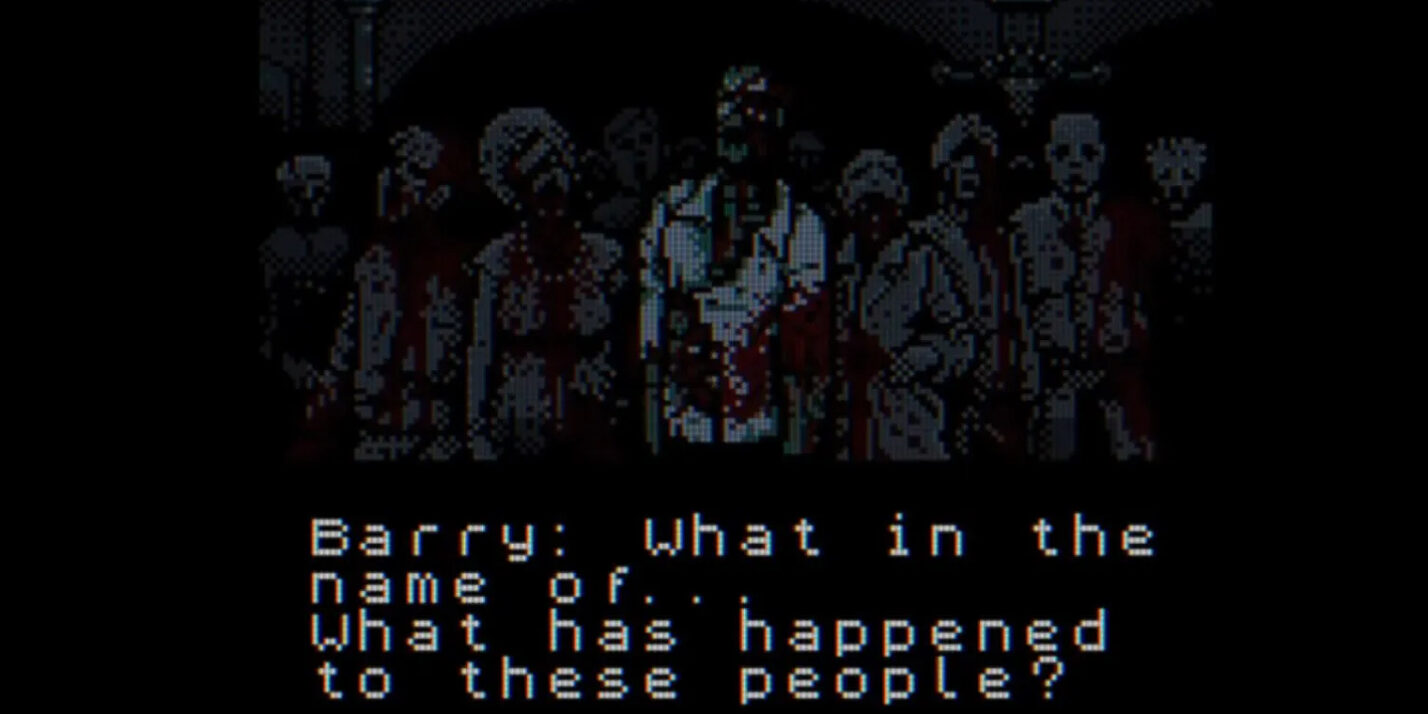
Players take on the role of Barry Burton, from the first game, who’s sent to investigate a seemingly abandoned ocean liner that, before him, Leon Kennedy was sent to investigate. Leon has disappeared, so Barry needs to find him and discover why this ship has a bunch of monsters on it. A similar storyline formed the basis for the first Revelations game, showing that Resident Evil isn’t afraid to cannibalize itself if it has a good story hook.
Critics found the story to be Gaiden’s saving grace, but largely hated the tedious backtracking to find items, as well as the weird combat. Whenever a player encounters an enemy, the game shifts to a zoomed-in view, and players need to stop a cursor as it moves across a bar, at the right point, to attack. It’s as clumsy and tension-sucking as it sounds. Unsurprisingly, Resident Evil Gaiden lives on as a curio more than anything else, that – similar to Deadly Silence – now sells on the physical market for upwards of $150.
You’re Never Alone in an Apocalypse
During the development of Requiem, the Producer (Masato Kumazawa) and Director (Koshi Nakanishi) both spoke about early iterations of the game, which included at one point an open-world design, and then an online version. They both noted that they scrapped these ideas as they weren’t what players wanted from a Resident Evil title, but as its history has shown, an online version can work well.
I’m referring to Resident Evil: Outbreak, of course. Although other games in the series featured online multiplayer, the majority have been classed as failures. More on that in a minute, but first: Outbreak was released on the PS2 in 2004 in the States and Europe, and made use of the then-new online functionality of that console.
Reading reviews at the time, the main complaint is that what players got is not what they imagined when Capcom said it was working on an online version of Resident Evil. Although set during the events of the second and third games, rather than letting players loose into a wide-open version of Racoon City, it instead allows up to four players to connect to play together as one of eight characters, in various scenarios set throughout the city.
Overall, reviews ranged from faint praise, like GameSpot’s “Outbreak doesn’t really live up to its potential, but it’s a pretty good game for members of its already-established audience,” and Playboy(!) noting that “Anyone who believes that fear is most intense when you’re alone hasn’t been dropped into a group of survivors fighting off flesh-eating zombies.”
Almost all critics agreed that the lack of voice chat was an unforgivable sin, as players could only communicate via built-in calls like “yes” and “help me.” PS2’s online infrastructure also, unfortunately, crippled a lot of positivity for Outbreak as it became apparent that it simply wasn’t quite good enough to consistently manage the work needed to run the game smoothly.
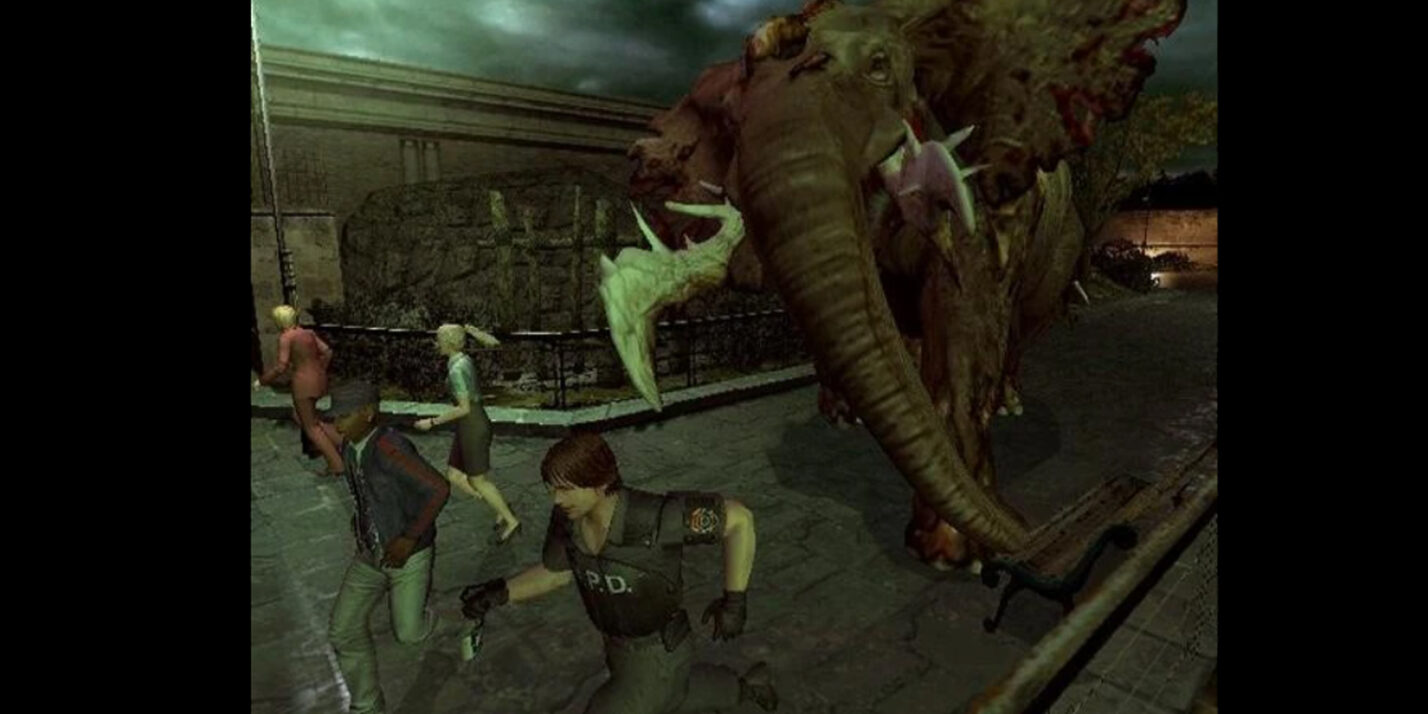
Outbreak fared better in Japan, leading to a sequel to be released there in 2004, and in 2005 for the US and Europe. Outbreak File #2 brought back the same eight playable characters alongside five new scenarios. Although it improved upon the online play from the first Outbreak, including adding lobbies and more game options, it suffered similar “It’s not bad for what it is” reviews.
At the time, I mean. Look at contemporary reviews of it and you’ll see that nostalgia and a love of the franchise color critical appraisal to the extent that it’s received 90-100% scores.
Resident Evil Online
Where was that love a few years ago, though? Outbreak was the first to take RE online but it certainly wasn’t the last. To date, there have been four games with a specific focus on online multiplayer, outside co-op play: Operation Raccoon City (2012, squad-based), Umbrella Corps (2016, competitive shooter), Resident Evil: Resistance (2020, 4v1 asymmetrical), and Re:Verse (2022, deathmatch).
Operation Raccoon City was delisted in 2021 due to ongoing issues with the now-defunct Games for Windows Live service, although a lot of gamers don’t mourn its disappearance as it’s widely considered rote and badly-produced (Eurogamer’s original review called it “a boring game, even for those of us into Resi big style.”).
Umbrella Corps followed to similar underwhelmed reviews, although this one was at least a genuine experiment: a small team of devs based in Capcom’s Osaka HQ worked on it in Unreal Engine, at a fraction of the budget typically afforded to an RE game (which may also explain why it doesn’t have “Resident Evil” in its name). It even received a low-budget live action trailer that spectacularly failed to look like anything related to Resident Evil, outside a few Umbrella logos.
In the game, players take on the role of soldiers, and can play various modes across maps based on iconic RE locations, like a church from RE4 and Lanshiang from RE6. Weirdly, despite being universally maligned, Umbrella Corps is still available and has servers running, although you’ll be hard pressed to find anyone else playing it. There is a single-player mode, although it’s extremely repetitive and lacks any of the style associated with the franchise.
Meanwhile, the follow-up RE online title, Resistance, was delisted in a comically fast time. It was bundled with the Resident Evil 3 remake and released in April 2020, but Resistance received its last patch in October that year and then Capcom abandoned it. This title can be summed up as “Dead by Daylight, but Resident Evil,” and it received middling reviews as a result. If you own or somehow manage to get hold of a copy, there are still servers running but, like Umbrella Corps, you’ll have a hard time finding anyone to actually play with.
Which all leads to Re:Verse, the Resident Evil competitive online multiplayer game that shipped with Resident Evil Village. Initially set to become the equivalent of an RE live service game, complete with Battle Pass and regular content updates, it was delisted quite recently in June 2025. It let players take control of various iconic characters from the franchise, such as Hunk, Leon, and Ada Wong.
It was also possible to play as a BOW, including Nemesis, a Super Tyrant, and Jack Baker from Resident Evil 7. Despite this hook, the game suffered abysmal reviews due to clunky controls and severely limited game modes (just one deathmatch mode, and only two maps).
Future Experiments
While it’s unlikely some experiments will be repeated (if we get another lightgun game it’ll be a miracle, and the recent mobile-focused base building/gacha Resident Evil: Survival Unit has been suffering poor reviews), it’s probably safe to say that Capcom hasn’t quite cracked the code when it comes to a satisfying online version of Resident Evil, but it’s certainly come close.
The Resident Evil Requiem producer, Masato Kumazawa, said in an interview with Press Start Australia that, while Requiem is resolutely a single-player experience, “there are some remaining [multiplayer] elements, but we can’t disclose what it is and how it is.”
“Looking at the game when it was multiplayer, the horror part was very mild,” he then clarified. “However, in that build, we made a game that was fun to play. But we looked deeply into this game and wondered if a fan of the franchise would really like this, so we thought they probably wouldn’t enjoy it as much. That’s the reason we made it back into single player. But because it was fun, we added elements from that build to the final game to ensure it was fun.”
Gamers will find out what these elements are when Requiem releases this Friday. For now, take a look at the other articles that are part of Resident Evil Week.