


“We’re Looking for Weirdos” – An Interview With Pixel Doors, a New Ethical Publisher



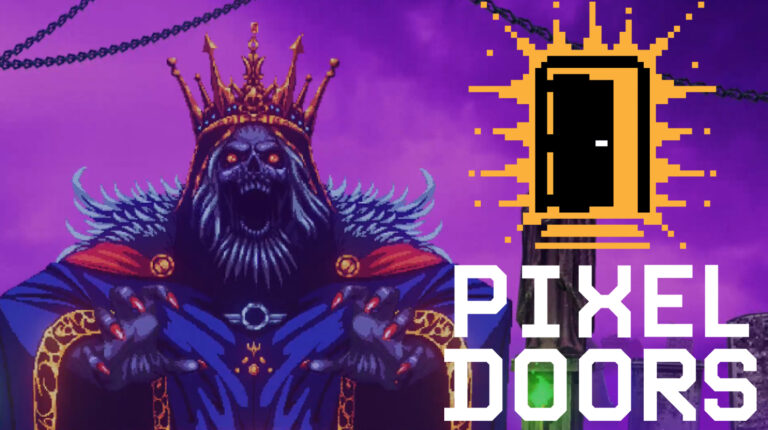
Pixel Doors is a new publisher founded by Nic van ‘t Schip and Jacek Pudlik, both of whom have extensive experience working in the game industry and related fields. Van ‘t Schip was previously the Senior EMEA Marketing Manager for Twitch, and Head of Licensing, PC & Console Games for MY.GAMES (the studio behind War Robots and Left to Survive, amongst other top titles). Pudlik also worked at MY.GAMES as a Senior Producer, and before that at Wargaming (the company responsible for World of Tanks and World of Warships) as an Associate Publishing Producer.
Now, they’ve put their combined expertise to good use by creating what they call an “ethical and sustainable” game publishing company. To find out more about what this entails, how Pixel Doors works, and what attracted them to the first game in their portfolio (Mad King Redemption), I spoke with van ‘t Schip and Pudlik via email.
Given that you’re promoting Pixel Doors with “if the game never takes off, we don’t make any money from it,” how does it work once you team up with a studio? Do you help fund them or just focus entirely on helping market a game?
We work with teams who have secured their baseline production budget through grants, savings, or investors. Our investment is sweat equity: strategy, marketing, PR, and business development. We are the business partner in the trenches so the developer can focus on the code.
We are an operational engine, not a bank. We step away from the “Publisher as Lender” model because we believe financial dependency often creates the wrong incentives (like forcing a game to launch too early for cashflow).
Following on from this: Nic, on LinkedIn you posted that “We saw so many incredible teams with solid games get rejected not because the game wasn’t fun, but because the P&L [profit and loss] didn’t look like a ‘unicorn’ in a corporate spreadsheet.” – could you please elaborate on what counts as a unicorn for typical publishers, and also how important it is for a studio to have an existing fanbase before you team up with them.
In this context a “unicorn” is a game that promises infinite scale and low risk; usually a trend-chaser like the next Fortnite or Genshin.
Publishers driven by spreadsheets look for such titles with massive ROI. If a game is unique, weird, or serves a specific niche, the spreadsheet says “Computer Says No.”
We look for the opposite. We look for Identity. We want a game that is too risky for a board meeting but perfect for a specific, passionate audience.
Mad King Redemption is the first game in the Pixel Doors portfolio – what attracted you to it?
The passion of the team was reasons 1, 2 and 3 for us wanting to work with them.
The team is smart and eager, they have worked their ass off and did a great job getting the project to where it is when we signed them, and we’re so proud that they picked us to help them get the project to the finish line!
It’s also a great game, who doesn’t want to play a love letter to Golden Axe delivered in a beautifully crafted roguelite envelope?
You touched on this in an answer above, but to elaborate: are you looking for any particular types of games to publish, or are you open to pretty much anything that seems interesting?
We don’t filter by genre; we filter by conviction.
Our smell test is: “Is this game specific enough that some people might love it, some might even hate it?” If a game tries to please everyone, it ends up being bland. We look for studios that are obsessed with a specific vision. Whether it’s a cozy narrative game or a brutal brawler, if the developer is making it because they have to play it, we’re interested.
Mad King Redemption is a great example; the vision of this team is breathtaking and their conviction to deliver on it is inspirational.
Mad King Redemption is also slated for release on Sega Megadrive/Genesis. Is this something you as a publisher are helping with, or something the developers already had planned? Plus, is it a sign that future Pixel Doors games will also target the retro console market?
All credits go to Secret Mission on coming up with that idea and with the contact in Japan who will facilitate that. It’s exactly that kind of out of the box thinking that impressed us about the team and now we’re helping them make it a reality!
We are platform agnostic, we want to help devs make cool games and launch them on cool platforms.
I’d like to ask you about how important wishlists are. The general gaming public understands this as a metric of game popularity, but there are a lot of stories from devs about games that hit impressive wishlist numbers but then “failed” at launch (I spoke to the dev of Katanaut about this back in October, for example).
How vital are wishlists to you as a publisher, and/or what’s your professional take on them?
Wishlists are a metric, but they are often a vanity metric. You can’t pay rent with “intent.” We see teams with 100k wishlists launch to silence because those users were farmed via festivals, not nurtured.
We focus on community health. I would rather have 1,000 active people arguing about lore in our Discord than 100,000 “cold” wishlists. Our strategy is to turn window shoppers into evangelists before day one.
You both have extensive experience within the video game industry; from your position within it, what state do you think it’s currently in? What do you think the future holds for it?
The “Factory Model” is breaking and/or broken. The era of infinite growth and over-hiring has led to the brutal corrections and layoffs we see now.
But the silver lining is the Talent Exodus. Senior developers are leaving the corporate machines to start their own “craft workshops.” We are entering an era of smaller, sharper, sustainable indie studios. Pixel Doors was created with the desire to cater to this niche of craftsmen engineers, to create the best possible conditions for them to build and grow, and be sure that everything around this process gets the attention it deserves without slowing down the creative process.
Following on from this: Jacek, you recently posted on LinkedIn that you believe one way to make a change within the industry is to “focus on grassroot growth – on the games that will break even, or make a tiny amount of profit. Keep the lights on until you find the secret sauce.” What do you (both) think is a secret ingredient developers should use when making their game?
This secret ingredient is a mix of endurance and creativity. You need to survive long enough to hone the craft, find the niche, and that can be your first game, it can be your 10th. We are here to support the developers on this entire journey.
Most studios die because they burn out (financially or mentally) before they find the fun.
You need to structure your studio so you can afford to iterate. Don’t bet the farm on the first prototype. Build small, validate early, and treat your own mental health as a finite resource. A burnt-out dev can’t patch a game.
I’d like to throw in a business-related question. The focus on ethics and sustainability is impressive to see but you’ve said that “Our model is simple: we place the financial health of the studio above our own short-term ROI,” so I have to ask: how viable is this business plan for building up Pixel Doors itself? Are you entirely reliant on a symbiotic relationship with studios you work with? If so, how much pressure could this put on a studio to ‘deliver the goods’, so to speak?
It’s a long game, but it’s the only ethical and sustainable one.
Our contract states that “The Developer Eats First.” Typically, the first $100,000 of revenue goes entirely to the studio to ensure they are stable. We only take our share after the lights are kept on.
Is this risky for us? Yes. But it ensures total alignment. If we do a bad job and the game flops, we earn nothing. It forces us to be effective. We don’t extract value from studios; we amplify it.
Pixel Doors is headed to GDC this year – what are you most excited about experiencing there, now you’re representing your own company?
Aside from the $18 coffees?
We are looking for the “weirdos.” We want to meet the developers who feel out of place pitching to massive publishers. We want to find the teams who are building something risky and tell them: “You’re not crazy, and we can help you build a business around this.”
You’ve also touched on this already but last of all: what advice can you offer aspiring game devs, whether working solo or as part of a small team?
Stop trying to guess what the market wants. By the time you finish a game chasing a trend, the trend is over.
Make the game you are desperate to play. If you love it, there is a niche out there that will love it too. Don’t try to make a game for everyone, make a game for someone, and make them love it obsessively.
Mad King Redemption currently has a demo available and is scheduled to enter Early Access this year. Pixel Doors is open to game devs interested in pitching their games. Jacek also makes a mean cheesecake, just to cap this all off with an extra treat.