

From Censorship to Comeback: How One Signature Reversed a Gaming Purge



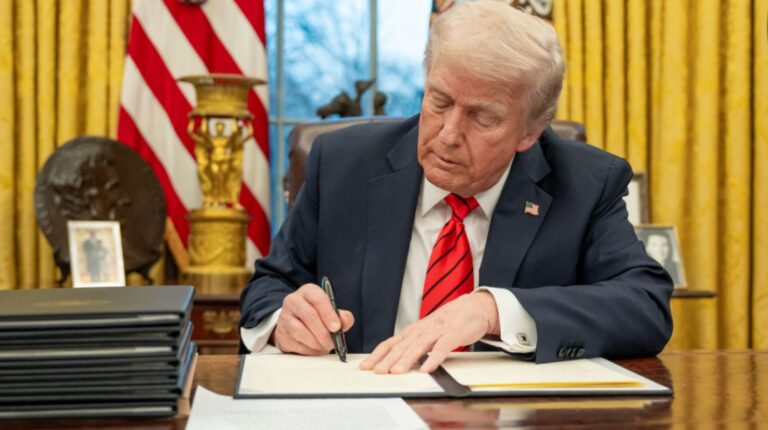
In an executive order signed by President Donald Trump on Aug. 7, 2025 financial institutions can no longer deny or restrict services based on political or religious beliefs or lawful business activities. This effectively grinds all payment providers’ attempts at censoring games on Steam in the US to a halt.
Whether this will affect these companies’ current iron grip on the gaming industry outside of the US remains to be seen. Visa and Mastercard threatened to withdraw their payment services on Steam and Itch.io following an emotional plea from Australian activist group Collective Shout, resulting in thousands of games being removed from their platforms.
When Trump signed the executive order into power he said: “The banks discriminate against conservatives, they discriminate against religion, because they are afraid of the radical left, I suspect,” and added “I’m not going to let them take advantage of you any longer.”
Jump to:
Operation Choke Point
Trump’s remark about banks fearing the radical left stems from Operation Choke Point, a well-documented initiative by the Obama administration, and its later 2.0 version under President Biden. Both these initiatives encouraged banks to stop their services with informal pressure from governmental regulators and threats of risks to their reputation from activists.
“As a result, individuals, their businesses, and their families have been subjected to debanking on the basis of their political affiliations, religious beliefs or lawful business activities, and have suffered frozen payrolls, debt and crushing interest, and other significant harms to their livelihoods, reputations, and financial well-being,” Trump said.
Even though executive orders issued by a US President do not carry legal weight in the same ways laws passed by the Congress and Senate, they serve as directives for how US federal agencies and departments operate and they may challenge how existing legislation should be implemented.
“Executive orders signed by a US president may on the face of it be limited to the goings on of the United States but they certainly have more far reaching circumstances in most cases in other countries too,” Sam Crich, a lawyer specializing in commercial and video game law at Eaton Smith Solicitors, told Eneba.
What Europeans Can Expect From Trump’s Fair Banking Act
The United States normally sets precedent for the rest of western economies around the world so to think that this executive order will not have any impact on what happens in the EU and UK is a bit premature. It is highly likely that it will have ripple effects across the pond.
“I can’t imagine that the banks will apply this decision only in the US as I don’t think they want to invite further EU regulation under circumstances where the US is likely the driving force behind their policies in the first place,” Crich said.
“That still doesn’t get around the fact that these institutions enforce terms and conditions on their customers which allow them to withhold services for any reason, it’s just that now such a decision risks breaching US law in a more direct way which usually equates to large fines.”
Activists Drew First Blood
As previously reported, Collective Shout reached out to the CEOs of several financial institutions with emotional claims about being linked to video games that promoted violence against women and girls. Visa and Mastercard quickly turned toward platforms like Steam and Itch who immediately removed hundreds of games, including games that had already been bought, and without refund.
This act of censoring video games was widely considered an overreach by the gaming community, which for a brief moment united across political and philosophical aisles to speak up against both Visa and Mastercard.
Steam went as far as adding a 15th rule to their terms and conditions governing what sort of content developers are allowed to upload on their platform.
“Content that may violate the rules and standards set forth by Steam’s payment processors and related card networks and banks, or internet network providers. In particular, certain kinds of adult only content,” it reads.
At the time of this writing, the 15th clause which was added as a result of pressure from financial institutions is still on their website in the US and in Europe.
“Whilst I don’t personally agree with the treatment of women as it is portrayed in some popular Japanese animated series, this is not something that should be dictated by corporations based in the west because that is a very slippery slope and this isn’t the right way to lobby for change in that regard,” Crich said.
 or
or