

Weekly Roundup: The Epic Woes of Fortnite, AI Eyesores, New Games!



Or maybe “AI-sores”, right? ANYWAY. It’s Friday once again, so here’s what video game industry news you need to know if you don’t know what news you need to know.
Jump to:
Fortnite Loses Devs, Industry Responds
The news has been dominated this week by Epic Games laying-off over 1,000 Fortnite devs, for two reasons: 1. This news came out of nowhere, even to the affected devs, and 2. It raises the question of “What counts as success in the live service sector?”
After all, Fortnite has long been considered something of a golden goose in terms of being one of the most successful live service games around: it’s that rare beast that, at least until recently, could not only grab players but retain them. Epic Games CEO Tim Sweeney said that, due to Fortnite losing players, Epic itself needs to lose staff as they simply can’t afford to keep them on. This confused a lot of the gaming public given Epic Games has managed to pay out $722 million to Fortnite creators via UEFN since 2023.
However, as we previously reported, the numbers back Sweeney up: Fortnite had around 650 million daily active users in 2024, but despite regular updates and constant celebrity crossovers, this number dropped last year to between 30 to 40 million. Even so, Sweeney also said that “What we now need to do is clear: build awesome Fortnite experiences with fresh seasonal content, gameplay, story, and live events,” so there’s clearly no intention of slowing down Fortnite content.
Affected devs took to social media to express their surprise and confusion, and others involved in the industry have also added their two cents. One of these is Emilee Kieffer, a digital artist who previously worked for PUBG Corporation, Kongregrate, and Humble Bundle. She recently posted on LinkedIn that “Tim Sweeney’s net worth is like $7 BILLION, how is he laying off people from Epic when he’s rolling in it?”
“Truly greed is truly destroying the game industry (honestly all industries). You could have the best looking, most popular, most played game out there and you’re still at risk because some lazy rich guy at the top decides that it’s not enough to make 10 million a year, they need to earn 20 MILLION!!!”
“These companies steal our passion and our creativity and our innovation and cram us into little boxes and tell us that we only get to be creative within the confines of capitalist intent to grow exponentially or else we’ll lose our jobs,” she added.
Chet Faliszek is another person who threw his opinion into the ring. A former Valve writer who worked on the likes of Left 4 Dead and Portal, Faliszek took to social media with his thoughts on the situation and Sweeney.
“Can someone explain this to me: why anybody who works at Epic should work hard? Cause Epic just laid off 1,000 people. And it’s gonna shut down Fortnite Rocket Racing, Ballistic and Festival Battle stage, whatever that is.”
“And so Tim has gone from making games to making one game, spending all his time doing that and trying to make as much money as possible,” he added. “I worked my ass off at Valve, and I cared about the things I made, and I cared about the people I worked with so much.”
“Would I do that at Epic if they’re gonna treat me like that and just have layoffs like that and just act the same way [as EA]? Like, ‘Hey, great job, made Battlefield 6, we dethroned Call of Duty: here’s a pink slip.’”
Fortnite’s Producer, Robby Williams, responded to the job cuts on X with “Our teams will have to pick up the pieces and try to keep moving forward but we cannot even fully understand what kind of impacts this will have on the game for the rest of the year and likely beyond.”
Yesterday, Fortnite’s Senior Community Manager, Michael Hogman, posted about the game’s future on X: “Reallyyy long week so far but here’s my attempt at a positive note. Today’s company meeting reminded me why I still choose to work here. The horizon of Fortnite holds much more than what can be seen (and leaked lol) for now. TYSM for your care and support, we won’t waste it!”
Highguard Dev Finds New Job
It’s not all bad news on the job front: after live service game Highguard died a death recently, Wildlight Entertainment has apparently shut its doors completely. However, the Principal Environment artist for Highguard, Derek Bentley, shared news on Wednesday that he’d been, fittingly, rehired by Respawn to once again work on Apex Legends (many of the Wildlight team worked for Respawn before jumping ship).
“I’m back, baby,” Bentley posted on X. “This week, I joined back up with my old team at Respawn, with Apex. I’m unbelievably stoked to be coming back, this time as a Principal Environment Artist, focusing almost entirely on making some extremely cool art, probably mostly rocks.”
Tech Costs Continue to Skyrocket
Meanwhile, price hikes continue to plague the industry as major RAM manufacturers like Samsung, SK Hynix, and Micron, shift their focus from consumer products to AI systems. For example, Sumit Sadana, EVP and Chief Business Officer at Micron Technology said back in December: “The AI-driven growth in the data center has led to a surge in demand for memory and storage.”
“Micron has made the difficult decision to exit the Crucial consumer business in order to improve supply and support for our larger, strategic customers in faster-growing segments.”
Crucial was a major player in the DIY PC scene as it supplied budget-friendly RAM kits and SSDs. Its dissolution has been accompanied by other PC-orientated companies, like Raspberry Pi and Framework, hiking prices to cover the raised cost of consumer components. Other big companies, including Acer, Dell, and Asus, have also warned of upcoming price increases.
One of the latest companies affected is AYANEO, creator of high-end handheld gaming devices. It started this week with a news post announcing the suspension of its recent NEXT 2 handheld, which was being sold for around $4,000.
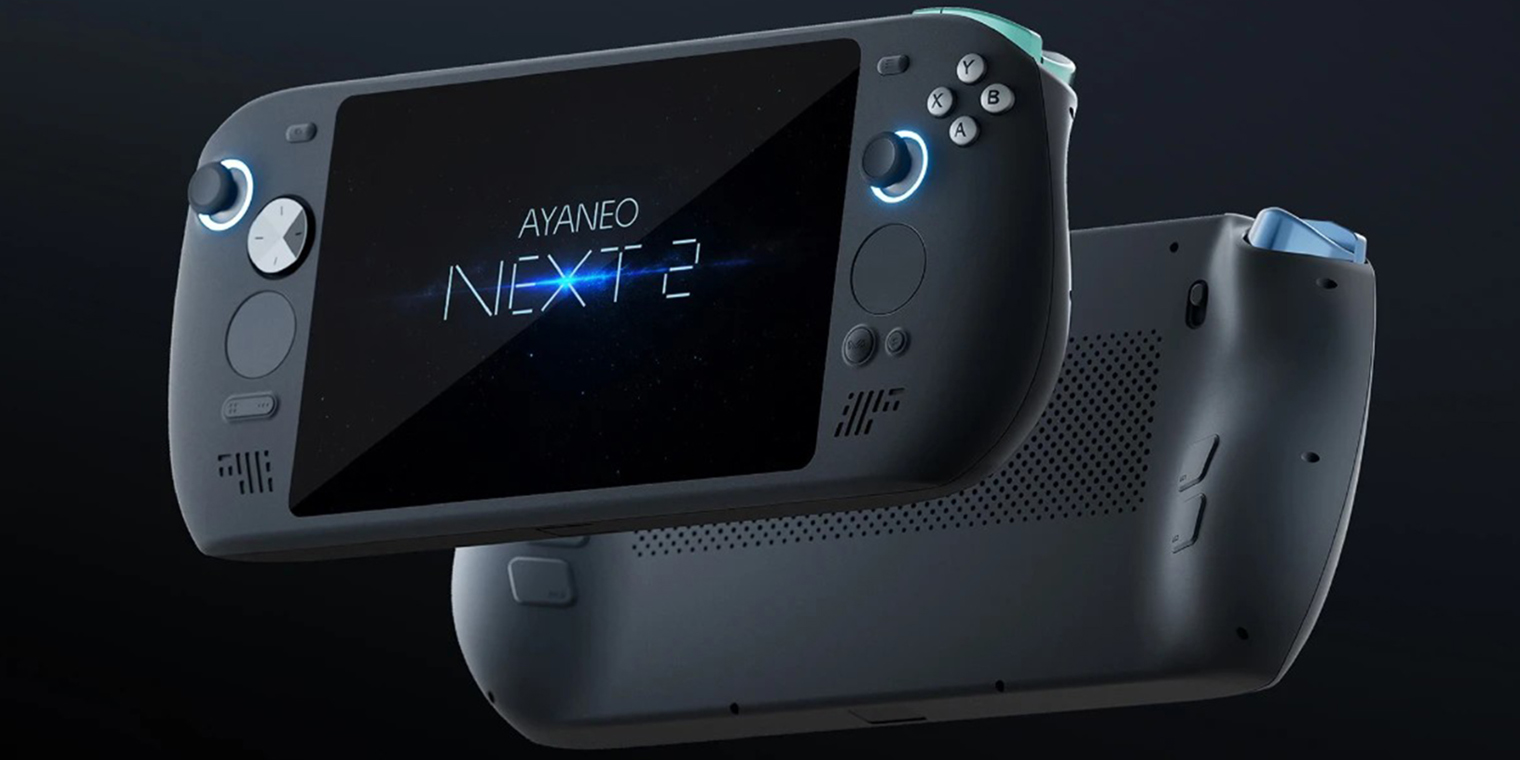
“When we launched NEXT 2, storage prices were already at a very high level. At that time, we were already under significant cost pressure. However, considering that many AYANEO fans had been looking forward to this product for a long time, we still decided to release it as planned and open pre-orders so as not to disappoint our supporters.”
“However, after the Chinese New Year, when we communicated with our suppliers again to confirm the latest storage procurement prices, we found that storage prices had increased to several times higher than before the holiday,” AYANEO added. “At present, the total cost of the product has far exceeded our selling price, even approaching twice the price we originally set. Under such circumstances, continuing to sell this product is no longer sustainable.”
The company confirmed that those who already backed it through a recent Indiegogo campaign will still receive a NEXT 2, and that production overall is only being suspended, not cancelled.
AI in the Industry
AI in game development continues to be a hot topic, with a few major game releases courting short-lived controversy this week. First up, the recently released “single player MMO” Crimson Desert, from Pearl Abyss (Black Desert), drew ire from gamers for its use of AI-generated artwork in-game. Pearl Abyss responded via the official Crimson Desert X account on Sunday.
“During development, some 2D visual props were created as part of early-stage iteration using experimental AI generative tools. These assets helped us rapidly explore tone and atmosphere in the earlier phases of production.”
“Following reports from our community, we have identified that some of these assets were unintentionally included in the final release. This is not in line with our internal standards, and we take full responsibility for it.”

Following Resident Evil Requiem’s spotlight in terms of NVIDIA’s more-controversial-than-it-needs-to-be DLSS 5 tool, CAPCOM recently fielded questions during an investor session about its use of AI.
“Our company will not implement the materials generated by our AI into game content. However, we plan to actively utilize this technology to improve efficiency and productivity in the game development process. Therefore, we are currently exploring ways to use it in various areas, such as graphics, sound, and programming.”
Another Xbox Showcase
The Xbox Partner Preview grabbed eyeballs on March 26 as it included reveals of multiple anticipated games, as expected. It also highlighted a few new games with AI use, like upcoming sci-fi RPG The Expanse: Osiris Reborn by Owlcat Games. As with Pearl Abyss, Owlcat said that the company uses AI assets “for prototyping, trying things out, placeholders. They will all be replaced at the end.” Hopefully they’ll remember to remove them at launch, though.
Other than The Expanse, Hades II returned with a fresh look at its fast-paced roguelike combat and evolving narrative. A darker tone came through with S.T.A.L.K.E.R. 2: Heart of Chornobyl, showing more of its atmospheric survival gameplay, alongside the reveal of action-adventure Stranger Than Heaven, which takes place over 1915, 1929, 1943, 1951, and 1965. Other appearances included a mix of action, narrative, and experimental titles, including the unexpected return of Serious Sam. Well, multiple Serious Sams.
Indie and smaller-scale projects got a look-in, too with games blending genres like platforming, puzzle-solving, and narrative exploration. Several games emphasized unique art directions or unconventional mechanics, like The Eternal Life of Goldman, reinforcing variety rather than scale, while some previously-released titles were confirmed for Game Pass (like Dispatch).