


Slay the Spire Tips: Master Deck‑Building, Path Planning & Character Synergy


Getting some actionable Slay the Spire tips is essential before you start the game.When I first tried it, I assumed more cards meant more power. My deck ballooned, I drew the wrong cards at the wrong time, and every boss punished me.
Only after dozens of failed runs did I realize that success lies in careful curation and planning. In this guide, I’ll share some pointers that helped me turn frustrating losses into consistent climbs. I’ll show you how to build a lean, focused deck, map your path with intention, and understand how each character’s strengths shape your choices. By sticking to these principles, you’ll improve your odds without relying on luck.
Jump to:
Slay the Spire Tips: Core Principles for Building a Winning Run
The most important lesson I learned is that small, synergistic decks perform better than large, unfocused piles of cards. Skip cards that don’t fit your plan and remove basic Strikes and Defends whenever you can. During a Silent run built around poison, I kept my deck under fifteen cards. Because I removed extra attacks and blocks, I drew Noxious Fumes and Catalyst together more often, doubling poison and melting elite enemies.
Beyond deck size, early relics are key. Elites drop relics that give permanent bonuses, and Act 1 elites are easier than they look. Plan your route to fight two or three of them before the boss, using campfires to heal or upgrade a critical card like Neutralize or Zap. Upgraded cards and relics amplify each other; a single relic that boosts strength or draw can turn a mediocre deck into a powerhouse. For more genre inspiration, our guide to the best deck‑building games explores how other titles use similar relic systems and may give you ideas for new strategies.
Smart pathing matters just as much as what’s in your deck. Every map offers branching routes filled with enemies, elites, campfires, shops, and events. Look ahead and choose paths that match your situation. If you’re healthy and confident, pick routes with elites and question‑mark rooms for more relics and events. If you’re hurt or have an uncertain deck, steer toward campfires to heal or upgrade instead. Question marks can hide treasures, card removal events, shops, or tough fights, so weigh the risk versus reward based on how strong your deck feels.
Potions and relics often sit unused; use them proactively. You can hold only three potions, so drink them during elite fights or bosses. A Weak Potion can halve a boss’s attack, while a Duplication Potion doubles your best card. Relics, especially those offered after bosses, can reshape your strategy. Snecko Eye randomizes card costs but grants two extra draws each turn, making high‑cost cards attractive. Coffee Dripper gives extra energy each turn but prevents resting; pick it only if you’re confident you can generate block or healing from other sources.
Finally, remember that it’s okay to skip card rewards. Ask yourself whether the card enhances your current plan, fills a gap (like area‑of‑effect damage), or solves a weakness (such as lack of block). If not, say no. Passing on cards keeps your deck lean and increases the chance of drawing your best combinations when you need them.
Character Advice: Play to Each Hero’s Strengths
Each of the four characters offers a different style. Drafting with their strengths in mind keeps your deck focused instead of scattered.
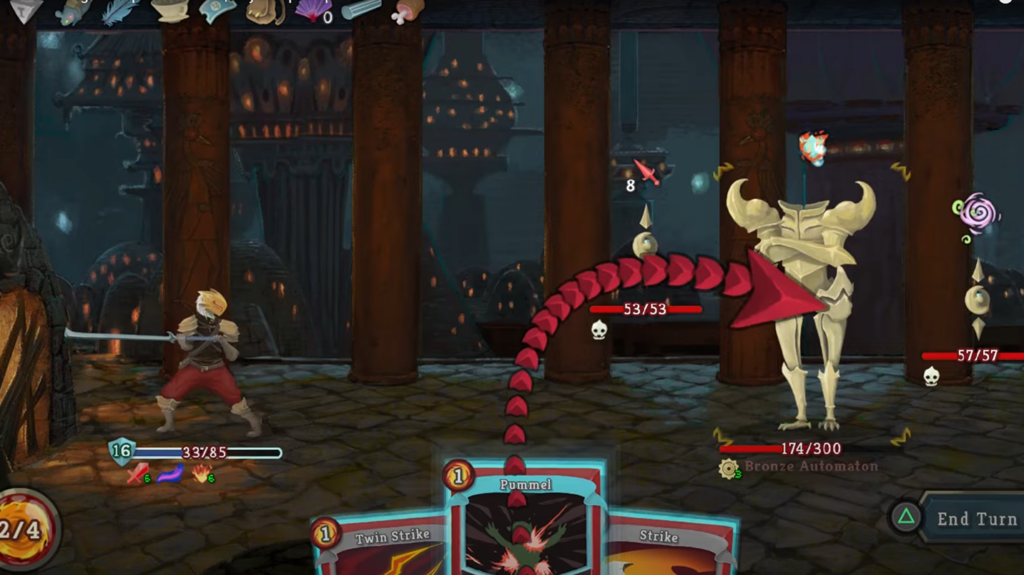
Ironclad excels at strength scaling and exhaust synergies. His starting relic heals six health after every fight, letting you trade health for damage early on. For strength decks, pick cards like Inflame, Spot Weakness, and Demon Form, then pair them with multi‑hit attacks such as Sword Boomerang or Heavy Blade. For exhaust decks, cards like Feel No Pain grant block whenever you exhaust a card, while Dark Embrace draws cards when you exhaust. Combine these with Burning Pact or Evolve to churn through your deck and keep damage and defense flowing.
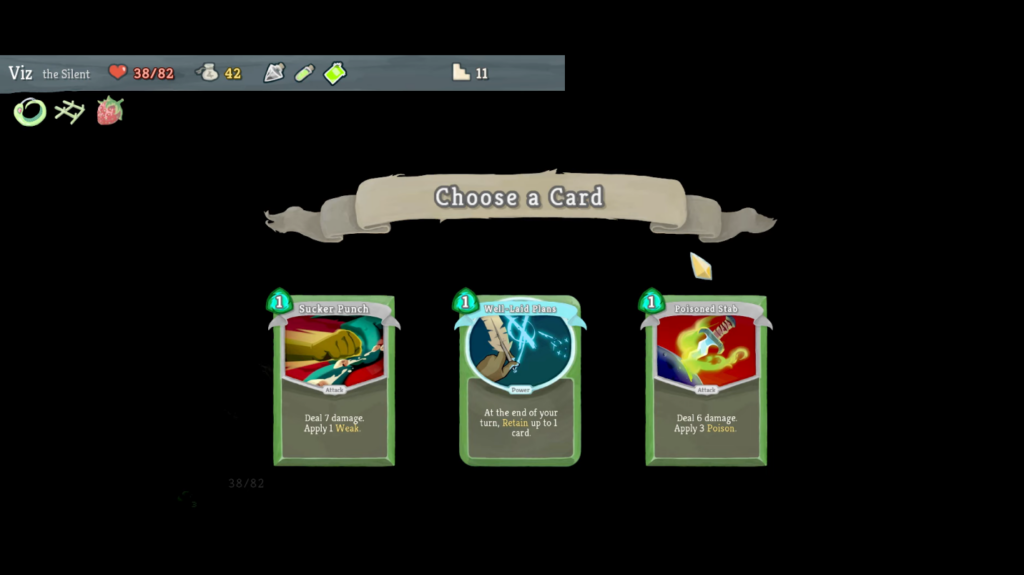
Silent rewards committing to either poison or shivs. Poison decks rely on Noxious Fumes, Deadly Poison, and especially Catalyst to stack and multiply poison. Upgrading Catalyst can end boss fights in two turns. Shiv decks focus on generating free attacks with Blade Dance, Cloak and Dagger, and Infinite Blades. Accuracy boosts shiv damage, and After Image grants block whenever you play a card. Footwork and Leg Sweep provide defensive backbone in either archetype. Mixing poison and shiv cards usually dilutes both strategies, so pick one early and stick to it.
Defect channels orbs (Lightning, Frost, Dark, and Plasma) and needs Focus to make those orbs powerful. Lightning builds shine with Electrodynamics, Ball Lightning, and Storm, filling your slots and damaging all enemies. Frost builds use Glacier and Cold Snap to channel Frost and keep your block high; Blizzard scales with the number of Frost orbs you’ve channeled. Dark orb strategies rely on Darkness and Consume to build huge delayed damage. Powers like Echo Form and Creative AI can create infinite loops but require careful energy management. Seek relics like Data Disk (+1 Focus) or Frozen Core to reinforce these builds.
Watcher balances three stances: Calm (gain energy when you exit), Wrath (double damage dealt and received), and Divinity (triple damage). A safe starter build centers on entering Wrath with Crescendo or Eruption, unleashing powerful attacks, then dropping back into Calm with Tranquility or Fear No Evil to gain energy. Scry and retain decks use Foresight and Evaluate to order your draws, while Pressure Points builds stack a unique debuff that explodes for damage. Always include reliable block cards such as Third Eye, Wallop, or Like Water, and remember to exit Wrath before enemies attack. For more games that capture this depth of strategy, explore our list of games like Slay the Spire that offer similar tactical twists.

Advanced Strategies for High Ascension
Once you can beat the Act 3 boss consistently, high ascension levels and Act 4’s secret boss (The Heart) present new challenges. Scaling damage and block becomes essential because late‑game enemies grow stronger each turn. Strength decks rely on cards and relics like Demon Form and Girya. Poison stacks infinitely, making it excellent for bosses with large health pools. Frost decks need a way to convert block into damage, such as an upgraded Blizzard. Cards like Buffer or Wraith Form provide temporary immunity, buying time to scale up.
Learning enemy patterns is vital. Each foe telegraphs its next move with an icon: a sword for attack, an armor icon for block, and so on. Recognize these cues to decide when to block or push damage. On higher ascensions, mistakes are costly. For example, the Gremlin Nob alternates between a heavy attack and Enrage, gaining strength when you play many skills. Knowing this, you can limit skill plays during Enrage turns. The Snecko confuses your deck by randomizing card costs, so save your expensive cards until you see their new cost.
Act 4 requires planning. To access it, collect three keys: one from a burning elite, one by forgoing a campfire upgrade, and one from an Act 2 boss chest. The Heart punishes decks that play too many cards with its Beat of Death effect, so infinite loops become dangerous. Focus on burst damage and block, and don’t be afraid to use potions. For fresh ideas on roguelite design, our roundup of the best roguelite games shows how other titles handle scaling and replayability.
Looking Forward: Preparing for Slay the Spire 2
Mega Crit has announced Slay the Spire 2 for release in 2025, promising new characters and mechanics while keeping the deck‑building core intact. The sequel is likely to expand on the strategies outlined here: build small decks around clear synergies, collect relics that support your plan, and adapt to unpredictable events. As you refine your skills in the original game, you’ll be ready for whatever challenges the next spire throws at you. If you want to explore similar experiences now, our list of the best roguelike games highlights titles that blend strategy and randomness in creative ways.
Climb the Spire With Confidence
Winning in Slay the Spire isn’t about luck – it’s about thoughtful decisions. Keep your deck lean, fight early elites for relics, plan your path based on your health and deck strength, and choose cards that support a clear strategy. Lean into each character’s strengths, learn enemy patterns, and use potions and relics to turn tough fights in your favor. When you’re ready to put these tips into practice, pick up a Slay the Spire game key. With these strategies, you’ll climb higher and enjoy the journey along the way.
FAQs
What are the best tips for Slay the Spire beginners?
To get good at Slay the Spire, keep your deck small, choose cards that fit a clear plan, and fight elites early to gain powerful relics. Planning your route on the map and removing weak cards will make your strongest combos show up more often.
Should I pick every card in Slay the Spire?
No, you shouldn’t pick every card in Slay the Spire. Adding too many cards dilutes your deck and makes it harder to draw key combos. Only take cards that strengthen your strategy or cover a specific weakness.
Which character in Slay the Spire is easiest for new players?
The easiest character for beginners is Ironclad because his starting relic heals six health after each battle and his strength‑based cards are straightforward. This allows you to recover from mistakes while learning the game’s mechanics.
How do I beat the final boss in Slay the Spire?
To beat the final boss, build a deck that scales damage or block, manage your potions, and upgrade key cards before the fight. Focus on cards and relics that provide sustained power, such as strength boosts, poison stacking, or orb generation, and ensure you have enough block to survive multi‑hit attacks.
Is fighting elites early worth it?
Yes, fighting elites early is usually worth it because they drop relics that make the rest of your run easier. Act 1 elites are less dangerous than later ones, so tackling them when your deck is small often sets you up for success later on.