

PUBG: Battlegrounds Review – Still a Top Battle Royale Contender

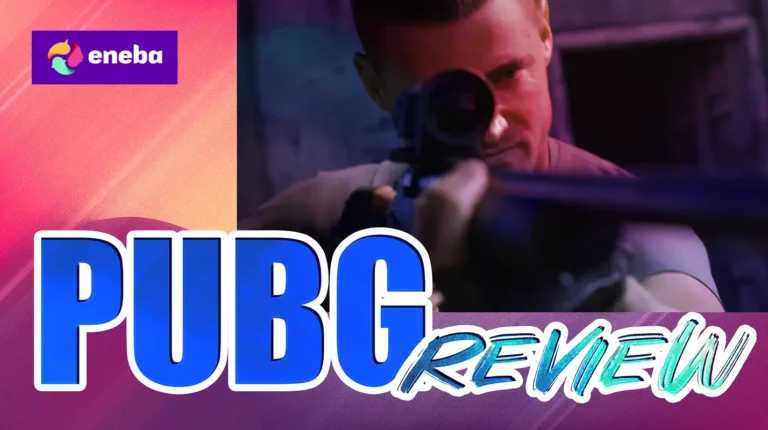
Despite approaching its nine year anniversary, PUBG: Battlegrounds remains a vital and worthwhile multiplayer game. Arguably the foundation for many battle royales that followed, PUBG is the perfect jumping on point for new players and has a lot to offer experienced gamers, too.
| Our score | 8
☆
★
☆
★
☆
★
☆
★
☆
★
☆
★
☆
★
☆
★
☆
★
☆
★
|
| Released | March 23, 2017 |
| Developer | PUBG Studios |
| Publisher | Krafton |
| Platforms | Android, PC, iOS, Xbox Series X|S, PS5 (reviewed) |
Jump to:
PlayerUnknown, Known
Initially created by Brendan “PlayerUnknown” Greene, PUBG started life as PlayerUnknown: Battlegrounds way back in 2017. Greene was best known for his DayZ battle royale mod, and subsequent H1Z1 battle royale, both of which helped land him a job at a Korean studio, Bluehole. This was soon renamed PUBG Corporation and spawned PUBG: Battlegrounds as we know it today.
PUBG has since proved itself popular with gamers and esports players across multiple platforms (it was also the fourth most popular streamed game on Twitch at the start of 2025), but in a world of Battlefields, Fortnites, and a million different Call of Duties, PUBG has to work a little harder to stand out in the field it helped cultivate.
That’s where my review comes in – I’ve taken a deep dive into PUBG to see if it still feels fresh, so pick your loadout and parachute in with me!
Free to Play, Not Pay to Win
It doesn’t hurt that PUBG update 39.1 recently went live, turning the classic Erangel island map into a frozen wasteland. This freshens up the gameplay for returning players, but also acts as a nice introduction to newbies as to what sort of things they can expect from the game.
If you are new to PUBG, or even battle royales in general, the gist is this: each map has up to 100 players on it, and it’s simply a case of being the last one standing. Ideally, by eliminating anyone you see. PUBG: Battlegrounds mixes things up with a few different game modes that are unlocked after completing basic training, and are found via the somewhat cluttered main menu.
This breaks the game down into several sections: Play, Pass, Career, Customize, Hideout, Workshop, and Store. There are also extra menus for things like Daily Check-In Rewards, tutorials, news, and so on. Play is where the action is, and I’ll dig into available game modes (and important caveats) in the next section.
First, though, I recommend anyone explore the various sections. Pass is what it sounds like, as it unlocks rewards through gameplay (eg. deal 120 damage to enemies within one match), and there’s a Premium version with better (cosmetic) rewards. Career is where you’ll find all your ranking info and player stats. Customize lets you tweak your character however you see fit, but keep in mind initial options are severely limited to six faces, two t-shirts, nine haircuts, and six colors across male and female body types.
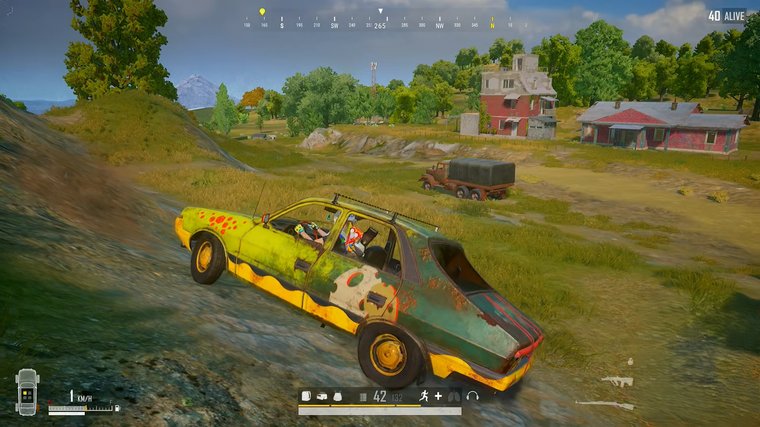
PUBG: Battlegrounds is free-to-play, so more customization options are found in Chests and Contraband lockers, among other places. These main item-drops are under the Hideout tab; Chests are opened with keys and unlock item skins, which in turn need to be made actually usable via Credits. Contraband can be opened with coupons, and often reward Scrap, or other in-game currency, which is then used to craft items under the Workshop tab.
This is all part-and-parcel of F2P titles, but new players can safely ignore a lot of this at the start and just jump into a game. And to be fair, the only in-game currency you’d need to spend real money on is G-Coins, which can also open Contraband. Otherwise, missions reward a lot of stuff, and anything you “buy” in-game is cosmetic to keep everything on a level playing field (Contraband lockers can reward Epic rarity loot on occasion – I managed to get a pretty snazzy rifle skin after opening five lockers).
One Hundred Enemies
The Play tab hides the various game modes: Normal, Ranked, Arcade, Training, and Custom. Ranked and Custom matches are only available to Plus members; this is PUBG’s special membership that unlocks extra items and in-game medals. There’s even an esports game mode under Plus membership, which makes sense given that PUBG: Battlegrounds is still considered one of the best esports games around.
The good news is that there’s still a lot of content available for free. So if you don’t want to bone up on a PUBG: Battlegrounds esports guide and just get to the good stuff, you’ll have to complete basic training before anything else unlocks. However, this only took me about five minutes so it’s quick and easy to blast through.
Speaking of blasting, weapons have the right amount of audio and visual kick, from rifles to grenades, and the player moveset includes the ability to vault over obstacles. Player movement does feel a little floaty when compared to newer multiplayer games like the PvPvE-focused ARC Raiders, but I do appreciate that it’s possible to change shoulder when aiming.
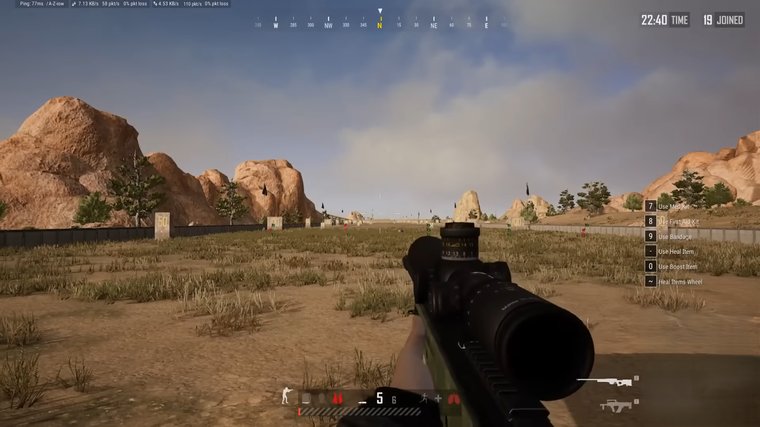
Matches can also be played in either TPP (Third-Person Perspective) or FPP (First-Person Perspective) to suit a more defensive play-style or a gung-ho approach. I’m a little bit of a coward so I prefer TPP, as I prefer the chance to run away from someone creeping up on me. FPP is more immersive, though.
Arcade mode has a 16 to 20 player Intense Battle Royale option, as well as an eight-versus-eight Team Deathmatch, but the main order of the day is 100 players in a massive free-for-all. Normal matches can be played solo or in teams of up to four, and there’s even the option to make sure you’re put with people who speak the same language. Real team players can even join and start Clans, although this is also only available through Plus.
Fight to Survive
I reviewed PUBG on PS5, and while the PC version is arguably better for performance, console gamers get cross-platform matchmaking so there’s never any shortage of players. Normal matches start with players parachuting onto either a randomly-chosen or selected map. There are 10, although they tend to be limited to five at a time. This rotation keeps things feeling fresh, but the downside is that your preferred map might not be as available as you’d like.
These include the sandy mesa of Miramar to the near-future city of Deston, but I like the newest map, Rondo, as it surprised me with Eastern Asian architecture and geography. I parachuted into an abandoned farm, geared up, and then found myself creeping through dense bamboo around a lake. This was also one of my most ignoble defeats as I decided to charge another player whose head kept popping up from behind a pagoda, only for my ammo to run out before I reached them.
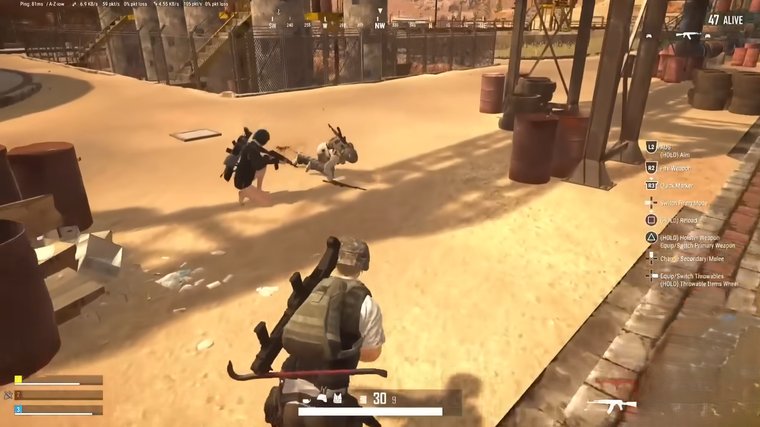
PUBG does encourage different playstyles, and usually I’m the more cautious type. I sometimes like to risk it by landing at a remote location as I found these can hide really cool items; one match had me discover a rocket launcher within a minute of landing. The risk comes into play once the designated play area begins to shrink. This starts small and every few minutes grows smaller still, forcing campers and cowards like me to run like hell towards the main area.
Anyone caught outside it gets zapped by a “Blue Zone” which inflicts small, but constant, damage. I made the mistake of trying my “start remote, work slowly inland” tactic on the new frozen Erangel map (which has a freezing effect) and died before I even saw another player. I did still somehow manage to outlive 65 of them so it wasn’t all bad news.
The Nuts and Bolts of PUBG: Battlegrounds
Loot drops in matches are largely randomized (that farm with the rocket launcher? I never found it there again), with a strong emphasis on early-game scavenging for resources. It’s this focus on grab-what-you-can-and-hope-for-the-best that defines PUBG over the majority of its competitors, coupled with a firmer grounding in relative realism (you won’t find the chaotic absurdity of Fortnite here).
Case in point: the weapons largely skew realistic, with guns ranging from assault rifles to pistols, alongside melee weapons like the game’s iconic pan. Smoke bombs and molotov cocktails are two examples of throwable weapons, with some special weapons like a crossbow occasionally available; altogether there are just over 70 weapons to choose from.
There are even almost 30 vehicles to commandeer, from bicycles to camper vans, UAVs, snowmobiles, and airboats to a motor glider. They might leave fans of driving games a bit annoyed at their general handling, but as an added way to get around maps (some of which are a generous 8x8km in size) they do the job.
My Final Verdict: PUBG Continues to Stand Out in the Battle Royale Genre
PUBG: Battlegrounds might see more potential successors appear every year, but it’s in no danger of being surpassed as one of the best battle royale games just yet. Between its regular collaborations (including a recent crossover with Dying Light: The Beast) and Krafton rolling out new versions (PUBG: Black Budget is coming soon), PUBG: Battlegrounds continues to shine.
Granted, its graphics aren’t as stylish or slick as more modern battle royales, and some players may find the lack of exotic weaponry disappointing, but the core PUBG: Battlegrounds experience remains an exhilarating gateway into battle royale games.
————–
PUBG: Battlegrounds
The original battle royale
| Pros | Cons |
|---|---|
| ✅ Large, varied maps ✅ Intense matches with an ever-shrinking play area ✅ Console players get cross-platform matchmaking | ❌ Graphics are starting to show their age ❌ Realistic weapons may disappoint players used to modern battle royales |