

15 Best Red Cards in MTG in 2026: Burn, Crush, and Rush

Eneba Hub contains affiliate links, which means we may earn a small commission if you make a purchase through them—at no extra cost to you. Learn more

The best red cards in MTG aren’t limited to early aggro and burn spells. Red can choke greedy mana bases, create explosive turns, copy powerful creatures, and even use the graveyard as fuel. It’s much more strategic than people give it credit for.
Check my 15 go-to red cards. They let me dictate the game’s flow, punish mistakes, and make unforgettable turns.
Jump to:
Best Red Cards in MTG for Explosive Plays
Red prints plenty of chaos, but only some cards hold up across formats. These are the best red cards in MTG that still show up at real tables.
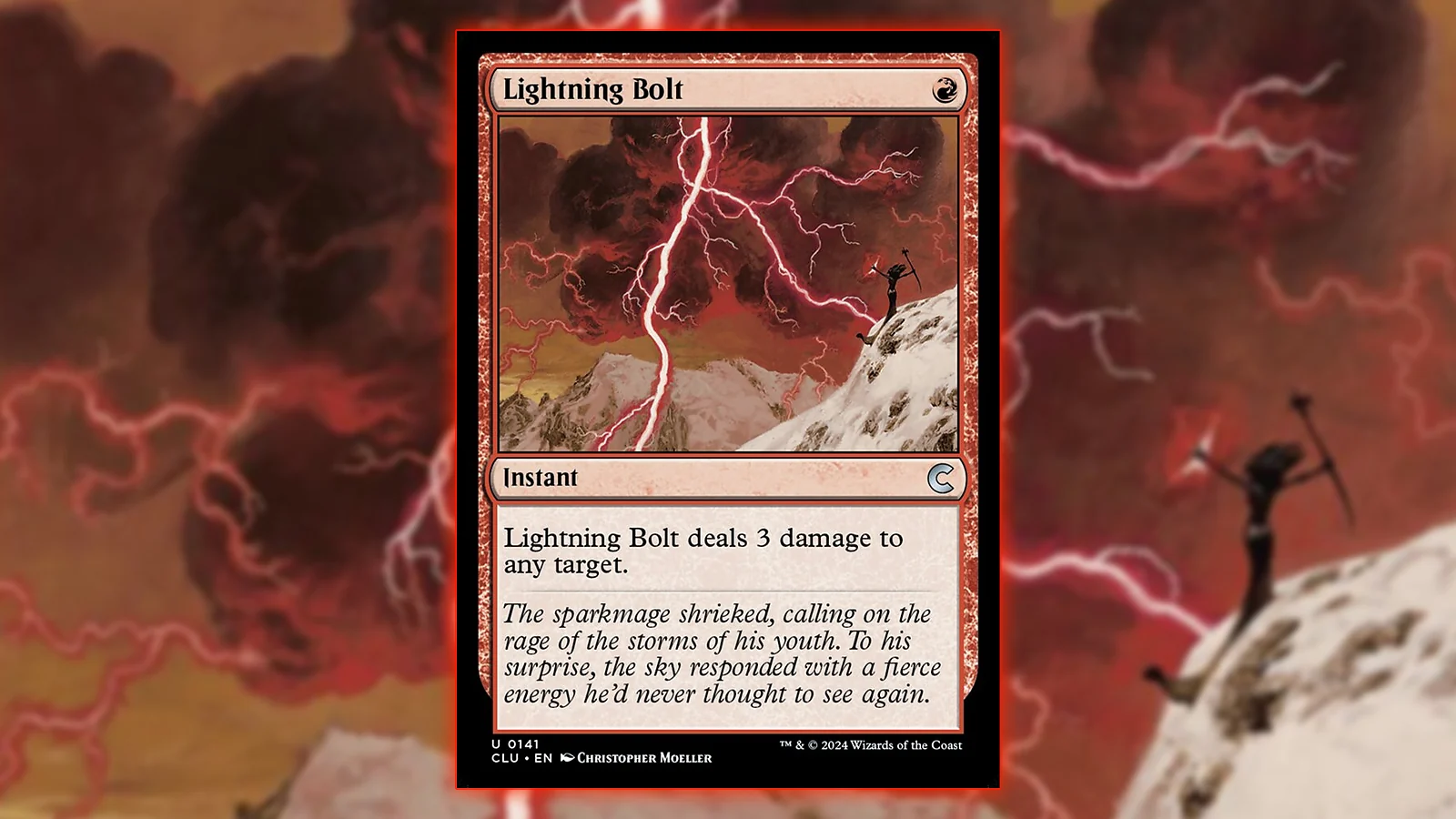
1. Lightning Bolt [The Most Iconic Burn Spell]
| Element | Details |
|---|---|
| Mana Cost | R |
| Card Type | Instant |
| Primary Role | Direct damage spell |
The classic Lightning Bolt is one of the best red cards in MTG, hands down. It’s great for anything from burning early mana dorks to slowing down planeswalkers.
It’s one of the original cards printed for the game, and it still sees play today because of its efficiency and respectable damage. An easy MTG Commander staple that can go anywhere, as long as you’re shuffling red.
3 damage for 1 mana is a great deal, and it’s seen as one of the most powerful removal cards in the game.
Lightning Bolt is one of the most iconic red spells that’s easy to slot into any applicable burn deck. It’s such a flexible card that you can use it as a closer or just keep it around for early headaches like Esper Sentinel.
2. Wheel of Fortune [Disruptive Hand Refill]
| Element | Details |
|---|---|
| Mana Cost | 2R |
| Card Type | Sorcery |
| Primary Role | Disruption and hand refill |
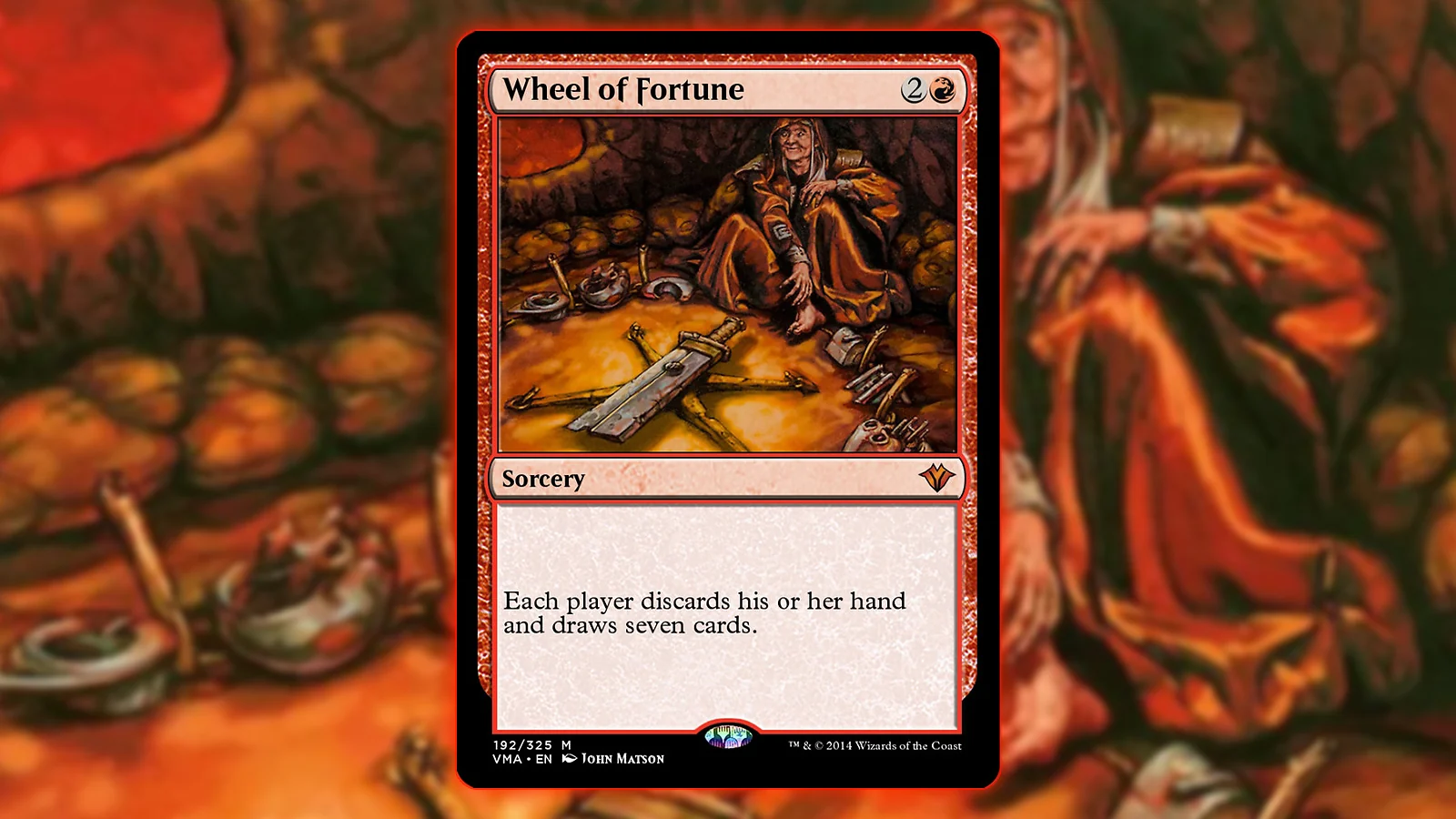
Wheel of Fortune is one of your best tools for drawing cards and punishing your opponent at the same time. It guarantees a hand of 7, which is essentially a much-needed refill for an archetype that can quickly empty its hand.
Card draw is hard to come by in a red deck, and Wheel of Fortune gives you that while also inciting a bit of chaos with its discard effect.
This is a worthy addition to decks that punish other players for drawing cards, like ones that run Nekusar, the Mindrazer with other wheel effects. It helps you find more fuel and punishment while raining damage on your opponents.
3. Dockside Extortionist [Explosive Treasure Token Engine]
| Element | Details |
|---|---|
| Mana Cost | 1R |
| Card Type | Creature |
| Primary Role | Fast mana generation |
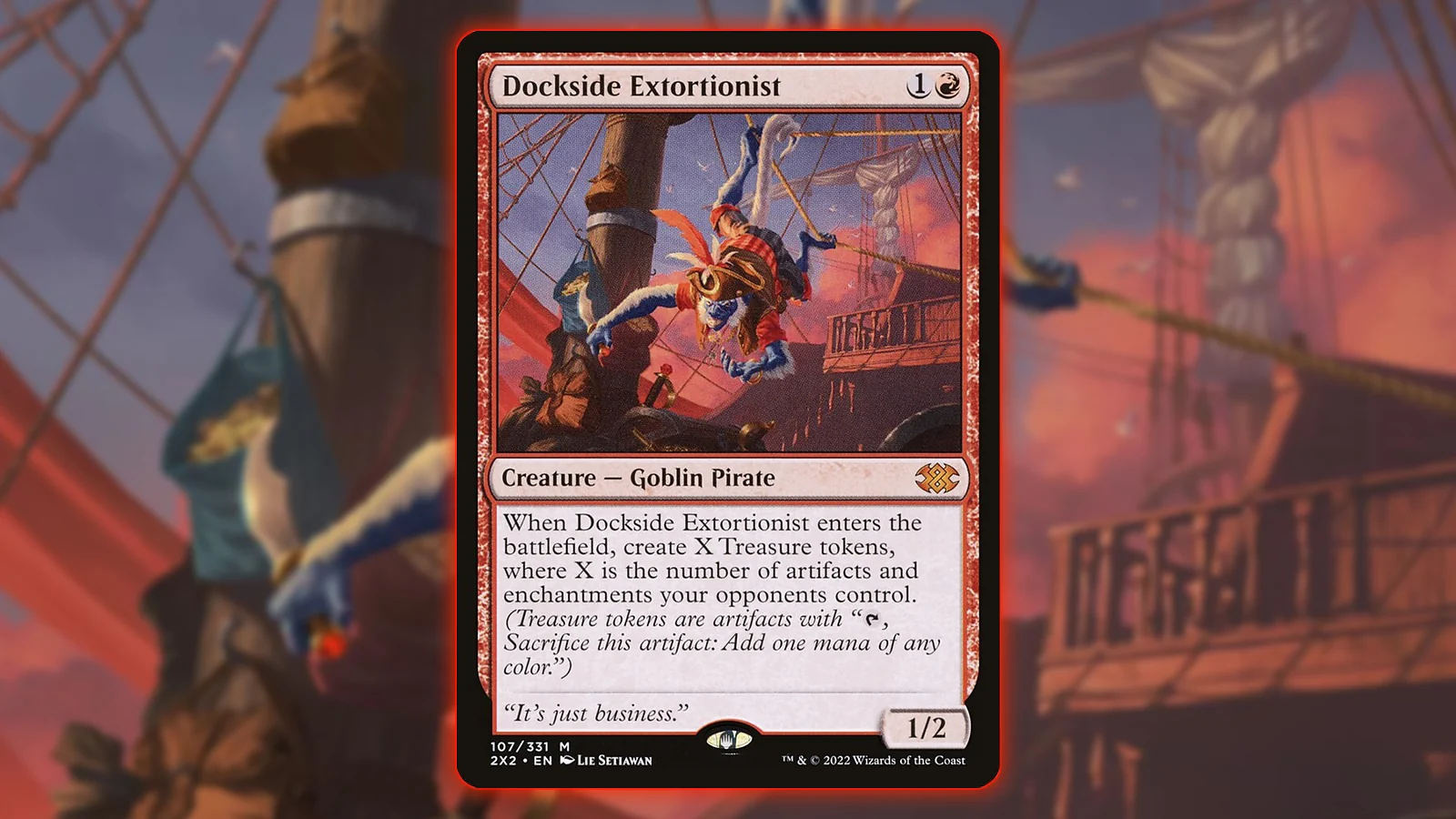
Dockside Extortionist is one of the best MTG cards for Commander (at least, it was). People used it to print mana basically, which got it banned.
It’s still a beast for casual Commander games if your playgroup allows it. It’s not as useful in other formats where players may not be running artifacts or enchantments.
For a 2-drop, its ability is incredibly powerful and only brings more value as the game progresses.
It’s good at helping you ramp if you have ways to keep reactivating its ability. The card can shine in pretty much any casual Commander deck that runs red, as it practically pays for itself (and then some) most of the time.
4. Underworld Breach [The Strongest Graveyard Combo Enabler]
| Element | Details |
|---|---|
| Mana Cost | 1R |
| Card Type | Enchantment |
| Primary Role | Graveyard combo engine |
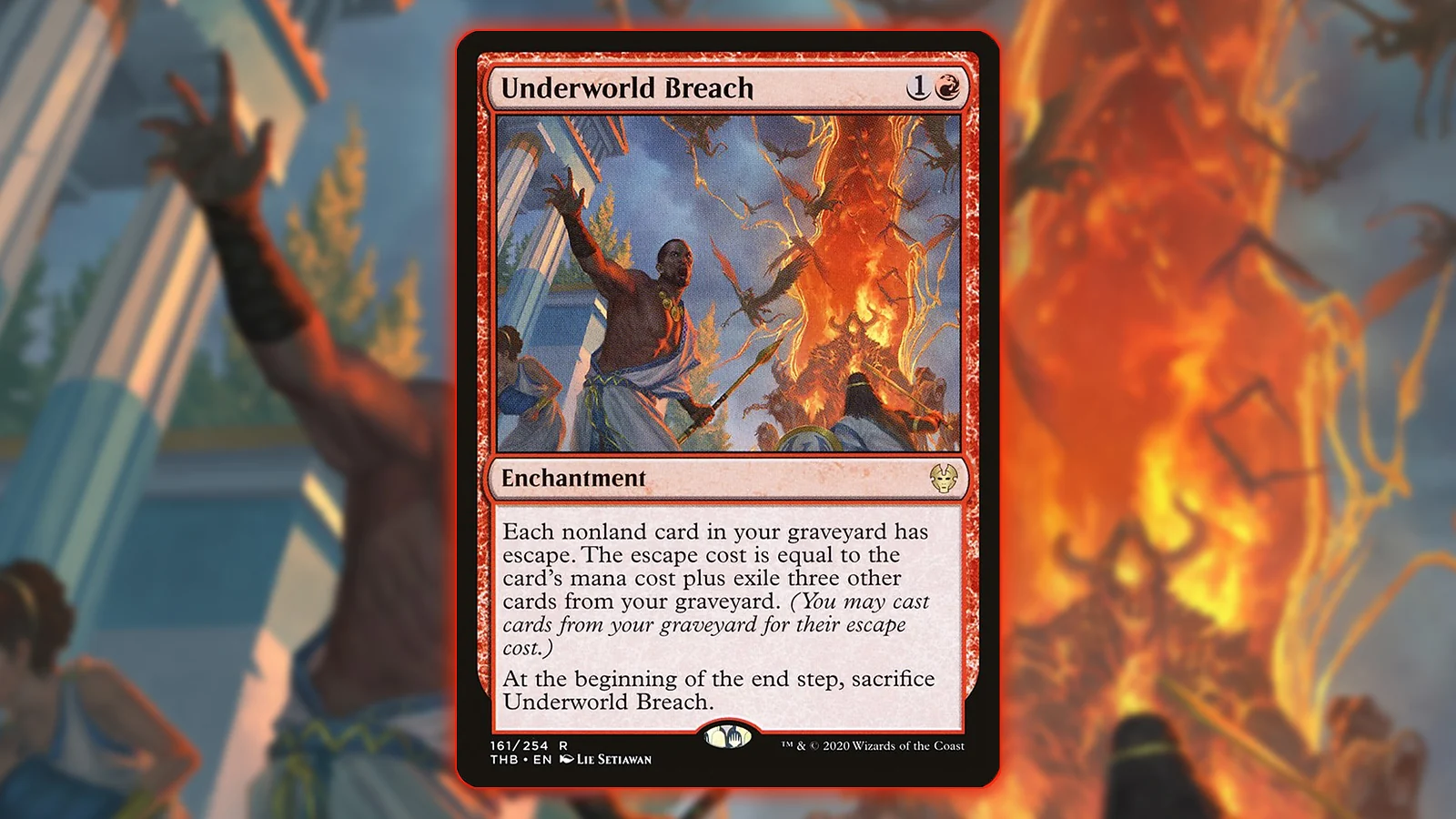
Underworld Breach turns your graveyard into a second hand for a turn. Every nonland card gets Escape, which means you can keep casting spells from the graveyard as long as you have cards to exile.
That ability gets out of control fast in decks that fill the graveyard naturally. Cheap spells, rituals, and draw effects suddenly become repeatable resources. With enough fuel, a single Breach turn can spiral into a full combo chain. Players often look for ways to maximize these recurring threats by checking out the top Auras in MTG to see which ones provide the best utility when cast from the bin.
It converts a stocked graveyard into explosive potential. Underworld Breach has powered some of the strongest combo turns in recent years, which is why it ended up banned in multiple formats.
This card is widely considered among the best enchantments in MTG because it offers an unparalleled level of recursion for a minimal mana investment.
One common line involves looping Wheel of Fortune with mana generators like Jeska’s Will, repeatedly refilling your hand while producing the mana needed to keep escaping spells. Once the engine starts, it’s easy to snowball into a win.
5. Blood Moon [The Ultimate Greed Punisher]
| Element | Details |
|---|---|
| Mana Cost | 2R |
| Card Type | Enchantment |
| Primary Role | Mass mana denial |
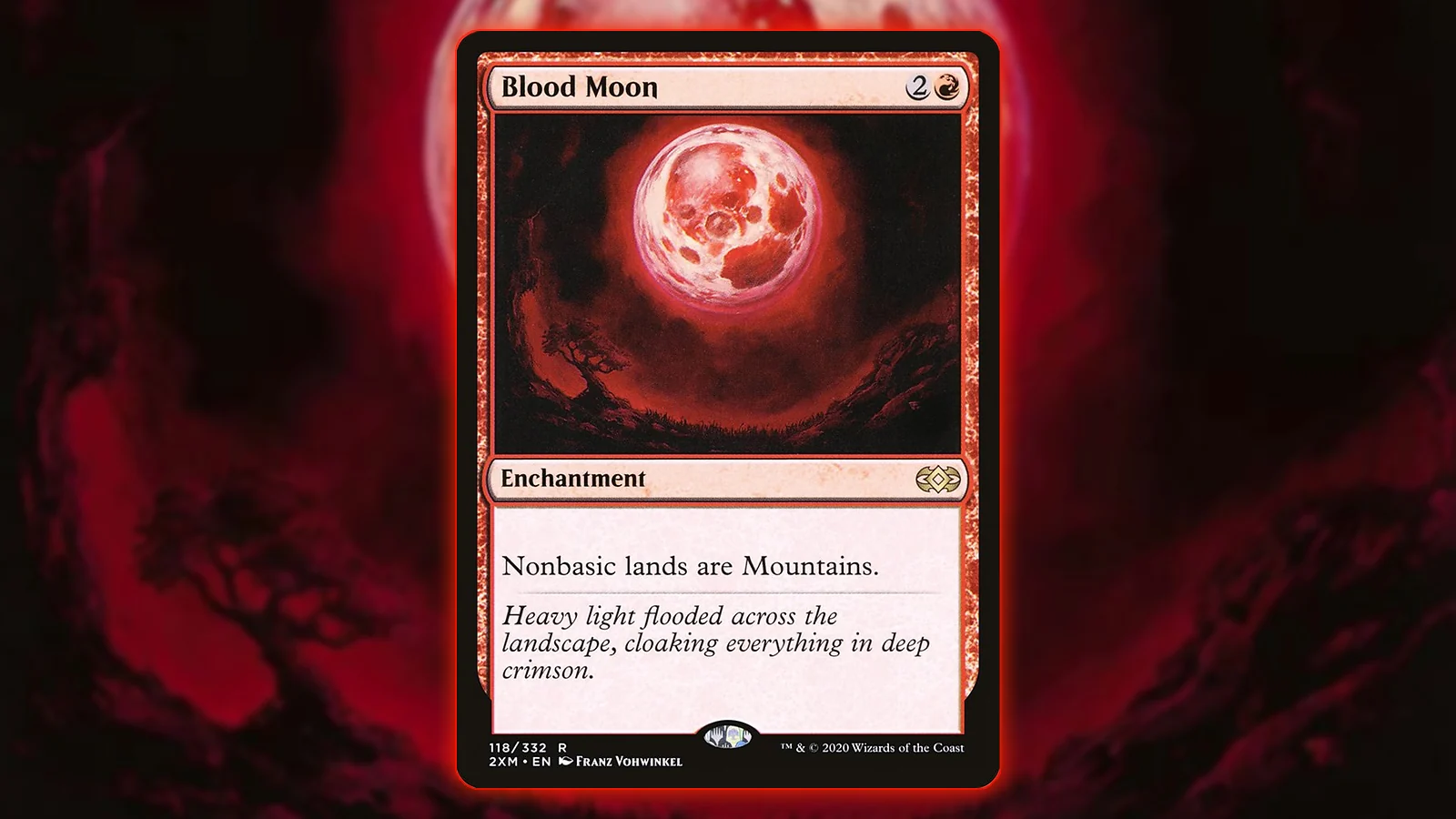
Blood Moon is one of the simplest ways red punishes greedy mana bases.
For three mana, every nonbasic land on the battlefield becomes a Mountain. That single line of text can completely derail decks built on fetches, shocks, and utility lands. Just imagine reducing a $2K pile of the best dual lands in MTG to basic Mountains with prettier pictures.
I don’t know of many cards that can punish greedy deckbuilding this cleanly. In formats where nonbasic lands dominate, Blood Moon can reshape the entire game the moment it resolves.
I’ve seen games where Blood Moon landed on turn three, and half the table just stopped functioning. Multicolor decks that looked perfectly stable a moment earlier are now staring at a handful of spells they can’t cast.
Of course, experienced players try to play around it. They fetch basics early or keep removal ready. But even then, Blood Moon often forces awkward sequencing and slows the game to a crawl.
6. Ragavan, Nimble Pilferer [The Most Valuable One Drop]
| Element | Details |
|---|---|
| Mana Cost | R |
| Card Type | Legendary Creature |
| Primary Role | Early pressure/Treasure ramp |
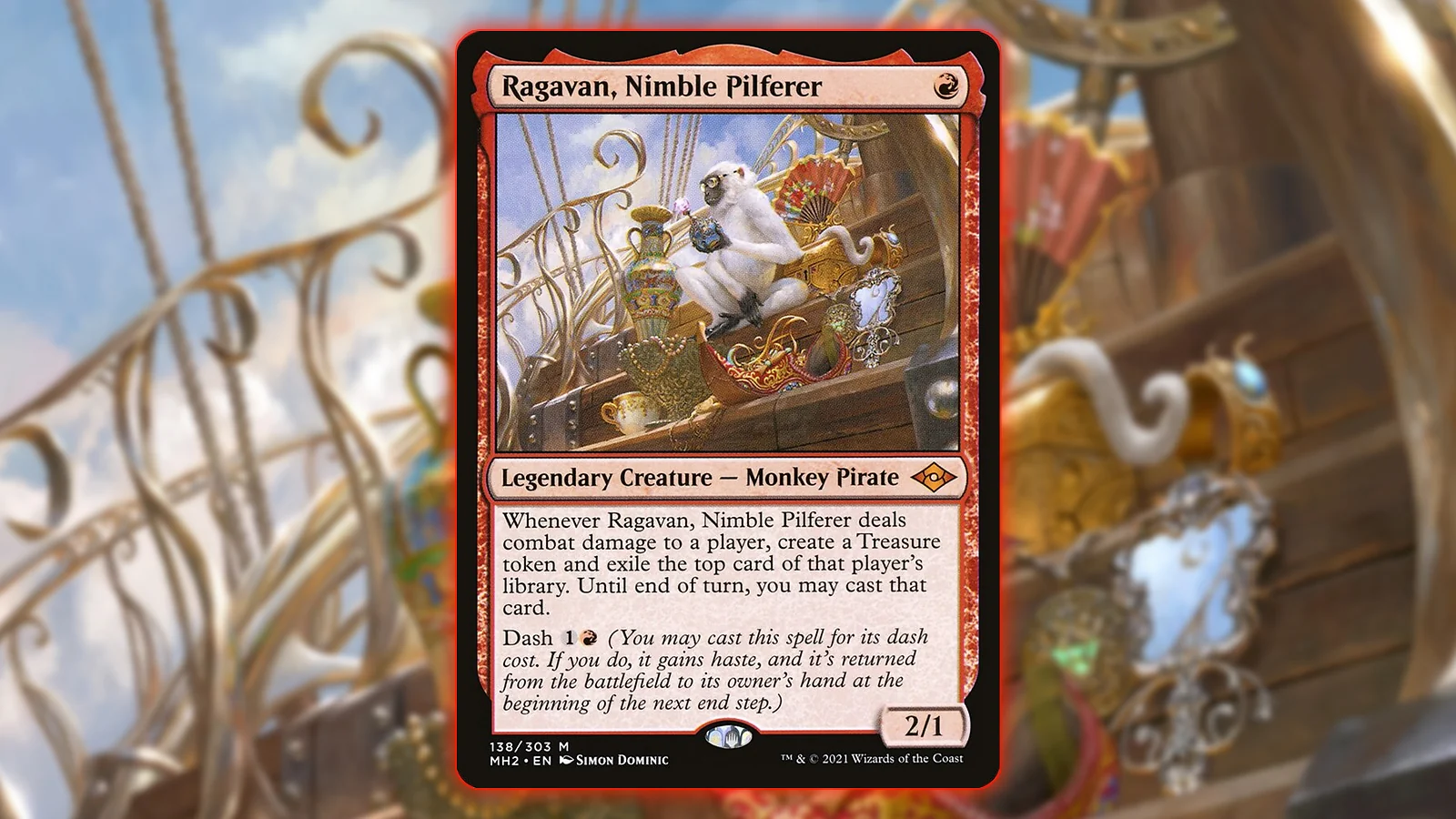
Ragavan, Nimble Pilferer is the kind of one-drop that forces an answer immediately. A 2/1 for one mana already applies early pressure, but the real payoff comes the moment it connects.
Whenever Ragavan hits a player, you create a Treasure token and exile the top card of their library, letting you cast it that turn. One attack can accelerate your mana, deal damage, and steal value from the opponent’s deck all at once. Collectors and competitive players alike recognize its status among top-tier mythic rare MTG cards due to this unparalleled utility.
A turn-one Ragavan immediately changes how the table plays. If it connects, you’re ahead on mana, ahead on cards, and already pushing damage. Left alone for even a couple of turns, it snowballs into a lead most decks struggle to claw back from.
That’s why players scramble to remove it. If Ragavan connects even once or twice, the tempo swing gets hard to recover from. The Dash ability makes things even worse for opponents, letting you redeploy it later to keep the pressure going.
7. Jeska’s Will [The Most Flexible Ritual]
| Element | Details |
|---|---|
| Mana Cost | 2R |
| Card Type | Sorcery |
| Primary Role | Burst mana/Card advantage |
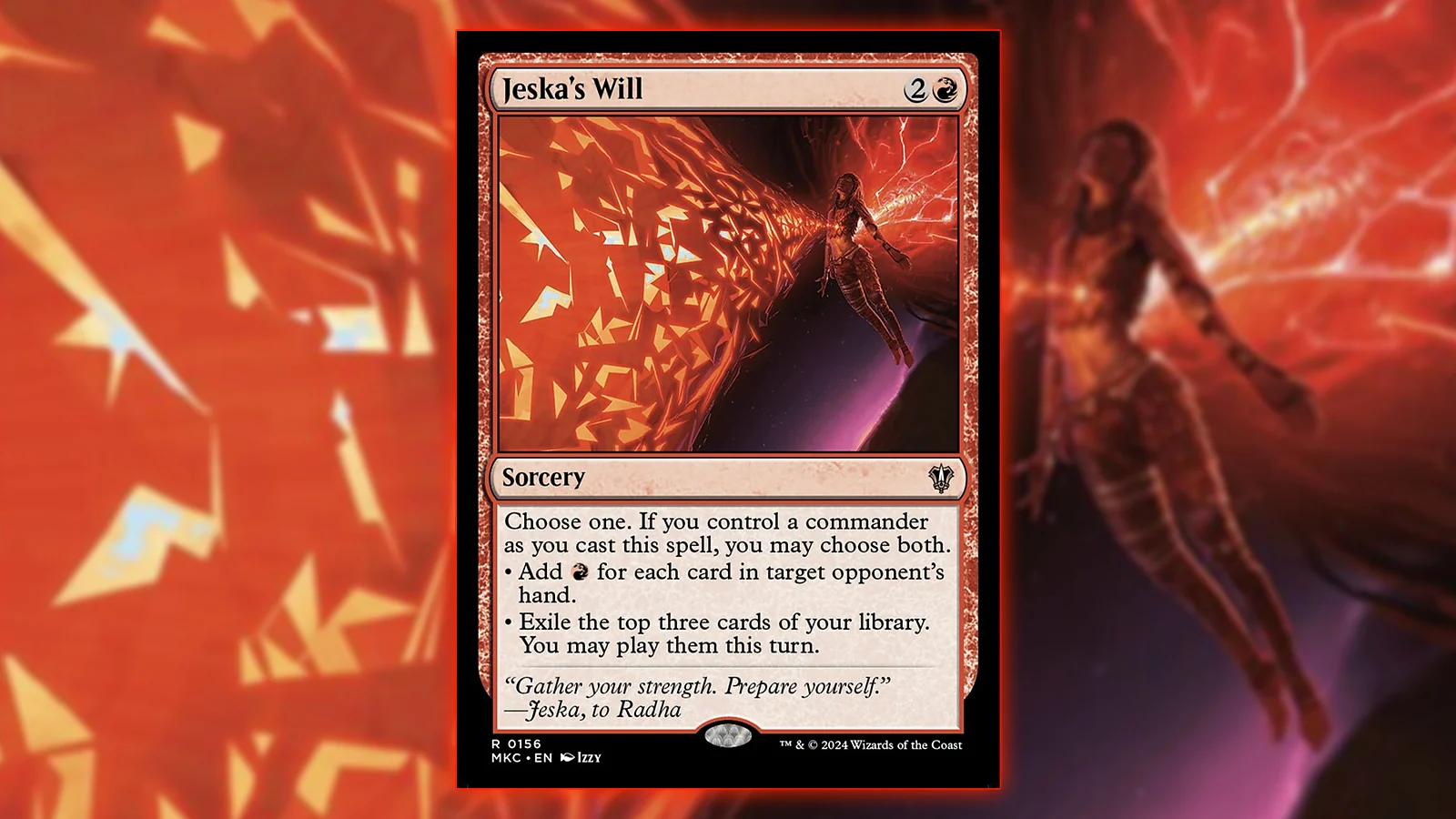
Jeska’s Will is the kind of red spell that turns a normal turn into a huge one. And you can’t beat that throwback if you started playing with Onslaught like me.
On its own, it already does useful work. You can either generate a pile of red mana based on an opponent’s hand size or exile the top three cards of your library and play them that turn. In Commander, though, you usually control your commander when casting it, which means you get both effects at once.
Jeska’s Will compresses ramp and card advantage into a single spell. In Commander, it routinely fuels explosive turns, and alongside engines like Underworld Breach or copy effects such as Reiterate, it can power some absurd combo lines.
That combination is where things get wild. A large burst of mana plus three fresh cards often leads straight into a combo turn or a massive swing. It’s common to see Jeska’s Will generate five or six mana while also giving you new spells to spend it on.
8. Fury [Crazy Board Control and Damage]
| Element | Details |
|---|---|
| Mana Cost | 3RR |
| Card Type | Creature |
| Primary Role | Board control/Tempo swing |
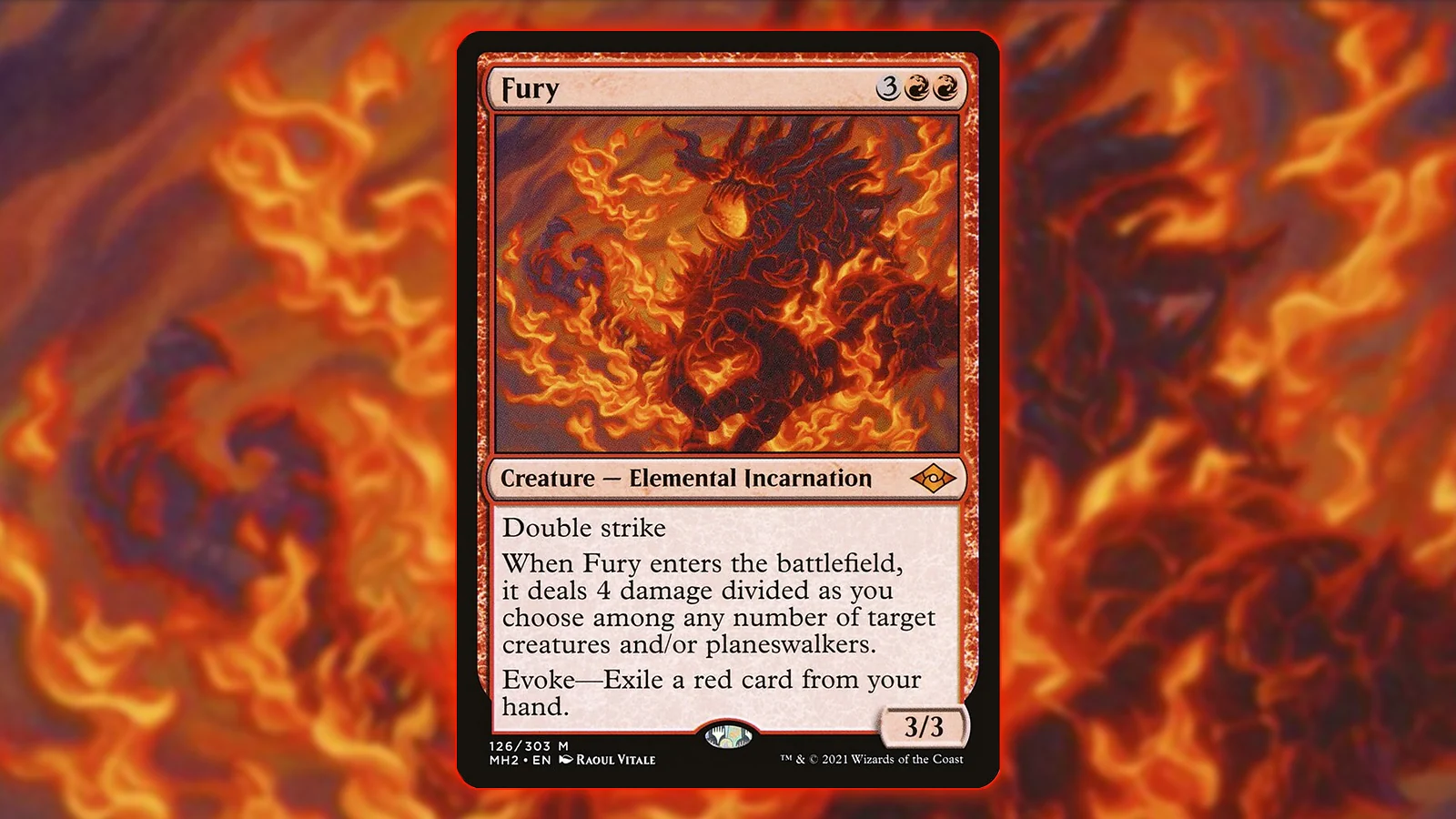
With the ability to be evoked by pitching another red card, Fury can hit the battlefield even when you’re tapped out. The moment it enters, you can divide four damage among creatures or planeswalkers, which often clears mana dorks, token boards, or utility creatures before they ever get value.
In faster formats, that swing matters a lot. Fury’s triggered ability can wipe out multiple small threats the turn it arrives. If you play it for its mana cost, it can also stabilize the board while also leaving behind a serious attacker.
Fury acts like a removal spell and a threat at the same time. The ETB damage keeps early boards under control, and if you cast it normally, you’re left with a double strike creature that closes games quickly.
It also has some nasty interactions. Evoking Fury and bringing it back with cards like Not Dead After All means you still get the damage trigger while ending up with the creature on the battlefield. That kind of sequence can flip the board in a single turn.
9. Kiki-Jiki, Mirror Breaker [The Infinite Loop Engine]
| Element | Details |
|---|---|
| Mana Cost | 2RRR |
| Card Type | Legendary Creature |
| Primary Role | Combo engine/Token generation |
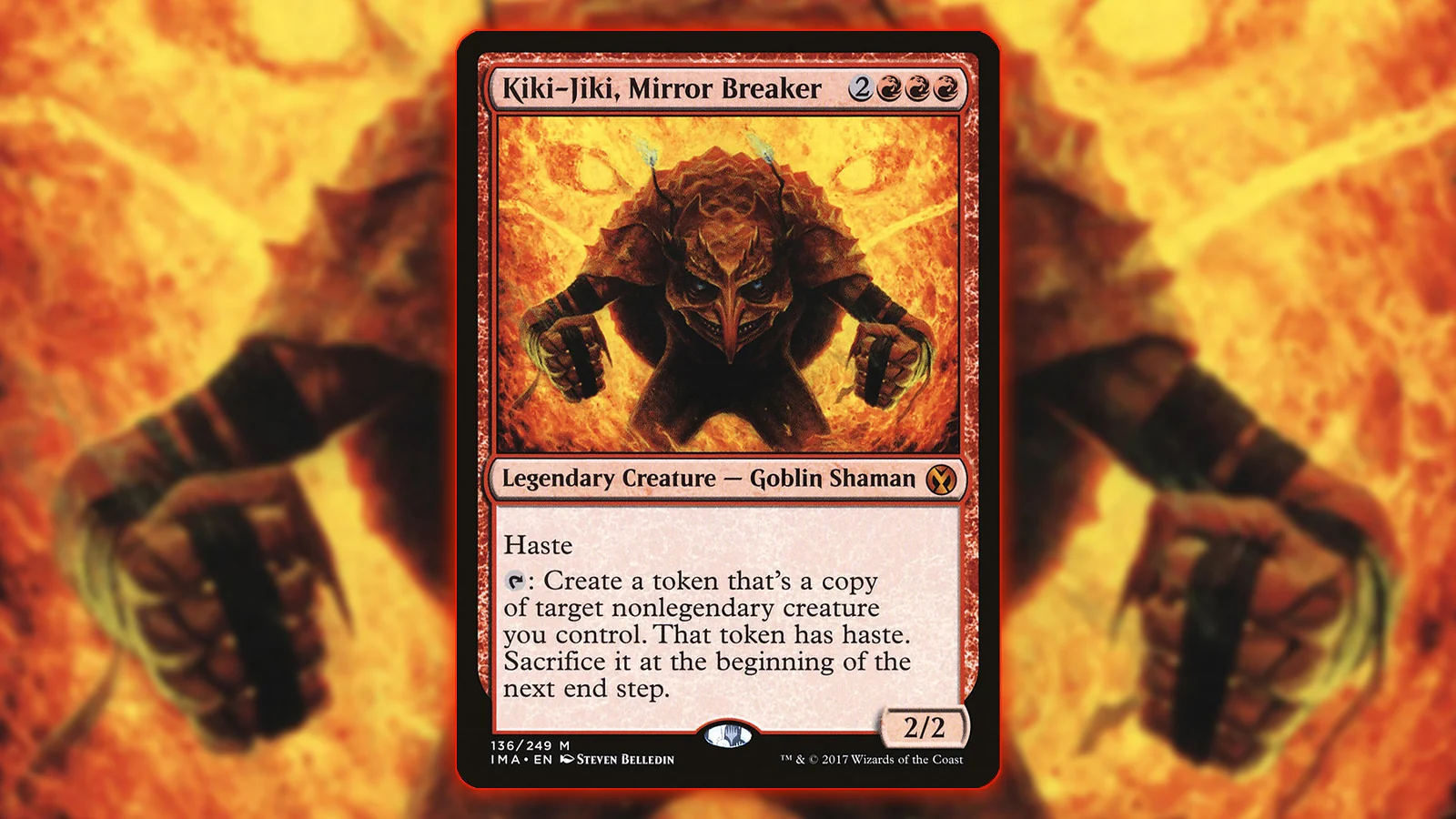
Kiki-Jiki, Mirror Breaker has been enabling absurd board states for years. With haste and the ability to tap and copy another nonlegendary creature you control, it turns ordinary creatures into immediate value engines.
Most of the time, that value shows up as extra triggers. Copy a creature with a strong enter-the-battlefield effect, and you get the payoff again (Dockside Extortionist = ungodly amounts of mana). Do it every turn, and the advantage adds up quickly.
Kiki-Jiki has been at the center of combo decks for years. It turns ETB creatures into repeatable engines and unlocks some of the cleanest infinite loops in red. If a deck can support some combo lines, Kiki-Jiki almost always becomes a wincon.
Of course, Kiki-Jiki is best known for what happens when the copy ability meets the right creature. Pair it with something that untaps creatures when it enters the battlefield, and the loop creates infinite hasty tokens, which usually ends the game on the spot. This reliable token generation is exactly why the goblin pairs so well with the top token commanders MTG players build their decks around.
10. Sneak Attack [The Best Surprise Attack Enabler]
| Element | Details |
|---|---|
| Mana Cost | 3R |
| Card Type | Enchantment |
| Primary Role | Creature cheating |
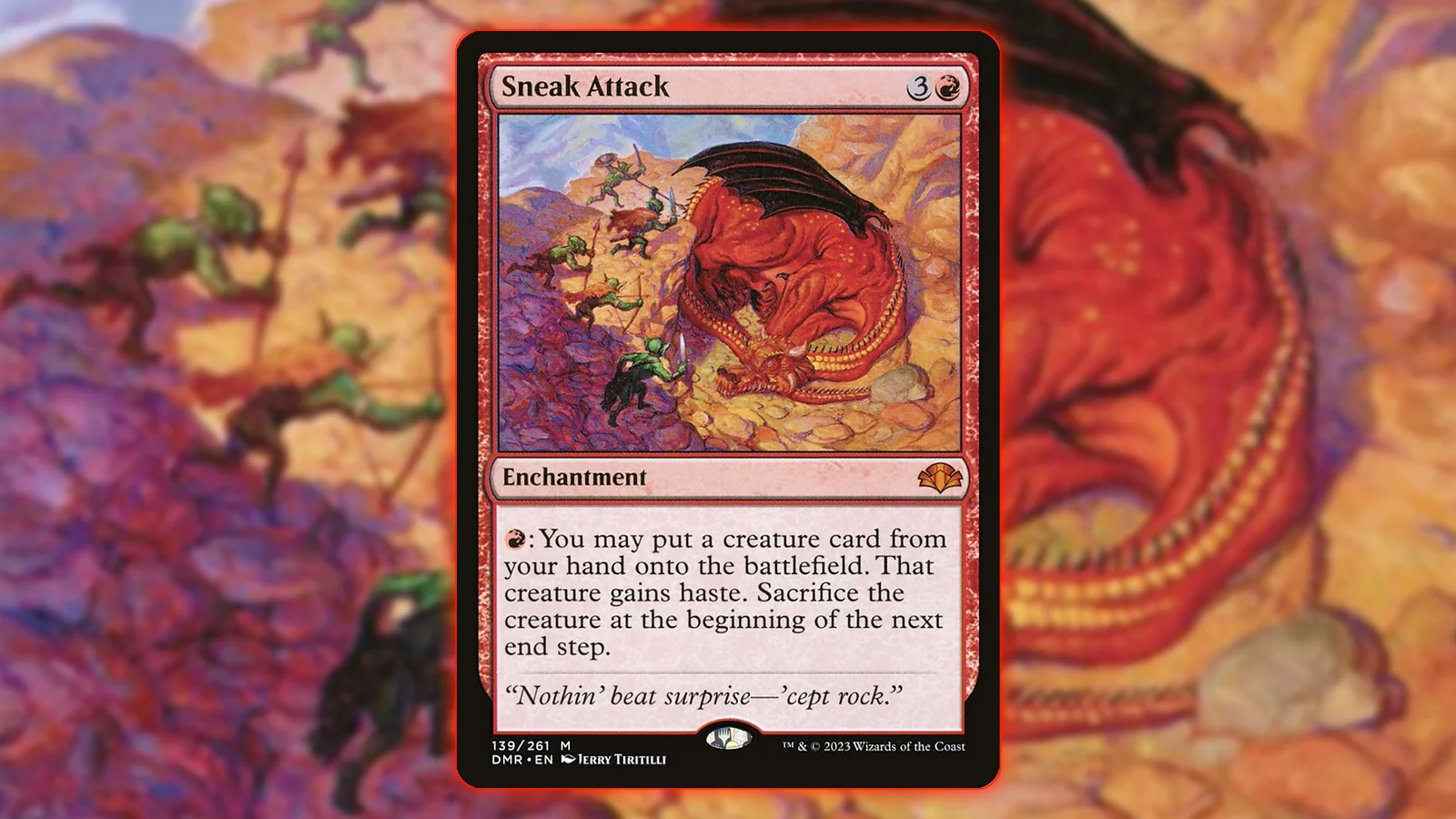
Sneak Attack is one of the best red cards in MTG that’s typically seen in Legacy. Once in play, you can start cheating out much bigger threats at a low cost.
You can play it in Commander as well, where it’s occasionally used in top dragon Commander decks with heavy hitters like Lathliss, Dragon Queen and Archwing Dragon.
Sneak Attack turns slow threats into instant pressure. If your deck runs high-impact creatures, this enchantment can end games the moment it resolves.
You can run this card alongside gigantic creatures like Emrakul, the Aeons Torn for a heavy surprise attack that can just straight up win the game. It works particularly well in control decks that have plenty of ways to dig through their library, counter spells, and disrupt the opponent through cards like Blood Moon.
11. Price of Progress [The Most Devastating Burn Finisher]
| Element | Details |
|---|---|
| Mana Cost | 1R |
| Card Type | Instant |
| Primary Role | Mana base punishment/Finisher |
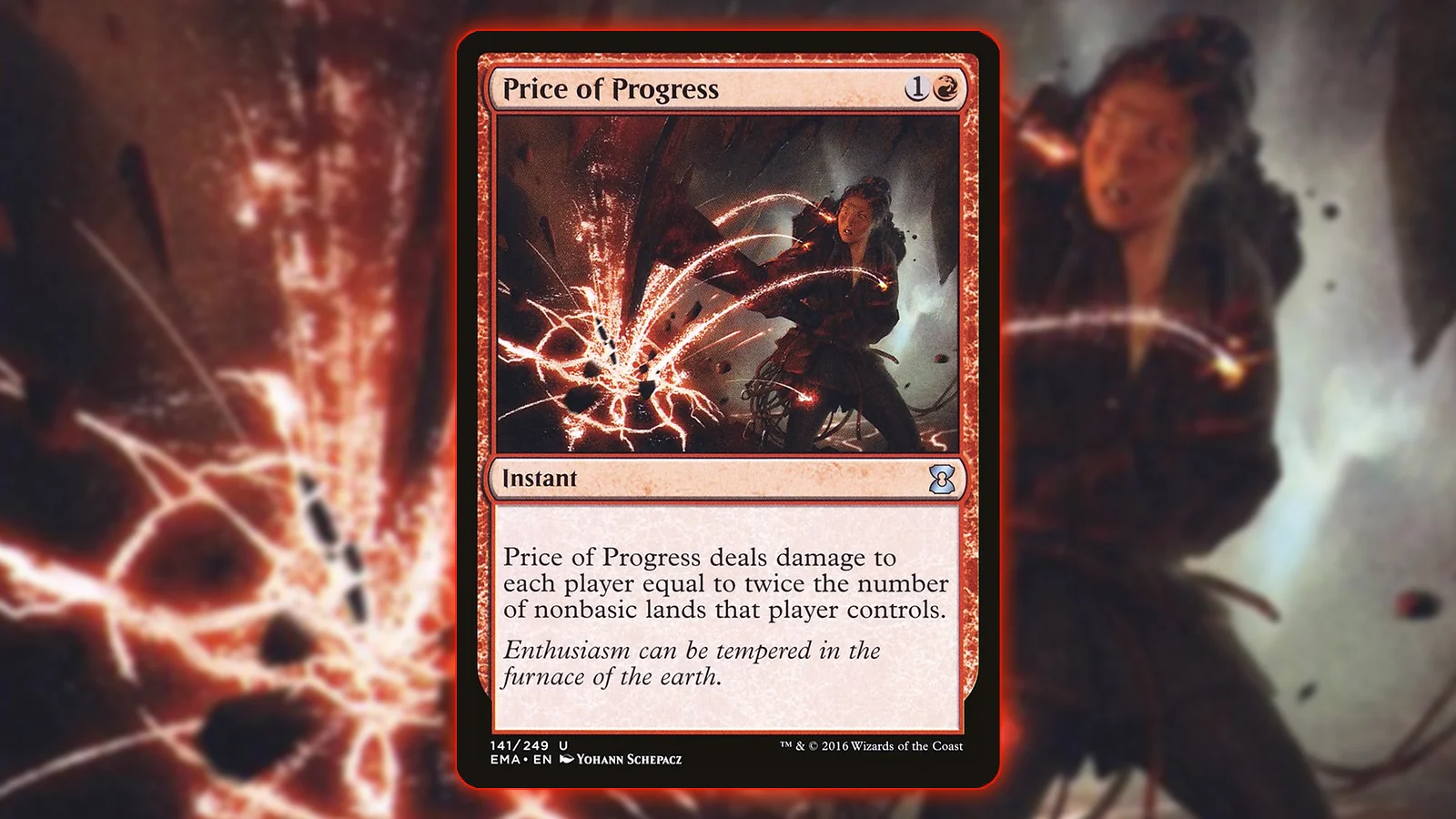
Price of Progress is a cheap and powerful instant that can completely obliterate players out of nowhere. It’s a must-have for Legacy Burn decks and one of the best red cards in MTG if you want to punish greedy mana bases.
The effect is symmetrical, but you don’t care since you’ll mostly be playing basic Mountains. Legacy Burn can run fetches for deck thinning, but those don’t stay on the board long.
Price of Progress typically deals around 6-10 damage for just two mana, and you can combo this with cards like Fireblast and Lightning Bolt to end the game in one turn.
Price of Progress turns fancy mana bases into a liability. When tables rely on nonbasics, this instant can wipe huge chunks off life totals and end games immediately.
12. Chandra, Torch of Defiance [The Best Red Planeswalker]
| Element | Details |
|---|---|
| Mana Cost | 2RR |
| Card Type | Planeswalker |
| Primary Role | Removal/Midgame engine |
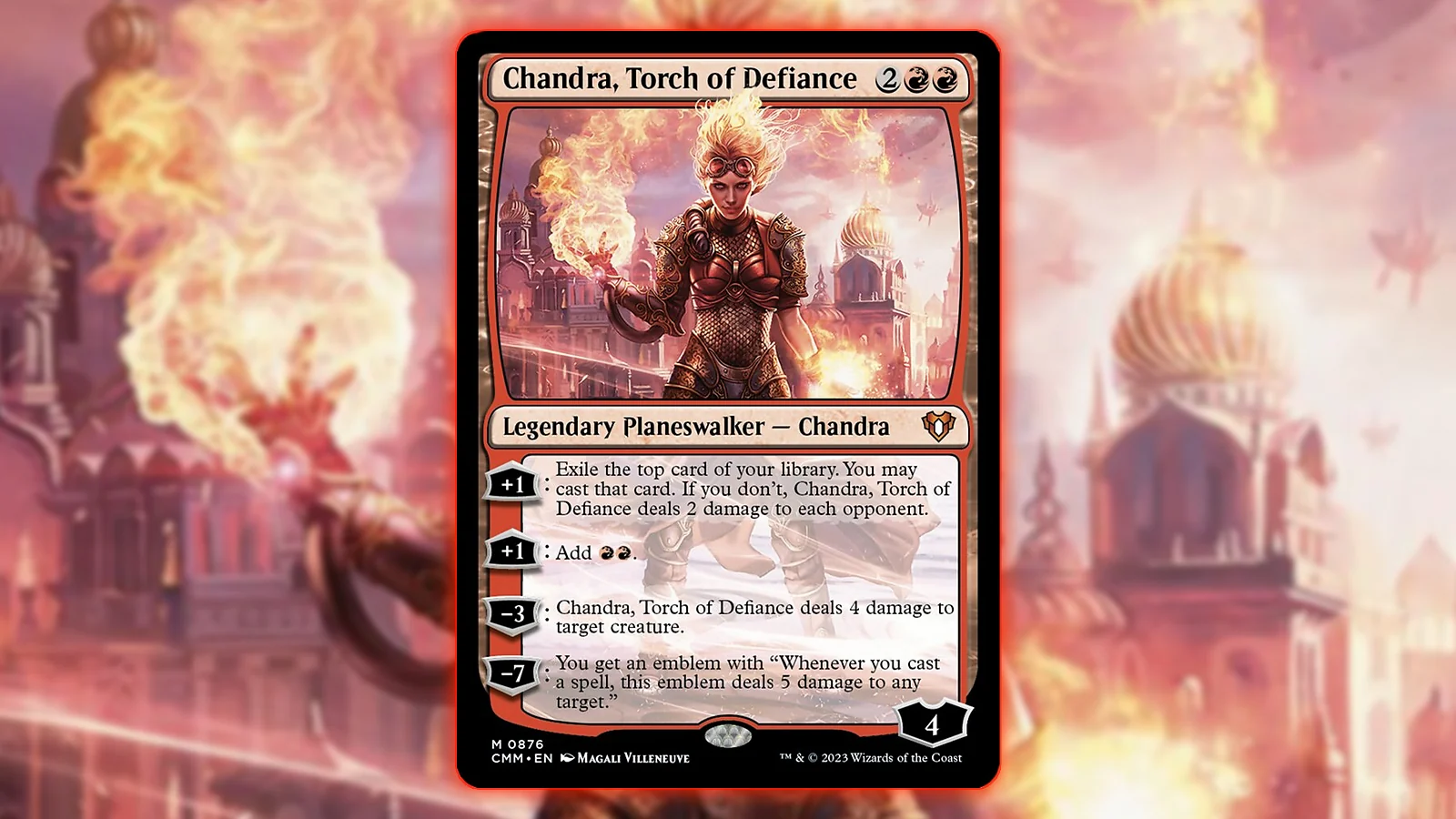
Chandra, Torch of Defiance is the only planeswalker on this list, and she’s an all-in-one package with her insane versatility. She’s got removal that you can immediately use, a ramp ability, and pseudo card draw. Just remember that her mana generation doesn’t count as a mana ability.
Chandra is one of the best red cards in MTG. She stabilizes the board, accelerates your mana, and keeps cards flowing – all while threatening an ultimate that can close the game quickly.
While not necessarily a deck-defining card, she’s a crazy good 4-drop that can help you gain a lot of advantage in both mid and late game. Her ultimate’s great too, assuming the game even lasts long enough to fire it off.
13. Goblin Guide [Extremely Fast and Early Pressure]
| Element | Details |
|---|---|
| Mana Cost | R |
| Card Type | Creature |
| Primary Role | Early pressure |
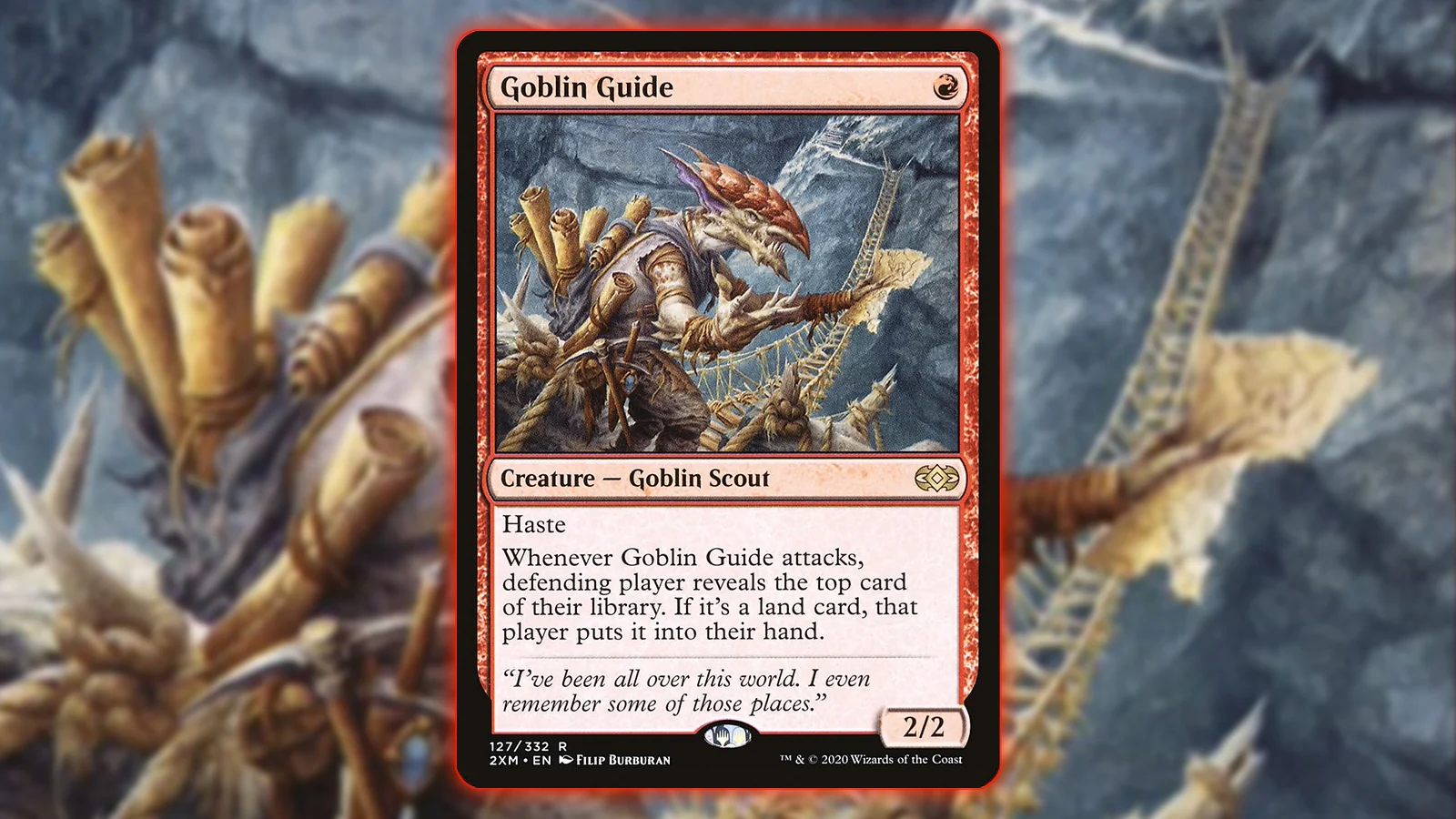
Most red decks thrive on aggression, and Goblin Guide is one of the strongest red creatures in MTG for that purpose. It’s a 2/2 body with haste, which is more than enough to raise a few red-mage eyebrows.
Goblin Guide sets the pace from the very first turn. Two damage immediately forces opponents to react, and if they don’t have removal ready, the pressure adds up quickly.
Its trigger can be used for information gathering, which is hardly a drawback. Sure, you may sometimes give the other player a land, but you’re usually getting valuable intel that’ll help you plan ahead.
14. Past in Flames [The Best Storm Enabler]
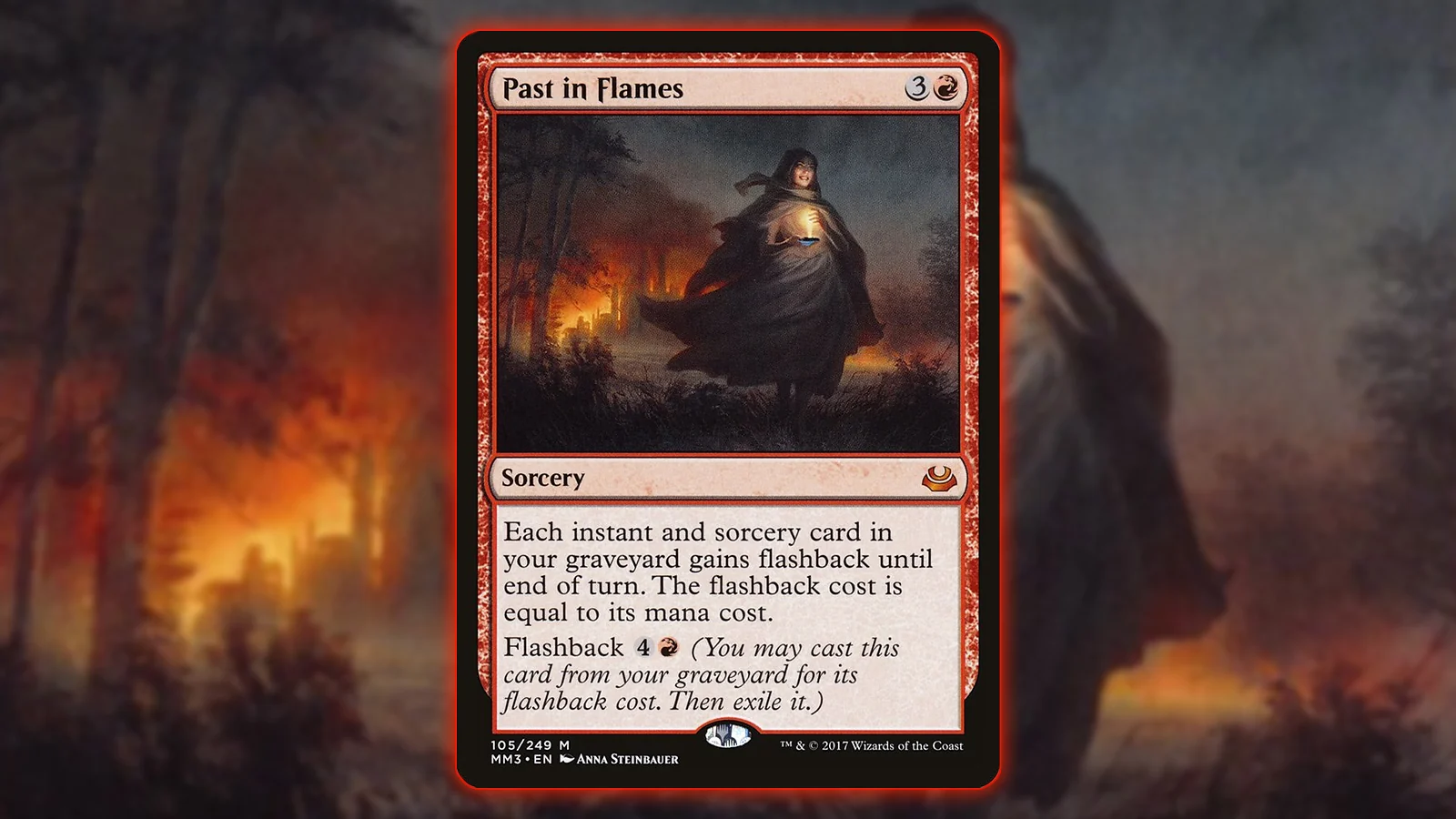
| Element | Details |
|---|---|
| Mana Cost | 3R |
| Card Type | Sorcery |
| Primary Role | Storm enabler |
Past in Flames works great for explosive storm combos. Combined with some fast mana and a card like Grapeshot, you can pull off some nutty flashback plays.
It’s often played in Ruby Storm decks, which feature several copies of Ruby Medallion, various rituals, and Ral, Monsoon Mage.
With the right deck, Past in Flames can enable incredibly fast strategies that go off in early turns.
Ruby Storm is still a decent archetype, so this card continues to be great for that specific playstyle. Just be warned that it requires skillful piloting like all Storm decks.
15. Gamble [Red’s Extremely Efficient Tutor]
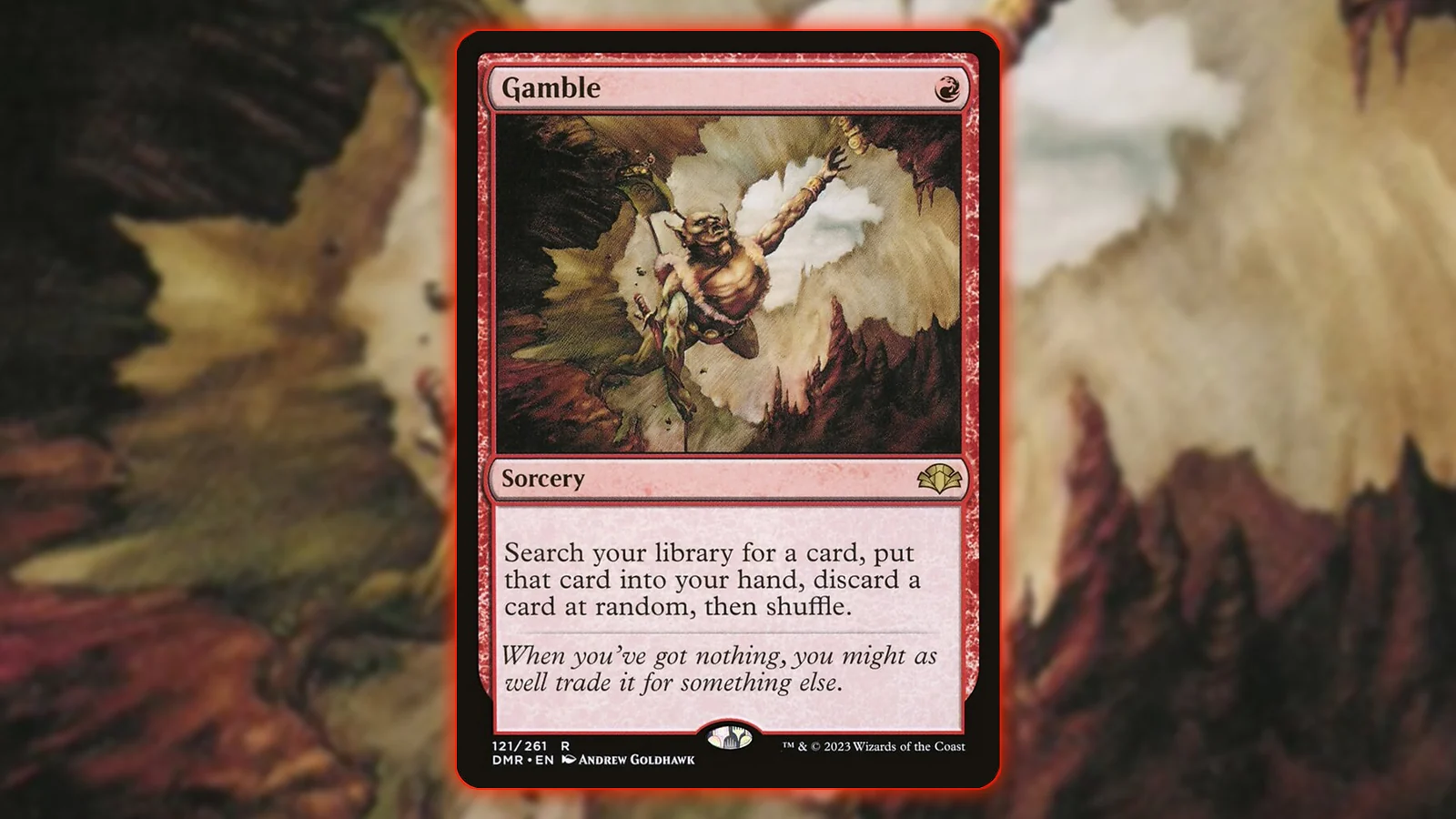
| Element | Details |
|---|---|
| Mana Cost | R |
| Card Type | Sorcery |
| Primary Role | Risky tutoring |
Gamble is the most efficient red tutor in the game as it lets you grab whatever you need at such a low cost. There’s a small chance you discard the card you just tutored for, sure, but you’ll be playing this early enough to minimize those odds.
Barring the occasional comedic misfortune, it’s hard to top the value this tutor can provide.
Feeling lucky? Put this absolute unit of a red MTG spell in your deck and watch it win you the game, or have a good laugh at the table as it immediately ruins your game plan in record time.
How Do Red Cards Work in MTG?
Red plays fast and loud. The color is built around momentum, explosive turns, and forcing opponents to react immediately. Instead of slowly building long-term advantages, red usually wins by pushing damage early and using one strong turn for a decisive swing.
Here’s what red usually brings to the table:
- Burn – Red is the main color for cards that deal direct damage to targets, and this includes classics like Lightning Bolt and Fireball. These let you dictate the pace or even close out the game.
- Haste – Plenty of red creatures start with haste, and some of its cards can even grant it to others. It’s great for maintaining pressure and delivering surprise attacks, and it’s part of why red’s identity is rooted in aggression.
- Land punishment – Greedy land bases are frequently punished by red. With cards like Blood Moon, Price of Progress, and even From the Ashes, it can stop multicolor players in their tracks.
- Bursts of mana – Red loves to generate a lot of mana to create explosive turns. It has many ways to do this across the formats, including looping Jeska’s Will or gaining it through the likes of Chandra, Torch of Defiance.
- Impulse draws – Since red lacks traditional card draw, it often takes advantage of exile-to-play mechanics to create swing turns or straight up win the game.
- Losing steam – In line with its impulsive nature, red can be its own worst enemy at times. It’s prone to running out of steam after a wave of aggression, and it has few ways to bounce back if its win condition gets denied. I don’t even want to know how many times I’ve left my opponent at three only to draw a land and die.
FAQs
If I had to pick, I’d say the best red cards in MTG are Lightning Bolt, Wheel of Fortune, and Dockside Extortionist. That said, it all depends on your favorite formats and style of play.
Red decks are good at creating explosive turns, securing an early advantage, and just generally controlling the pace of the game through disruption, constant pressure, and a bit of calculated chaos.
Red cards are considered aggressive due to their tendency to be used for fast mana, impulse draws, and rush down attacks. Add a bit of direct burn to the face, and it quickly becomes clear that red wants to end you early and hard.
Red cards have card draw in the form of “impulse draws”, which typically mean exile-to-play effects through cards like Jeska’s Will and Chandra, Torch of Defiance.