


20 Best Mana Rocks in MTG 2026 – Top Ramp Staples Explained



The best mana rocks in MTG can turn a slow, clunky hand into a smooth, unfair-looking start. If you’ve ever dropped a turn-two Sol Ring and suddenly felt like you skipped ahead three turns, you already know the vibe.
So, what’s a mana rock, exactly? It’s an artifact that taps to produce mana, acting like an extra land you can deploy early to accelerate your game plan. More mana means bigger spells earlier, smoother turns, and fewer games lost to bad draws.
In this guide, I’m breaking down the staples and the spicy picks I keep reaching for when building a new list. If you love casting your big spells ahead of schedule and watching the table panic a little, you’re in the right place.
Jump to:
Best Mana Rocks
If your deck feels slow or clunky, your mana rocks are usually the first place to look – particularly in Commander, where getting ahead early matters a lot. Here are the best mana rocks MTG has to offer, from consistent staples to high-power options that solve real ramp and fixing issues.
1. Sol Ring
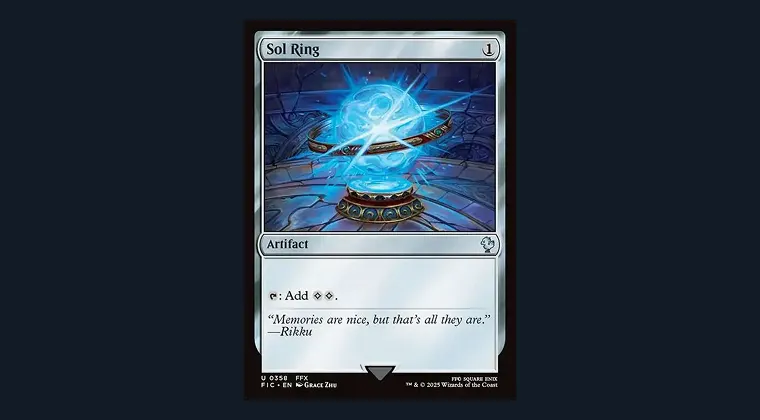
| Card Type | Artifact |
| Mana Cost | {1} |
| Mana Produced | {C}{C} |
| Enters Tapped | No |
| Activation | {T}: Add {C}{C}. |
| Special Rules / Conditions | Produces only colorless mana |
| Price | ~$3–$20 (common modern/commander prints) |
Sol Ring is basically the card that makes every Commander opening hand feel suspiciously lucky. You play a land, drop Sol Ring, and suddenly you are two turns ahead of everyone else for doing almost nothing. It’s so simple it feels unfair. No setup, no condition, just free acceleration right out of the gate.
What I love about Sol Ring is how universal it is. It doesn’t care about colors, strategy, or deck style. Control, combo, stompy, janky precon you built at 2 a.m. – it all works. Two extra mana every turn just smooths everything out, which is why any list of the best mana rocks in MTG basically starts with Sol Ring by default. Your commander comes down faster, your big spells land earlier, and your whole deck feels like it’s running on premium fuel.
Ridiculously efficient and nearly free mana acceleration, making it the gold standard for explosive early turns in any Commander deck.
At this point it’s less of a “mana rock” and more of a format mascot. If it’s legal, you run it – not because it’s clever, but because it’s ridiculously efficient.
2. Coldsteel Heart
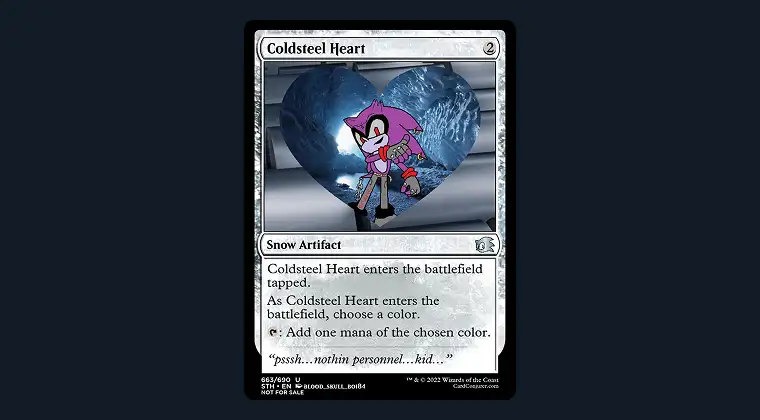
| Card Type | Artifact |
| Mana Cost | {2} |
| Mana Produced | One mana of the chosen color |
| Enters Tapped | Yes |
| Activation | {T}: Add one mana of the chosen color. |
| Special Rules / Conditions | As Coldsteel Heart enters, choose a color |
| Price | ~$1 – $3 (common reprints) |
Coldsteel Heart is a simple, reliable mana rock that prioritizes consistency over speed. It enters tapped, which makes it slower than most two-mana rocks, but the ability to choose any color when it enters gives you guaranteed fixing exactly where your deck needs it most.
That kind of flexibility is why Coldsteel Heart keeps showing up on lists of the best MTG mana rocks for Commander – especially in multicolor decks or builds with demanding mana costs, where hitting the right colors on time matters more than shaving a single turn of tempo. Unlike options that depend on opponents or specific board states, Coldsteel Heart always works the same way every game.
Color-fixing and reliable ramp in one tidy package, entering tapped but paying you back with perfect mana consistency.
It’s not flashy or explosive, but it quietly smooths out awkward draws and prevents color screw – and that reliability is often worth more than raw speed at casual and mid-power tables.
3. Arcane Signet
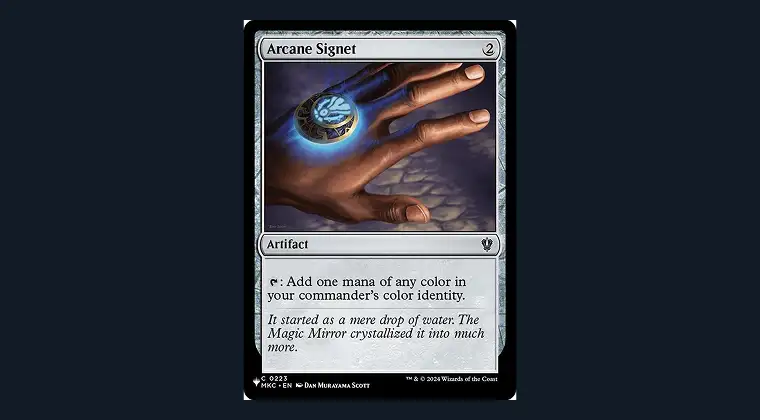
| Card Type | Artifact |
| Mana Cost | {2} |
| Mana Produced | One mana of any color in your commander’s color identity |
| Enters Tapped | No |
| Activation | {T}: Add one mana of any color in your commander’s color identity. |
| Special Rules / Conditions | Commander-only color restriction |
| Price | ~$2 – $5 |
Arcane Signet is the gold standard for reliable color fixing in Commander, converting two mana into perfect access for your deck’s colors with no conditions. Its efficiency and consistency place it firmly among the best mana rocks in MTG, especially for multicolor lists that need smooth early development without tempo loss.
This reliability explains why it appears in most best Commander precons, where stable mana is essential for newer and tuned builds alike.
Two-mana, no-strings-attached fixing that taps for exactly what you need, which is why it’s an auto-include in most multicolor decks.
While it doesn’t generate extra mana, its perfect fixing keeps spells on curve across the game.
4. Mana Vault
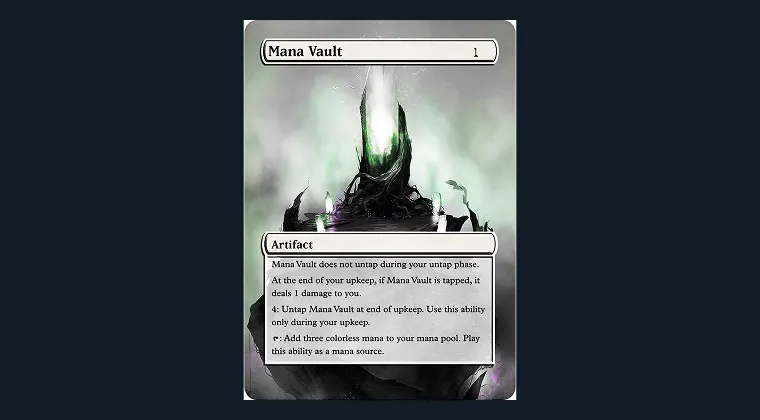
| Card Type | Artifact |
| Mana Cost | {1} |
| Mana Produced | {C}{C}{C} |
| Enters Tapped | No |
| Activation | {T}: Add {C}{C}{C}. |
| Special Rules / Conditions | Doesn’t untap normally; upkeep {4} to untap; deals 1 damage if tapped |
| Price | ~$50 – $120+ (older printings stronger) |
Mana Vault feels like lighting a match under your deck: a huge burst of mana upfront, with consequences later. That makes it perfect for decks that want to do something explosive early – slam a commander, lock the board, or assemble a combo before opponents are ready.
I’ve always thought of Mana Vault as a commitment card. You’re choosing speed over comfort, and the drawbacks come with it: the damage adds up, the untap cost is annoying, and if the game goes long it can feel clunky. But if your deck is built to capitalize on early turns, Vault can completely change the tempo, which is why it often shows up on lists of the best mana rocks in MTG for strategies that want to get scary ahead fast.
A burst of fast mana that trades long-term comfort for short-term chaos, perfect for powering out game-winning plays ahead of schedule.
Mana Vault is not a cozy card. In slower or grindy decks, it often feels worse than it looks on paper. But in fast metas or competitive environments, it is pure acceleration and sometimes that is all you need.
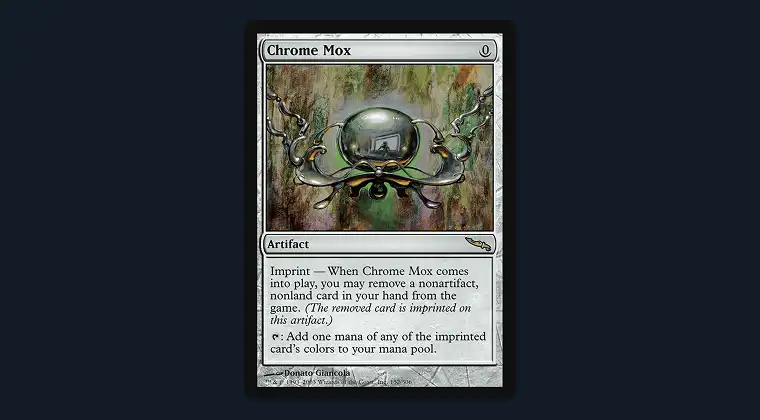
5. Chrome Mox
| Card Type | Artifact |
| Mana Cost | {0} |
| Mana Produced | One mana of the imprinted card’s color |
| Enters Tapped | No |
| Activation | {T}: Add one mana of any color of the exiled card. |
| Special Rules / Conditions | Imprint – exile a nonartifact, nonland card as it enters |
| Price | ~$70 – $300+ depending on set/printing |
Chrome Mox is the kind of fast mana that makes opening hands feel unfair: it costs 0, comes down immediately, and boosts you a full turn ahead. The price is imprinting (exiling) a nonartifact, nonland card from your hand, but in fast decks that trade is often worth it for the tempo.
It’s especially strong in blue-heavy lists, where you can pitch an extra cantrip or counterspell and still function smoothly. If your deck already runs a bunch of the best blue cards in MTG, you’ll usually have something you can afford to imprint, and the payoff is casting key pieces earlier while keeping up interaction.
Zero-mana acceleration that turns an extra card into immediate tempo, ideal for decks that value speed over raw card advantage.
Just don’t treat it like a universal staple. Slower, grindier decks may feel the lost card more, and artifact-dense hands can leave it awkwardly offline. In the right build, though, Chrome Mox is a clean, brutal accelerator.
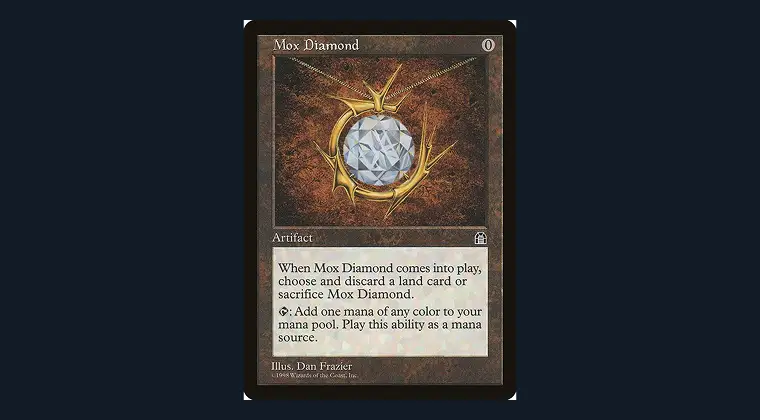
6. Mox Diamond
| Card Type | Artifact |
| Mana Cost | {0} |
| Mana Produced | One mana of any color |
| Enters Tapped | No |
| Activation | {T}: Add one mana of any color. |
| Special Rules / Conditions | As it enters, discard a land or it doesn’t enter |
| Price | ~$600 – $1,300+ |
Mox Diamond is one of those pieces of fast mana that quietly makes your deck feel smoother from turn one. It drops for zero, asks you to discard a land, and immediately taps for any color you need. That trade sounds scary at first, but in practice, pitching an extra land is usually painless, and jumping a full turn ahead on mana more than makes up for it.
What really sells it is the flexibility. Unlike options that lock you into a specific color, this one fixes everything on the fly, which is huge in two-, three-, or even five-color builds. It helps you cast your best MTG cards earlier and more reliably, whether that’s a turn-one setup piece, early interaction, or your commander ahead of curve. It’s less flashy than some other fast mana, but it’s incredibly consistent.
Costly but lightning-fast, this classic converts a spare land into permanent acceleration and keeps your curve blazing.
The only time it feels awkward is in land-light or super greedy lists where every land drop matters. Otherwise, it’s just clean, efficient acceleration with almost no drama.
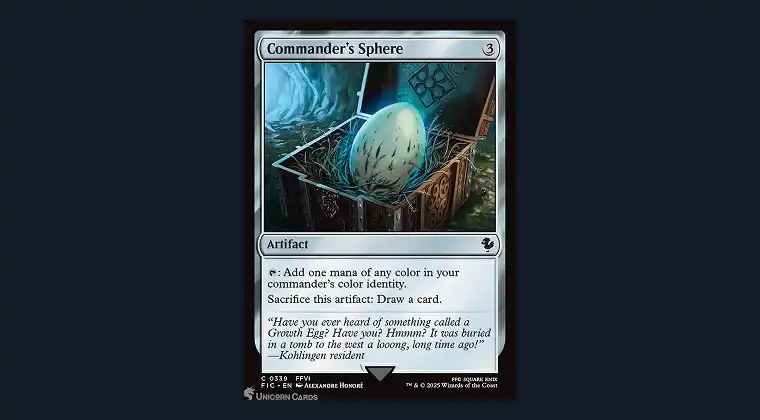
7. Commander’s Sphere
| Card Type | Artifact |
| Mana Cost | {3} |
| Mana Produced | One mana of any color in your commander’s color identity |
| Enters Tapped | No |
| Activation | {T}, later sacrifice |
| Special Rules / Conditions | Can be sacrificed to draw a card |
| Price | ~$1 – $4 |
Commander’s Sphere is the steady, dependable type of mana rock. Three mana gets you an artifact that taps for any color in your commander’s identity, which means it quietly fixes your colors without fuss.
Where it really earns its slot is in multicolor or white-heavy decks that don’t have easy access to ramp. If you’re running a pile of the best white cards in MTG – board wipes, removal, protection spells – you really don’t want to be stuck missing the right pip. Commander’s Sphere smooths those awkward draws and lets you reliably cast what you need, when you need it, which feels surprisingly good in longer, grindier games.
Solid, no-nonsense ramp that later cashes itself in for a card, giving you value both early and late.
It’s also a nice reminder that not all of the best MTG mana rocks are about explosive starts – some are about consistency and sanity. And then there’s the little bonus: you can cash it in for a card later. That tiny bit of value keeps it from ever feeling dead in the late game.
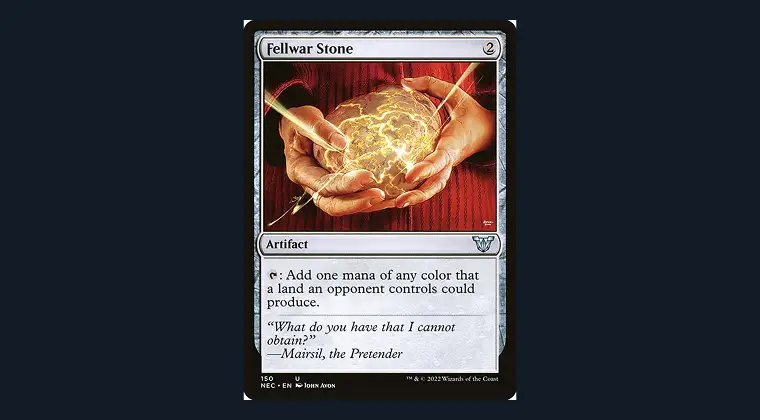
8. Fellwar Stone
| Card Type | Artifact |
| Mana Cost | {2} |
| Mana Produced | One mana of a color an opponent’s land could produce |
| Enters Tapped | No |
| Activation | {T}: Add one mana of a color an opponent’s land could produce. |
| Special Rules / Conditions | Depends on opponents’ lands |
| Price | ~$0.15 – $2 |
At just two mana, Fellwar Stone slips in early and usually taps for exactly the color you need without any setup or commitment. You play it, pass the turn, and suddenly your mana feels smoother. No choosing a color, no entering tapped, no strings attached.
What makes it shine is how well it scales with the table. Since it checks what colors your opponents’ lands can produce, it often gets better the stronger everyone else’s mana base is. In Commander, where people run plenty of shocks, triomes, and especially dual lands, Fellwar Stone frequently turns into a two mana rainbow rock. In most pods it taps for three or more colors without even trying, which feels kind of ridiculous for the cost.
Cheap, flexible fixing that almost always taps for the right colors in multiplayer, making it surprisingly reliable at two mana.
It is not flashy or explosive like fast mana pieces, but it is incredibly efficient and reliable. That makes it perfect for multicolor decks that care more about consistency than speed.
9. Grim Monolith
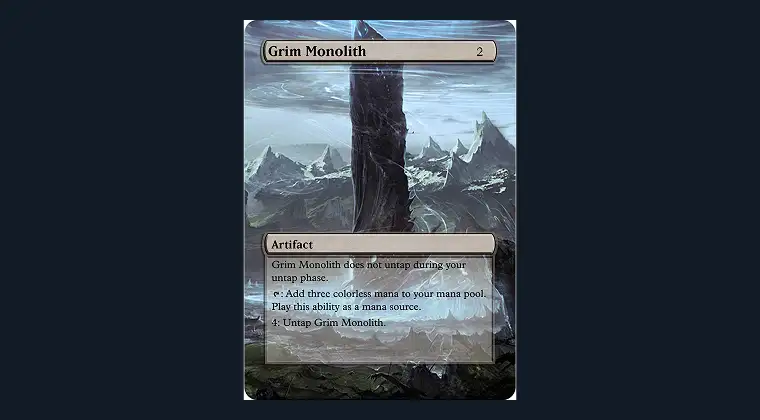
| Card Type | Artifact |
| Mana Cost | {2} |
| Mana Produced | {C}{C}{C} |
| Enters Tapped | No |
| Activation | {T}: Add {C}{C}{C}. |
| Special Rules / Conditions | Doesn’t untap normally; {4}: Untap Grim Monolith |
| Price | ~$200 – $400+ |
Grim Monolith has a very deliberate, almost mechanical feel to it. You play it knowing it is not going to behave like a normal mana source. It comes down, does its job in a big way, and then just sits there until you decide it deserves attention again.
Where it really shines is in decks that care about big, chunky costs: Eldrazi, artifacts, or combo shells that just want raw resources fast. Because it produces only colorless, it slots perfectly into strategies packed with the best colorless cards, letting you power out haymakers or assemble engines before the table is ready.
Explosive ramp that jumps you multiple turns ahead, especially deadly in combo or big-mana strategies.
Grim Monolith earns its spot among the best mana rocks in MTG for decks that know exactly what they want to do with a sudden burst of colorless mana. When used thoughtfully, it feels precise and intentional instead of reckless.
10. Lion’s Eye Diamond

| Card Type | Artifact |
| Mana Cost | {0} |
| Mana Produced | Three mana of any one color |
| Enters Tapped | No |
| Activation | Discard your hand, Sacrifice: Add three mana of any one color. |
| Special Rules / Conditions | Activate only as an instant |
| Price | ~$300 – $700+ (varies by printing) |
Lion’s Eye Diamond is one of the weirdest MTG mana rocks, and I mean that in the best way. Discarding your entire hand sounds horrible until you realize how easy it is to break that downside. When used correctly, it feels less like a cost and more like a ritual with attitude.
I love LED in combo decks where the hand does not matter anymore. Casting it, cracking it, and suddenly having three mana of one color can lead to some truly unhinged turns. It is explosive, dramatic, and very much not a fair Magic card.
A risky but absurdly powerful burst of mana that fuels graveyard and combo lines like nothing else.
Outside of combo shells, though, it is basically unplayable. This is not a value card or a comfort rock. Lion’s Eye Diamond is all or nothing, and if you are not ready to commit, it will absolutely punish you.
11. Thought Vessel
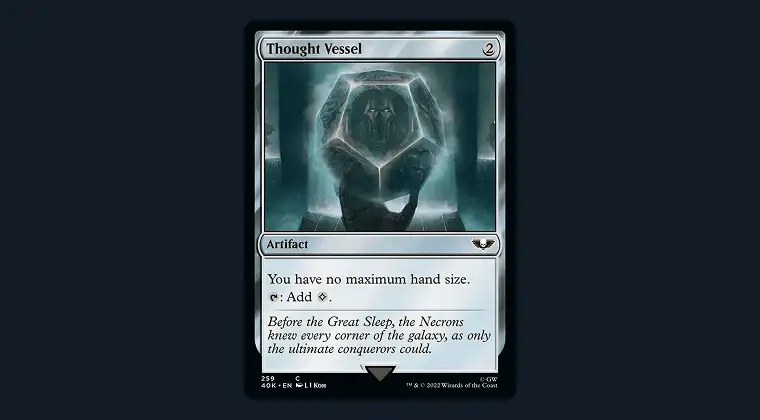
| Card Type | Artifact |
| Mana Cost | {2} |
| Mana Produced | {C} |
| Enters Tapped | No |
| Activation | {T}: Add {C}. |
| Special Rules / Conditions | You have no maximum hand size |
| Price | ~$1 – $6 |
Thought Vessel is the kind of mana rock I add to decks almost automatically, then forget about, and then quietly appreciate every single game. Two mana for colorless ramp is already fine, but the “no maximum hand size” text is what really sells it.
It really shines in decks that draw a lot or tend to hoard resources. Blue control, spell-slinger builds, anything with big refill effects. There is something deeply satisfying about casting a massive draw spell and not having to toss half your hand in cleanup like some kind of punishment.
Steady ramp with the bonus of removing your hand size limit, perfect for decks that like to hoard cards.
Vessel quietly ramps, quietly protects your hand, and never becomes dead – the exact reason it earned its reputation as one of those reliable Commander staples you’re always happy to see early.
12. Mind Stone
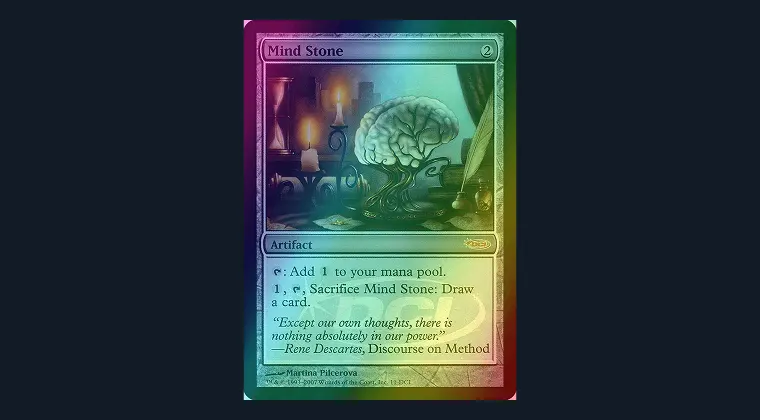
| Card Type | Artifact |
| Mana Cost | {2} |
| Mana Produced | {C} |
| Enters Tapped | No |
| Activation | {T}: Add {C}. |
| Special Rules / Conditions | {1}, {T}, Sacrifice: Draw a card |
| Price | ~$1 – $5 |
Mind Stone feels like the definition of solid value. Two mana, taps for mana, and later you can cash it in for a card. Simple, clean, no weird conditions.
Early game, it is just ramp that helps you curve out. But late game, when you topdeck it and already have plenty of mana, it does not feel awful because you can just sacrifice it and draw something better. That tiny bit of flexibility makes a huge difference over the course of a long Commander game.
Early acceleration that never feels dead thanks to its built-in card draw when you no longer need the mana.
I love cards that refuse to be useless, and Mind Stone fits that philosophy perfectly. It is never the star of the show, but it is always pulling its weight.
13. Chromatic Lantern
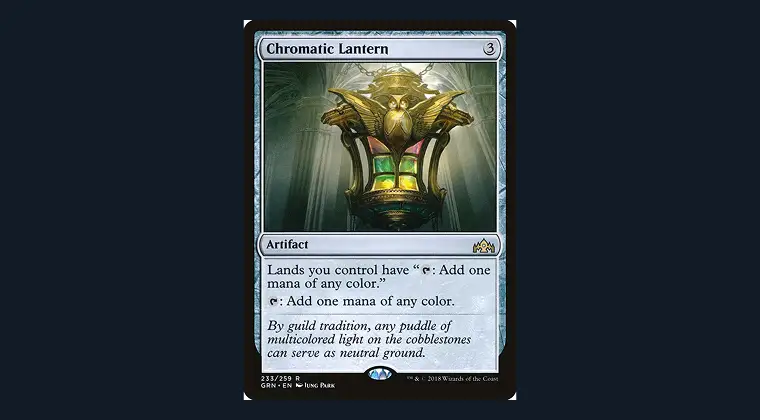
| Card Type | Artifact |
| Mana Cost | {3} |
| Mana Produced | One mana of any color |
| Enters Tapped | No |
| Activation | {T}: Add one mana of any color. |
| Special Rules / Conditions | Lands you control tap for any color |
| Price | ~$3 – $12 |
Chromatic Lantern is a lifesaver in multicolor decks because it makes every land tap for any color. That means fewer awkward hands, less color-screw, and way less time spent sequencing lands like you’re defusing a bomb.
It’s also a solid three-mana rock that adds any color itself, so you’re getting ramp and premium fixing in one slot. In casual and mid-power Commander games where turns stretch out and consistency matters, it’s easily one of the best MTG mana rocks for keeping your plan online.
Fixes your entire mana base at once, turning every land into rainbow fuel and smoothing out even the greediest decks.
If your table is all gas, no brakes, you might skip it for something faster. But when perfect fixing matters and you want your deck to cast what it draws without a mini crisis every turn, Chromatic Lantern delivers.
14. Springleaf Drum
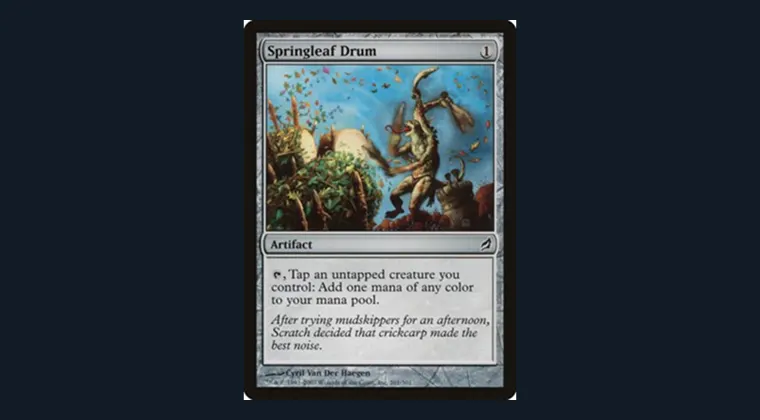
| Card Type | Artifact |
| Mana Cost | {1} |
| Mana Produced | One mana of any color |
| Enters Tapped | No |
| Activation | {T}, Tap an untapped creature you control: Add one mana of any color. |
| Special Rules / Conditions | Requires a creature |
| Price | ~$2 – $8 |
Springleaf Drum doesn’t scream “powerful” like Sol Ring or Mana Vault, but it turns any random body on the board into ramp. Suddenly your early mana dork, token, or leftover creature is basically a tiny Birds of Paradise, and your turns start flowing way smoother.
It shines brightest in creature-heavy and green-based decks. If you’re already running mana elves, token makers, or a pile of the best green cards, you’ll almost always have something spare to tap. Instead of choosing between attacking or ramping, Drum lets your board multitask, which feels weirdly efficient.
A deceptively strong one-drop that turns spare creatures or tokens into extra mana without slowing your curve.
Of course, it’s not for every deck – control lists or spell-heavy builds won’t get much value out of it. But in the right shell, Springleaf Drum is cheap, fast, and quietly explosive.
15. Talisman of Dominance
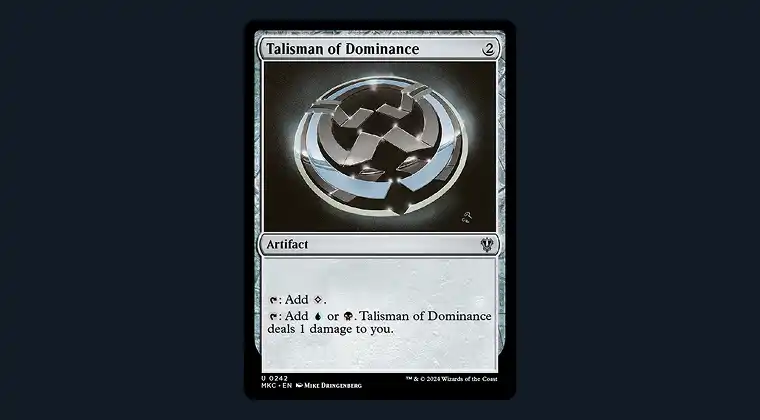
| Card Type | Artifact |
| Mana Cost | {2} |
| Mana Produced | {C}, {U}, or {B} |
| Enters Tapped | No |
| Activation | {T}: Add {C}, {U}, or {B}. |
| Special Rules / Conditions | Deals 1 damage to you for colored mana |
| Price | ~$0.45 – $8 |
Talisman of Dominance just does its job without making a fuss. Two mana, comes in untapped, and immediately helps you move forward – that alone already puts it ahead of a lot of slower options. The tiny life loss when tapping for color is barely noticeable, especially in formats where life is just another resource.
Where this talisman really shines is in blue-black decks that want both speed and flexibility. Having instant access to either blue or black mana makes early turns much smoother, whether you’re holding up interaction or trying to land a key engine piece. If your deck is packed with the best black cards in MTG – removal, discard, tutors, or combo enablers – consistent black mana on turn two is exactly what you want.
Efficient two-mana ramp with immediate access to colored mana, with the tiny life loss rarely mattering.
Talisman of Dominance is reliable, efficient, and rarely feels like a bad draw. In Dimir decks especially, it’s the kind of card you add once and never really question again.
16. Lotus Petal
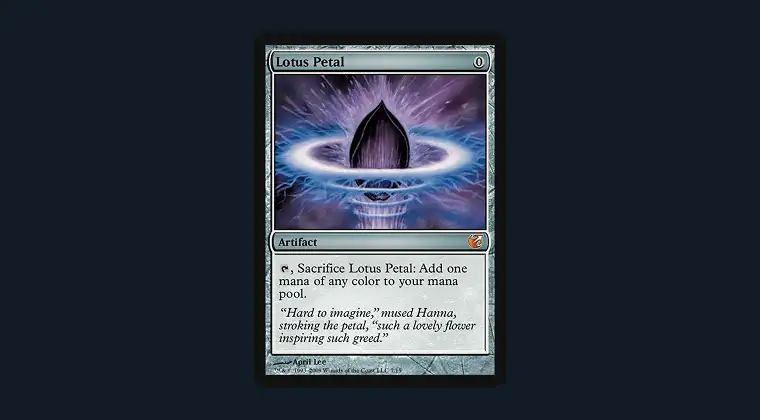
| Card Type | Artifact |
| Mana Cost | {0} |
| Mana Produced | One mana of any color |
| Enters Tapped | No |
| Activation | {T}, Sacrifice: Add one mana of any color. |
| Special Rules / Conditions | One-shot mana |
| Price | ~$10 – $40 (older/rare prints can be higher) |
A free artifact that sacrifices for one mana of any color doesn’t sound like much at first – until that single mana lets you cast your commander a turn early, protect a combo with interaction, or squeeze two spells into a turn when you normally couldn’t. It’s less about long-term ramp and more about perfect timing.
The best thing about Lotus Petal is how adaptable it is. It fixes any color, costs nothing to deploy, and sits there waiting until you need that one crucial burst. In faster or combo-focused builds, that kind of efficiency is huge, which is why it often shows up among the top mana rocks for Commander decks that care more about speed than staying power.
A one-shot mana boost that’s perfect for explosive starts and combo turns where every single mana counts.
That said, it’s not for every table. In slower, grindier games, Petal can feel underwhelming compared to rocks that stick around and keep producing mana. But if your deck values tempo and explosive turns, Lotus Petal quietly overperforms.
17. Mox Opal
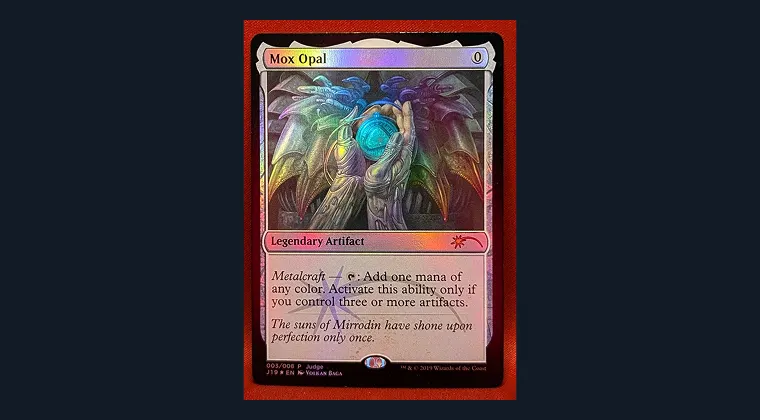
| Card Type | Artifact |
| Mana Cost | {0} |
| Mana Produced | One mana of any color (with Metalcraft) |
| Enters Tapped | No |
| Activation | {T}: Add one mana of any color. |
| Special Rules / Conditions | Metalcraft – requires 3 artifacts |
| Price | ~$80 – $250 |
Mox Opal is the kind of card that does not look like much until you play it in the deck that actually supports it, and then it feels borderline unfair, which is why people call it one of the best mana rocks in MTG. Zero mana for any color is already wild, but Metalcraft is the real gatekeeper. If you can keep three artifacts on the board, this thing turns into a free rainbow land that does not even take up a land slot.
In artifact heavy decks, it is kind of ridiculous. Signets, treasures, random baubles, suddenly Metalcraft is always on and Opal is just pure acceleration. You get ahead on mana without spending mana, which is the dream. It feels especially nasty when you chain multiple cheap artifacts and your turn just keeps going.
Free acceleration with metalcraft that shines in artifact-heavy builds, often acting like a true zero-cost land.
Outside of those shells, though, it can be awkward. Nothing feels worse than staring at a shiny Mox that refuses to tap. So it is very much a build around card. But when your deck supports it, Mox Opal feels like you are getting away with something.
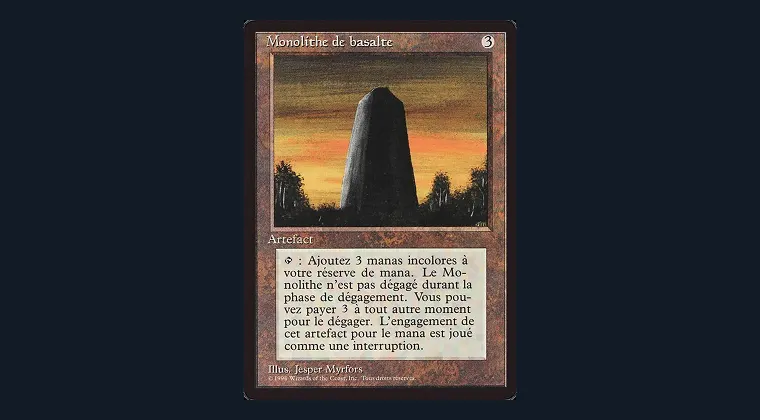
18. Basalt Monolith
| Card Type | Artifact |
| Mana Cost | {3} |
| Mana Produced | {C}{C}{C} |
| Enters Tapped | No |
| Activation | {T}: Add {C}{C}{C}. |
| Special Rules / Conditions | Doesn’t untap normally; {3}: Untap Basalt Monolith |
| Price | ~$10 – $40 |
Basalt Monolith feels like a weird relic from old Magic that somehow still causes trouble today. Three mana to cast, tap for three mana immediately, and then it stubbornly refuses to untap unless you pay for it. On the surface, it looks clunky, almost awkward, like it should be mediocre.
Then you actually play it and realize how much three extra mana at once matters. It lets you jump turns in a way most rocks cannot. Big spells come down earlier, combos get easier to assemble, and if you have any untap synergies, things start getting silly fast. It has that classic “this might be dangerous” energy baked right into it.
Chunky three-mana ramp that pairs especially well with infinite-mana combos and big spell strategies.
Basalt Monolith feels powerful in an old school, slightly suspicious way. Every time I tap it, I feel like I am about to either win the game or accidentally do something broken, and honestly, that is a pretty fun place to be.
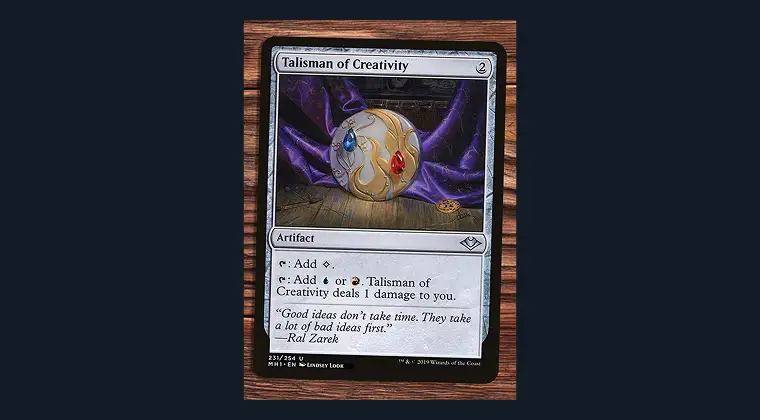
19. Talisman of Creativity
| Card Type | Artifact |
| Mana Cost | {2} |
| Mana Produced | {C}, {U}, or {R} |
| Enters Tapped | No |
| Activation | {T}: Add {C}, {U}, or {R}. |
| Special Rules / Conditions | Deals 1 damage to you for colored mana |
| Price | ~$2 – $10 |
Not every mana rock needs to be explosive to be good, and Talisman of Creativity is a perfect example of that. It hits the table for two mana, enters untapped, and immediately gives you access to both blue and red. That alone makes it feel smooth and dependable, especially compared to slower rocks that make you wait a turn before doing anything useful.
In Izzet decks, that flexibility is gold. Being able to cast a burn spell, hold up interaction, or chain cantrips without worrying about color screw keeps your turns flowing naturally. If your deck is stacked with the best red cards in MTG alongside blue staples, the Talisman quietly supports all of it, making sure you always have the right mana at the right time.
Fast, flexible fixing that keeps your tempo high while reliably covering both of your key colors.
The life loss is almost a non-issue – one life here and there is a tiny price to pay for clean fixing and early acceleration. It may not steal the spotlight, but Talisman of Creativity is exactly the kind of rock you want when consistency matters more than spectacle.
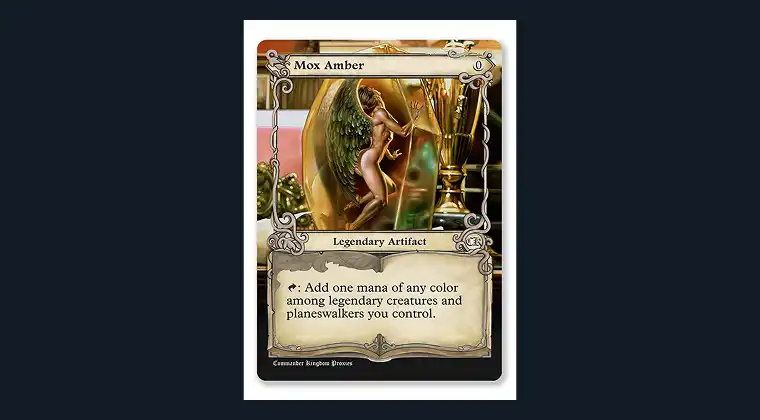
20. Mox Amber
| Card Type | Artifact |
| Mana Cost | {0} |
| Mana Produced | Mana of a color among legendary permanents you control |
| Enters Tapped | No |
| Activation | {T}: Add one mana of a color among legendary creatures and planeswalkers you control. |
| Special Rules / Conditions | Requires legendary permanents to function |
| Price | ~$30 – $80+ |
Mox Amber is the most polite of the Mox family. It does not explode like Chrome Mox or demand sacrifices like Diamond. Instead, it just quietly asks if you happen to have a legendary creature or planeswalker hanging around. If you do, great. Free mana. If not, it just sits there looking awkward.
In the right deck, though, it is kind of amazing. Commander decks almost always revolve around a legendary creature, so once your commander hits the board, Amber basically becomes a zero cost mana rock.
Since many commanders also happen to be some of the best mythic rare MTG cards in your collection, this artifact rewards you for playing your most powerful legendary permanents as early as possible.
Zero-mana acceleration that rewards legendary-heavy decks with free mana and effortless synergy.
It definitely has some “dead card” moments early, but when it turns on, it feels smooth and efficient rather than explosive or risky. I like it because it rewards building around your commander instead of just brute forcing speed. It is subtle, but surprisingly strong when everything lines up.
How to Choose the Best Mana Rocks in MTG for Your Deck
When you’re sorting through the best MTG mana rocks, it’s easy to grab every shiny staple and call it a day. But the truth is, the best mana rocks depend a lot on your deck’s speed, colors, and game plan.
Start With Your Deck’s Speed and Power Level
“Best” always depends on how fast you’re trying to develop your board.
If you’re playing casually, you usually want steady, reliable MTG mana rocks that smooth things out instead of exploding out of the gate. Think consistent 2–3 mana options that help you hit land drops and cast your commander on time.
Here’s a quick rule of thumb:
- Faster decks → more 0–1 cost ramp
- Most decks → core of 2-mana rocks
- Slower decks → can afford 3-mana value rocks
Guidelines by power level:
- Casual: mostly steady 2–3 mana options
- Mid-power: strong 2-mana suite, limited fast mana
- High-power: more 0–1 mana acceleration
Example: A battlecruiser dragon deck is happy with Commander’s Sphere and Chromatic Lantern. A tuned combo list wants Chrome Mox and Lotus Petal to explode early. Same slot, totally different job.
Pick Rocks That Fix Your Colors and Hit Your Curve
Color access first, extras second. Fancy text doesn’t matter if you can’t cast your spells.
Use this quick checklist:
- Does it help cast my commander on curve?
- Does it make the colors I miss most?
- Does it enter untapped when tempo matters?
Multicolor decks usually want more fixing-focused Commander mana rocks, since missing one pip can stall your whole turn. Mono-color or colorless builds can lean harder on raw efficiency and cheaper pieces.
In practice, many of the best mana rocks in MTG are boring on paper but amazing in games because they quietly make everything smoother.
Use Synergy, Meta, and Budget to Finalize Your Ramp Package
This is where deck personality kicks in. Your theme should guide your final picks.
A few examples:
- Artifact decks love cheap rocks that boost metalcraft or count as pieces
- Legendary shells like synergy pieces
- Token or creature builds can use tap-creature rocks
- Combo decks value burst mana over long-term value
Also think about your local meta. If artifact wipes show up often, don’t overload on fragile ramp. Keep your plan functional after disruption.
Budget-wise, don’t stress chasing every premium staple. Smart fits and solid mana rocks for Commander often perform just as well at a fraction of the cost.
Concrete target: most Commander decks run around 8–12 total ramp pieces, adjusting based on curve and table speed. Faster tables = more ramp. Slower tables = fewer, value-focused pieces.
Conclusion: Your Mana Rocks, Your Game Plan
The best mana rocks in MTG aren’t the flashiest ones, or the priciest ones, or the ones your friend swears are auto-includes. They’re the rocks that make your deck feel clean: your early turns stop stuttering, your hands stop fighting your colors, and you actually get to do the fun stuff you built the deck to do.
When I’m making final cuts, I always come back to one simple thing: does this rock’s mana ability help me cast my key spells on time, or is it taking up space while I hope the game goes long? If it fixes your colors, hits your curve, and doesn’t mess up your tempo, it’s doing its job. Everything else is a bonus.
Whether you’re tuning paper decks at your local table or trying to play Commander in MTG Arena, the same logic holds up: smoother mana means you get to play more Magic and spend less time staring at spells you can’t cast. Pick rocks that match your pace, and the deck will feel like it’s cooperating instead of arguing with you.
FAQs
There is no single best mana rock for every deck, but Sol Ring is widely considered the strongest overall due to its one-mana cost and ability to produce two mana immediately. Its efficiency, reliability, and legality in Commander make it the most commonly played option.
Mana rocks are good because they accelerate gameplay, improve mana consistency, and help decks function smoothly. They allow you to cast important spells earlier, recover faster after disruption, and fix colors in multicolor decks, which is especially important in Commander.
Yes, mana rocks are a form of mana ramp. They increase your available mana beyond normal land drops, either by producing extra mana or by fixing colors efficiently. Unlike land ramp, they are artifacts, which makes them faster but also more vulnerable to removal.
No, mana rocks do not count as lands. They are artifacts that produce mana, not lands themselves. This distinction matters for deck construction, card effects that reference lands, and gameplay interactions like land destruction or land-based ramp spells.
Mana is not a physical rock. In Magic: The Gathering, the term “mana rock” is a nickname for artifacts that produce mana. The word “rock” comes from early Magic slang and does not refer to a real material or card subtype.
Most Commander decks run 36 to 38 lands, supplemented by 8 to 12 mana rocks or ramp pieces. The exact number depends on your deck’s curve, colors, and strategy, with faster decks using more rocks and fewer lands.