

15 Best Green Cards in MTG for 2026: Power, Ramp, and Game-Enders

Eneba Hub contains affiliate links, which means we may earn a small commission if you make a purchase through them—at no extra cost to you. Learn more

The best green cards in MTG ramp faster, fix better, and end games harder than any other color. Early ramp lets you curve into haymakers while others are still fixing. Green smooths out greedy mana bases, fuels creature-based draw engines, then tramples, overruns, or craterhoofs the table.
I’ve sleeved up green in everything from casual pods to tuned Commander lists, and these are the cards that force the table to react.. If you want your Forests to do real work, this is the short list.
Jump to:
The 15 Best Green Cards in MTG That Ramp Fast & End Games Harder
Here I’ll highlight the best green cards in MTG that see consistent play across Commander and other popular formats. Each card fills a clear green role and solves common deck-building problems players face when upgrading green-based lists.
1. Finale of Devastation [Early Tutor, Craterhoof on Demand]
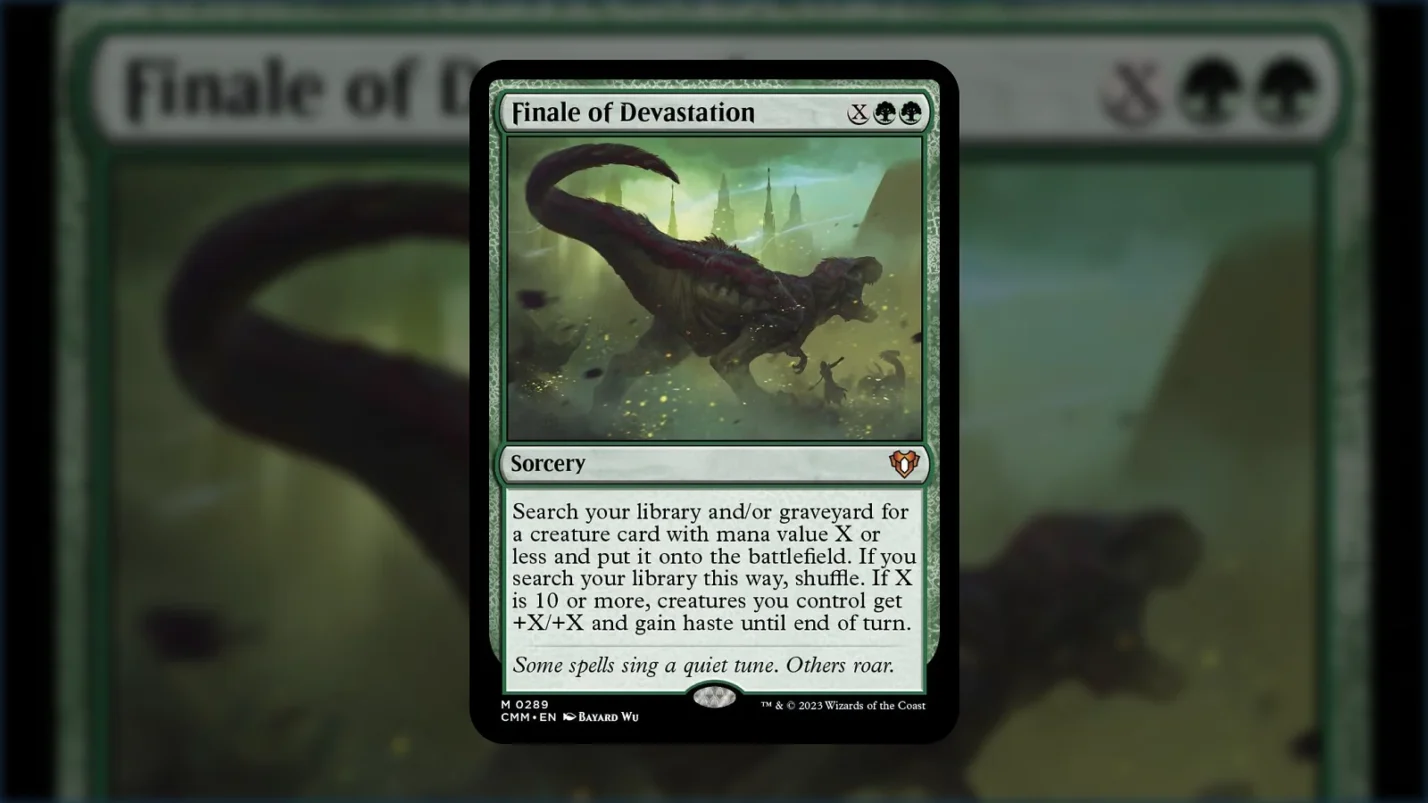
Finale of Devastation is green at full power. It tutors, reanimates, and ends the game on the spot if you have enough mana.
| Element | Details |
|---|---|
| Mana Cost | XGG |
| Card Type | Sorcery |
| Primary Role | Tutor/Finisher |
Finale searches your library or graveyard for a creature and puts it directly onto the battlefield. That flexibility alone makes it powerful. The real payoff comes later. When X is ten or more, you get an Overrun effect without Trample, but that doesn’t matter since you’ll probably fish out Craterhoof anyway.
This kind of flexible tutoring is highly important in slower, high-impact builds like those led by top angel commanders, where accessing the right threat at the right time often decides the game.
It also pairs naturally with many best Commander staples built around creature density.
Finale compresses tutoring, recursion, and a game-ending effect into one slot, which is rare even among the best green cards in MTG. Green isn’t big on reanimation, and this is one of the few ways to do it consistently.
I’ve cast this for three just to stabilize and for 12 to trample the table. That flexibility made it one of my Commander staples in green. It scales with your mana, rewards creature density, and turns any established board into a win the moment it resolves.
2. Invasion of Ikoria [Creature Toolbox With Teeth]
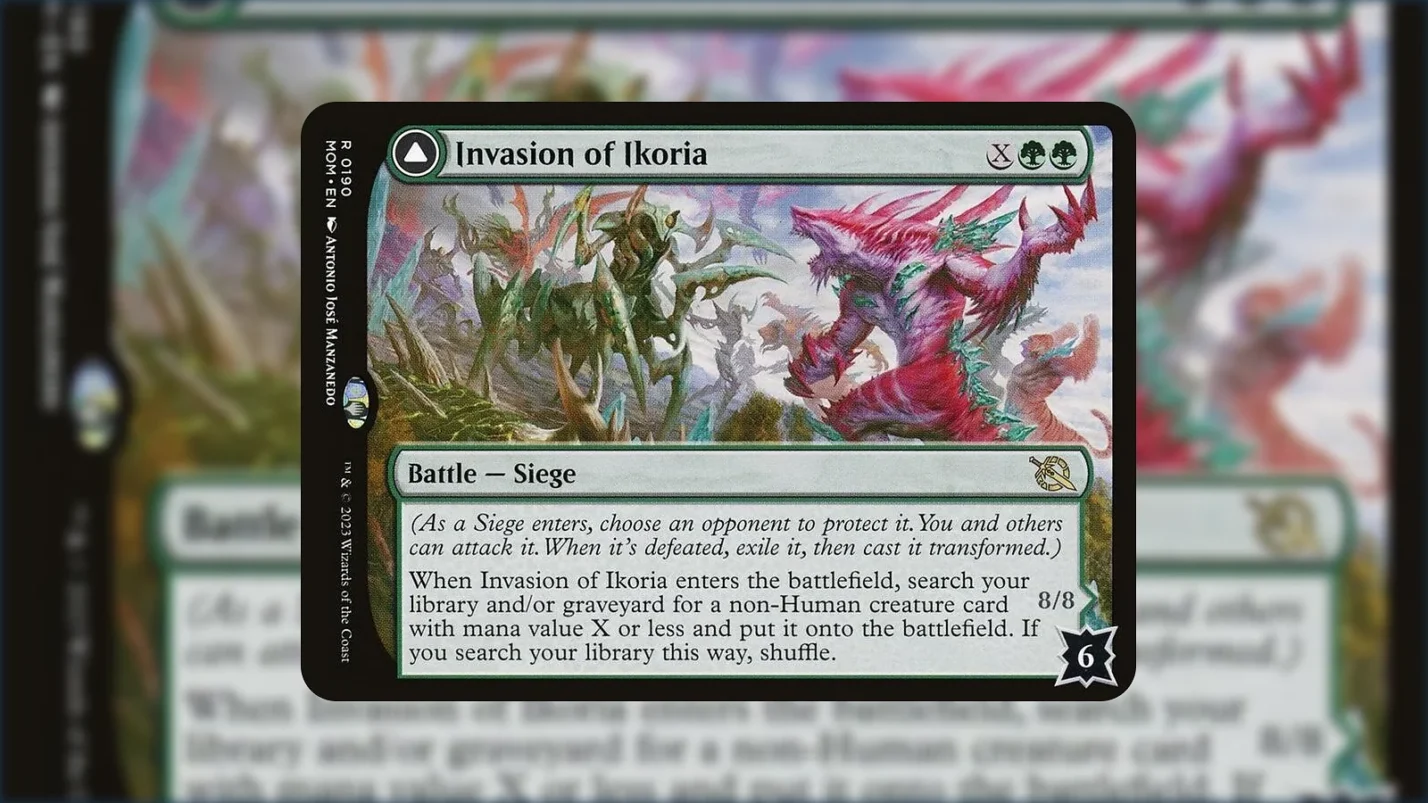
Invasion of Ikoria is a flexible tutor that adapts to game state and deck speed. I’ve run it in creature-dense shells where I didn’t want to commit to fragile combo lines but still needed consistent access to key pieces.
| Element | Details |
|---|---|
| Mana Cost | XGG |
| Card Type | Battle – Siege |
| Primary Role | Tutor/Board Pressure |
On the front side, Invasion of Ikoria tutors any creature with mana value X or less and puts it onto the battlefield.
In the earlier stages, it grabs mana dorks or utility pieces. And later, it fetches game-ending threats. After defeat, it flips into a massive Trampler that pressures life totals immediately.
Invasion of Ikoria stays live at every stage of the game. Early, it finds acceleration or interaction. Late, it grabs your biggest threat and demands an answer.
And when it flips, combat changes completely. Zilortha lets your non-Human creatures assign damage as though they weren’t blocked, which often turns a developed board into lethal out of nowhere.
3. Green Sun’s Zenith [The Gold Standard of Green Tutors]
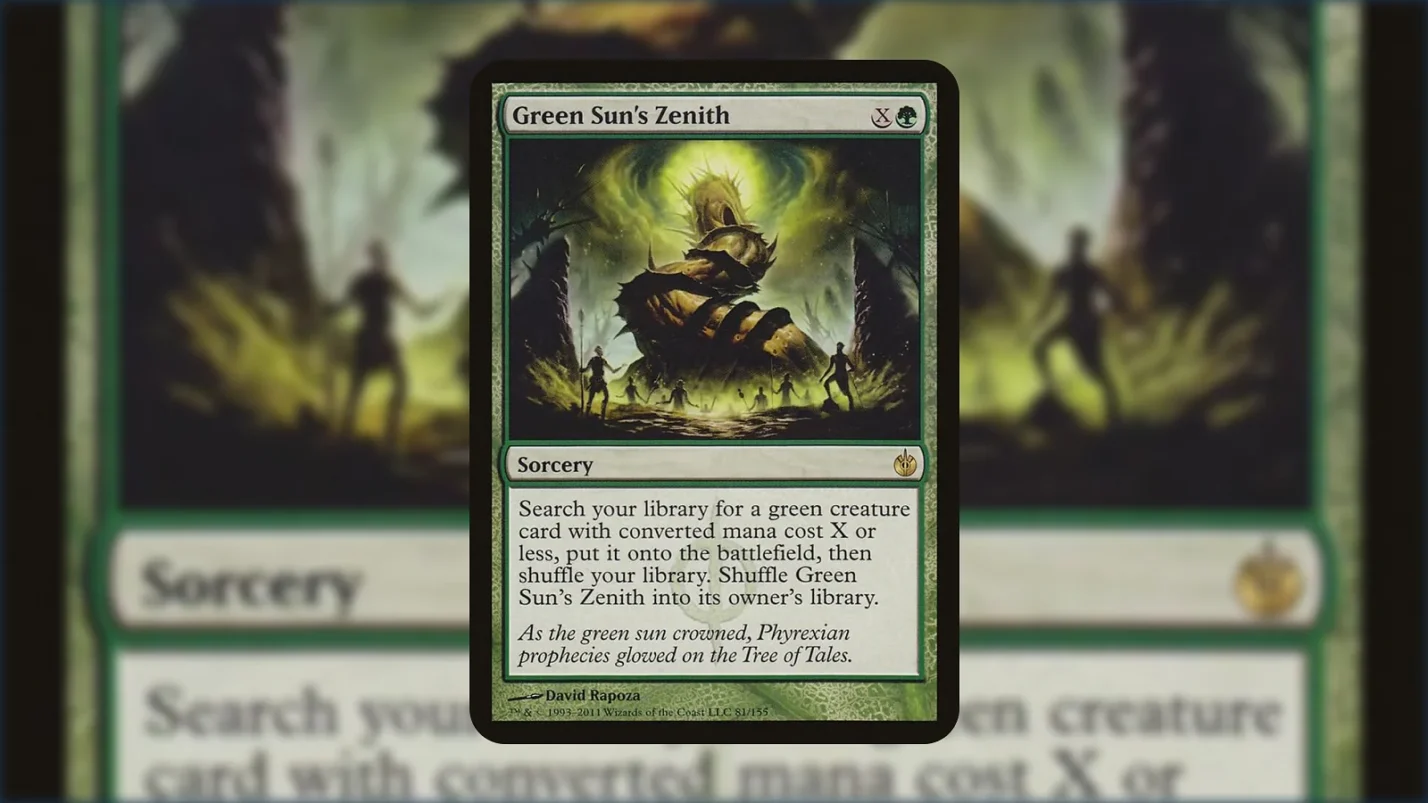
Green Sun’s Zenith is the gold standard for green creature tutoring. It’s cheap, scalable, and keeps coming back for more. All of this makes it one of the best MTG cards to use at any point of the game.
| Element | Details |
|---|---|
| Mana Cost | XG |
| Card Type | Sorcery |
| Primary Role | Tutor |
Zenith tutors for a green creature with mana value X or less, and then the next stop is the battlefield. After resolution, it shuffles itself back into the library, which allows repeated use over long games.
This repeatable access to key creatures is one reason Green Sun’s Zenith appears so frequently in decks built around the best elf commanders.
Few cards offer this level of efficiency and repeatability like Zenith in creature-based green decks. Zenith is the best card if you want to understand how green leverages mana advantages.
Early game, it’s Dryad Arbor for ramp. Midgame, it’s your value engine. Later, it grabs whatever payoff your board is built around. Then it shuffles itself back into your library, which means you’re never really out of access.
4. Channel [Pay Life, Cast Anything]
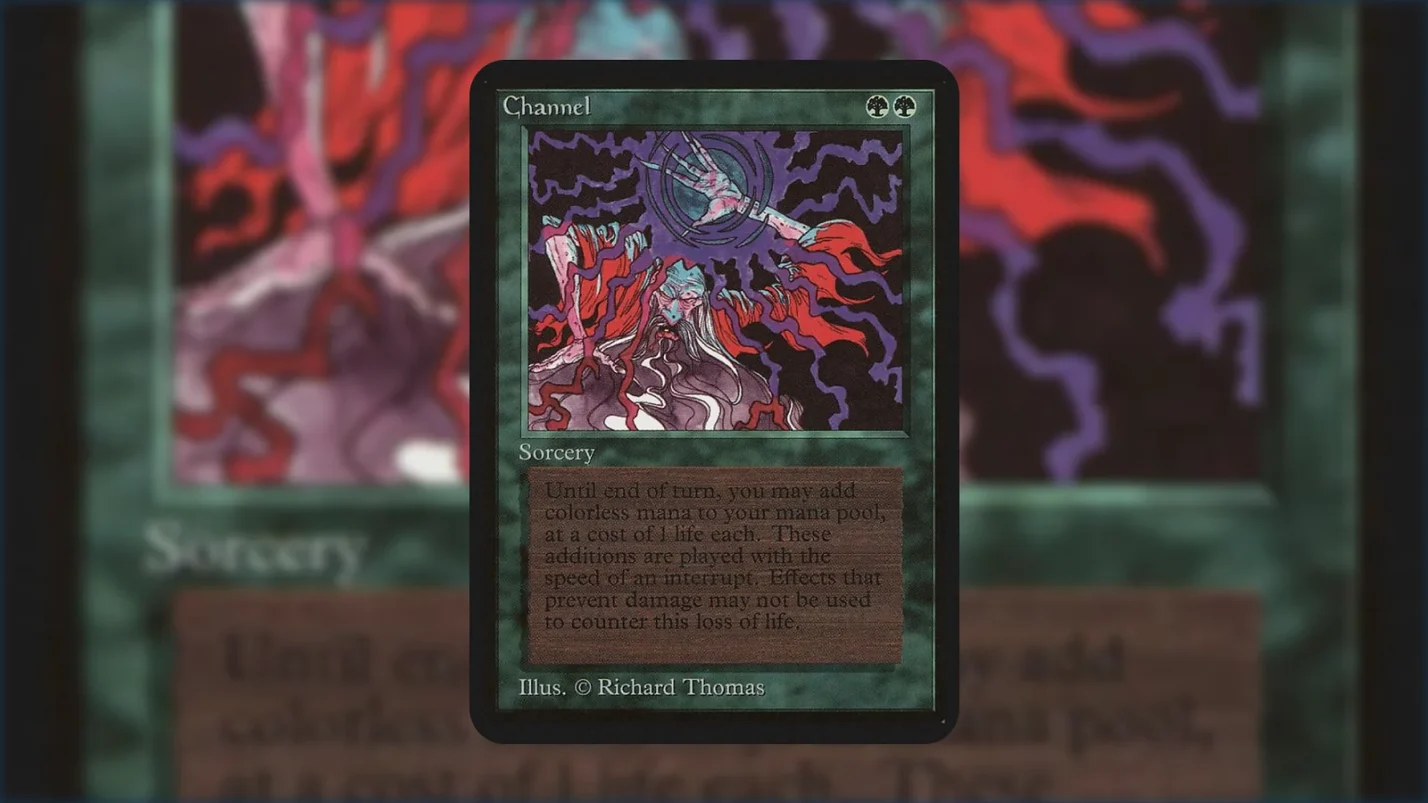
Channel is one of the most infamous green spells ever printed. It turns life directly into mana, and that exchange has broken formats before.
| Element | Details |
|---|---|
| Mana Cost | GG |
| Card Type | Sorcery |
| Primary Role | Mana Acceleration |
Channel lets you pay 1 life for one colorless mana, with no cap beyond your life total. That means absurd early plays. Think dumping your life total into an Eldrazi or a lethal Fireball before the table is ready. Even though it’s banned in most formats, Channel is still one of the best green cards in MTG.
Channel demonstrates the extreme ceiling of green mana acceleration better than almost any other green spell. This card can end games before they even begin by turning life into mana.
Channel shows just how far green spells in MTG are willing to push resource conversion. Few cards illustrate risk-versus-reward (or raw explosive potential) better in the history of the game.
5. Triumph of the Hordes [One Swing, Ten Poison]
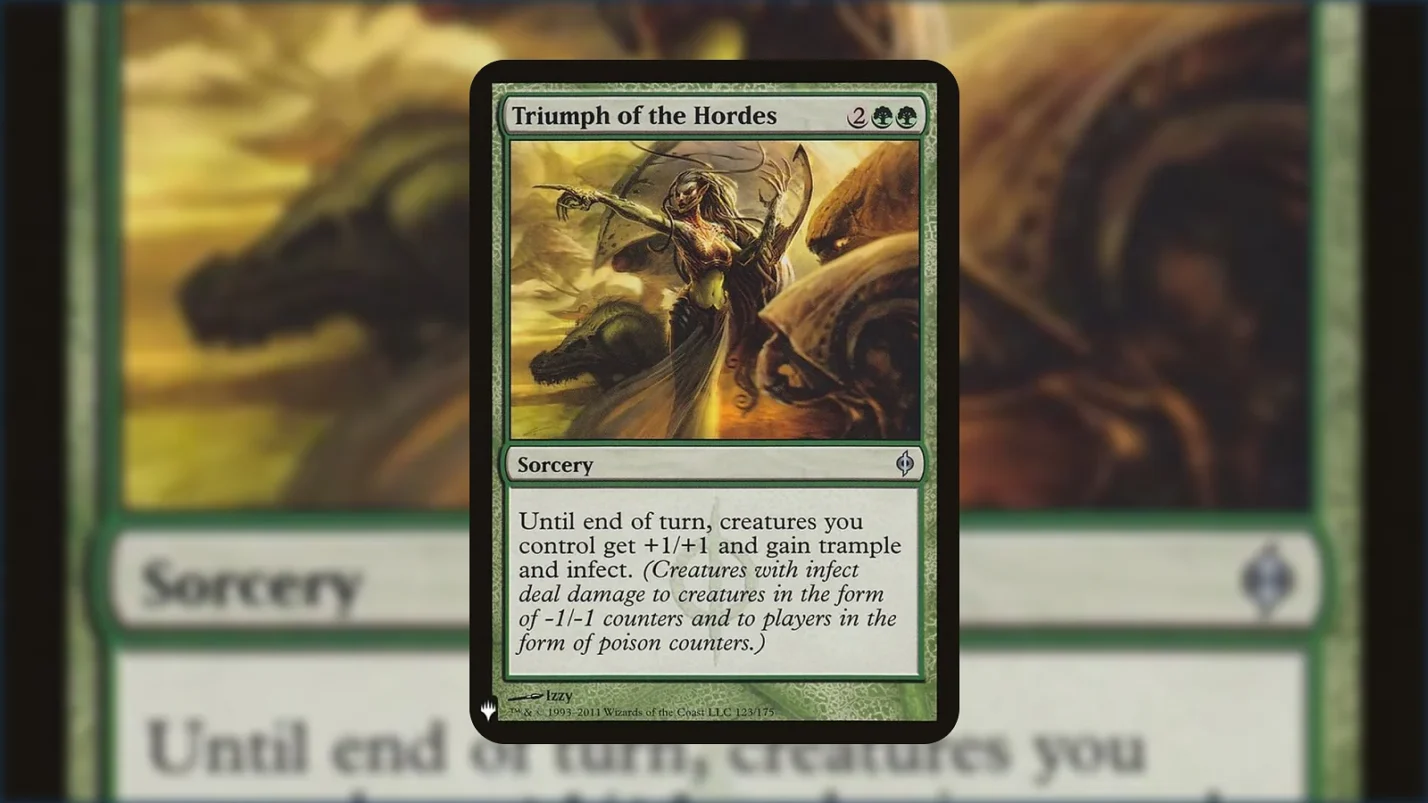
Triumph of the Hordes ends games out of nowhere. It can turn a modest board into lethal damage before you know it.
| Element | Details |
|---|---|
| Mana Cost | 2GG |
| Card Type | Sorcery |
| Primary Role | Finisher |
It gives all your creatures +1/+1, trample, and infect until end of turn. Infect turns combat math upside down. Ten poison counters is all it takes, so even a board of five or six creatures can suddenly represent lethal to multiple opponents.
It’s a staple in token decks and aggressive green shells, and often works well with the best token commanders when players want fast, decisive wins.
Triumph of the Hordes is one of the best green cards in MTG if you want to steal games out of nowhere. If you already have creatures, Triumph does the rest.
I’ve seen stable boards collapse the turn this resolves, especially when players think they’re safe at high life totals.
6. Natural Order [Sac a Dork, Drop a Bomb]
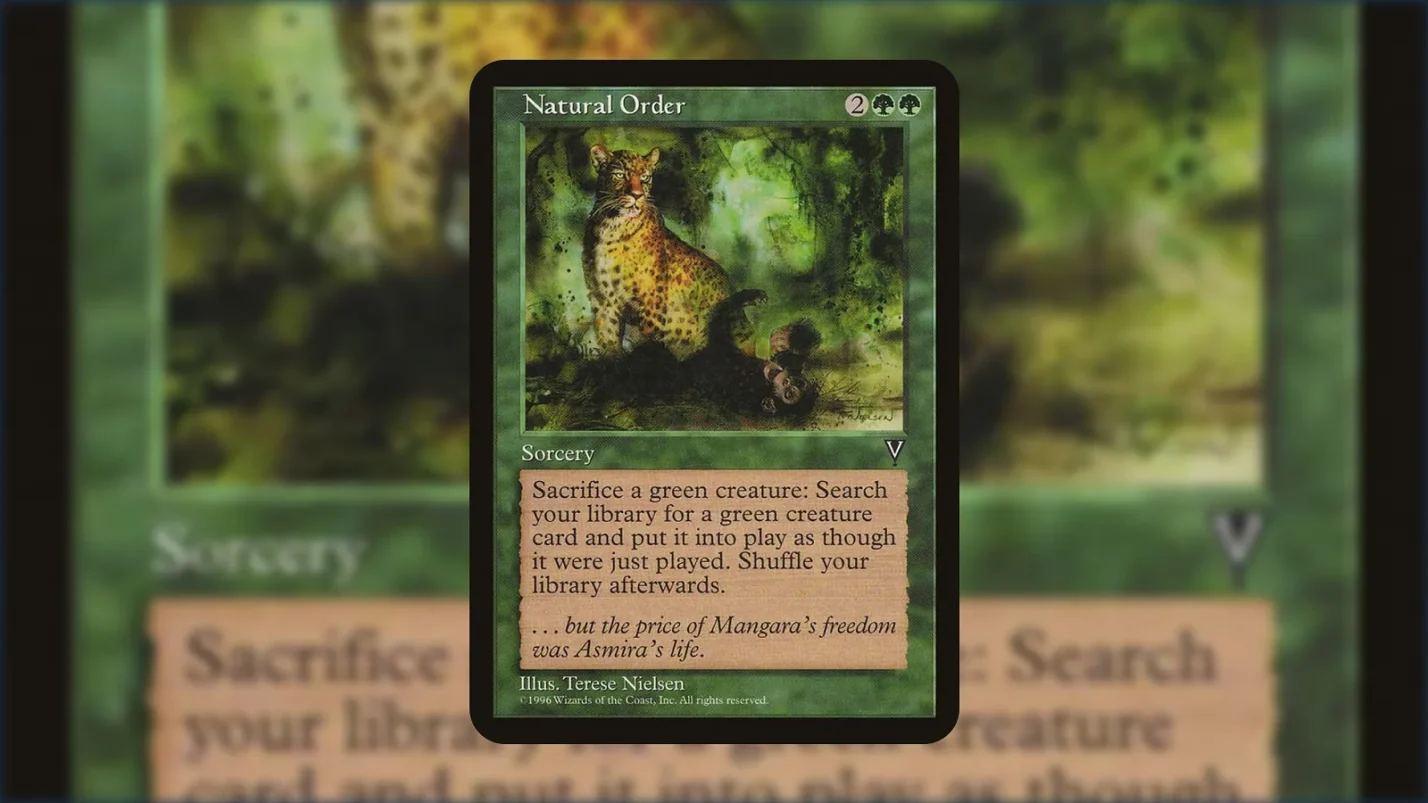
Natural Order is one of the cleanest cheat green spells MTG has ever gotten. Four mana, one creature, and suddenly the biggest threat in your deck is on the battlefield.
| Element | Details |
|---|---|
| Mana Cost | 2GG |
| Card Type | Sorcery |
| Primary Role | Sacrifice-Based Creature Tutor |
You sacrifice a green creature, search your library for some of the best green green creatures MTG has, and put it straight onto the battlefield. In decks built around it, that “downside” is barely a cost. It’s often just turning a mana dork (think Dyad Arbor) into something that ends the game.
Few MTG green spells create this kind of board swing for four mana. It can convert a random elf into Craterhoof or a game-warping threat before the table has time to react
Natural Order skips the hard part. Instead of waiting to hit eight or more mana, you turn a spare creature into your best threat right now. That tempo swing is why it keeps showing up among the best green cards in MTG.
7. Life from the Loam [Three Lands, Every Turn]
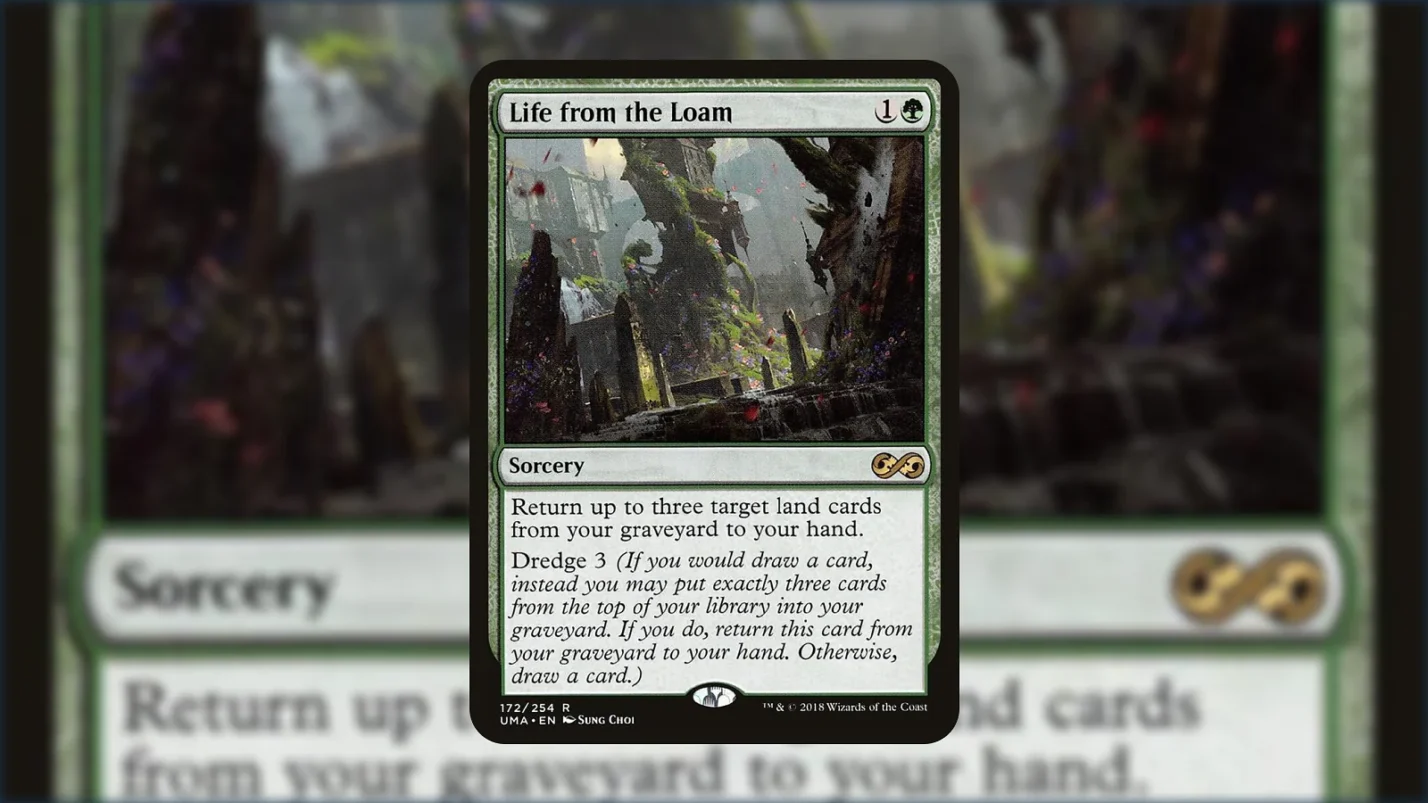
Life from the Loam is one of the best MTG green spells if you want to turn lands into a renewable resource engine. it digs up land cards from your graveyard, but Dredge can also put cards there each turn.
| Element | Details |
|---|---|
| Mana Cost | 1G |
| Card Type | Sorcery |
| Primary Role | Land Recursion Engine |
Loam keeps putting lands from your graveyard into your hand (think fetches, utility stuff, premium duals), and dredge keeps it coming back. Over a few turns, it snowballs. You’re replaying fetch lands, hitting every land drop, and quietly pulling ahead on resources.
I’ve used Loam to stabilize sketchy keeps and grind through removal-heavy tables. Once it’s dredging every turn, you stop topdecking lands and start choosing which ones you want back.
Loam doesn’t explode. It accumulates. Fetch lands, utility lands, cycle lands – they all come back. If you’ve ever watched Legacy Lands bury a table under Wasteland loops, you already know what this card does.
In grindy Commander pods, it turns your mana base into a resource you can reuse over and over. Once it’s online, you stop worrying about lands and start thinking about leverage. If that doesn’t scream best green cards in MTG, I don’t know what does.
8. Sylvan Tutor [Set Up the Perfect Draw]
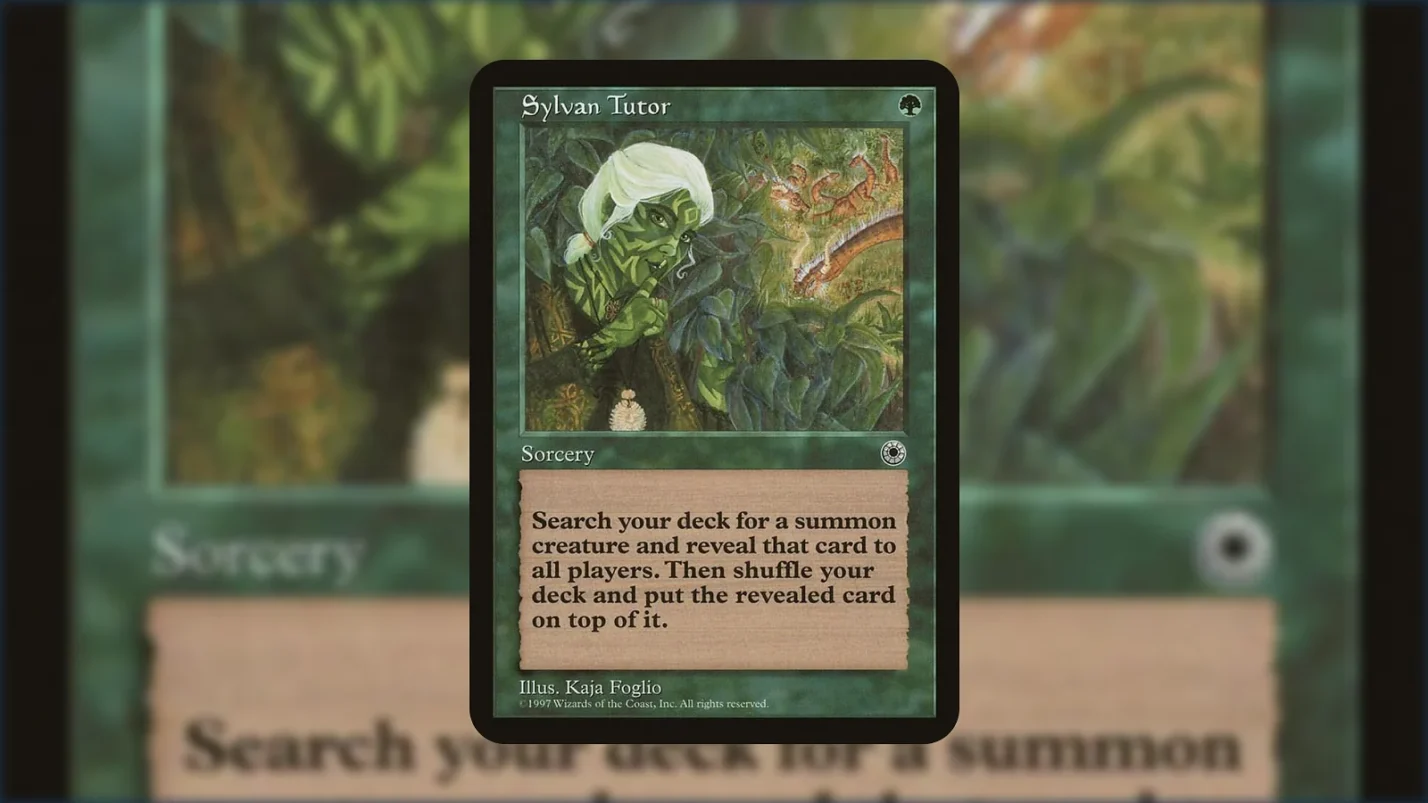
Sylvan Tutor is one of the best green cards if you’re into clean one-mana setups. It trades speed for precision, which suits many Commander decks perfectly.
| Element | Details |
|---|---|
| Mana Cost | G |
| Card Type | Sorcery |
| Primary Role | Topdeck Creature Tutor |
It searches your library for any creature and puts it on top, so it can’t tutor for OP planeswalkers or non-creature combo pieces. You don’t get the card immediately, but paying one mana to guarantee your next draw is a trade many Commander decks are happy to make. In slower pods, I like that precision more than raw tempo.
One mana for unconditional creature access makes Sylvan Tutor a clean and efficient setup tool. You can use it to line up combo pieces and late-game finishers with minimal investment.
I’ve used it to line up Craterhoof, set up Eternal Witness loops, and find silver bullets at the right moment. It doesn’t scream power, but in tight games, knowing exactly what you’re drawing next is a real edge.
9. Scapeshift [Cash In Your Mana Base]
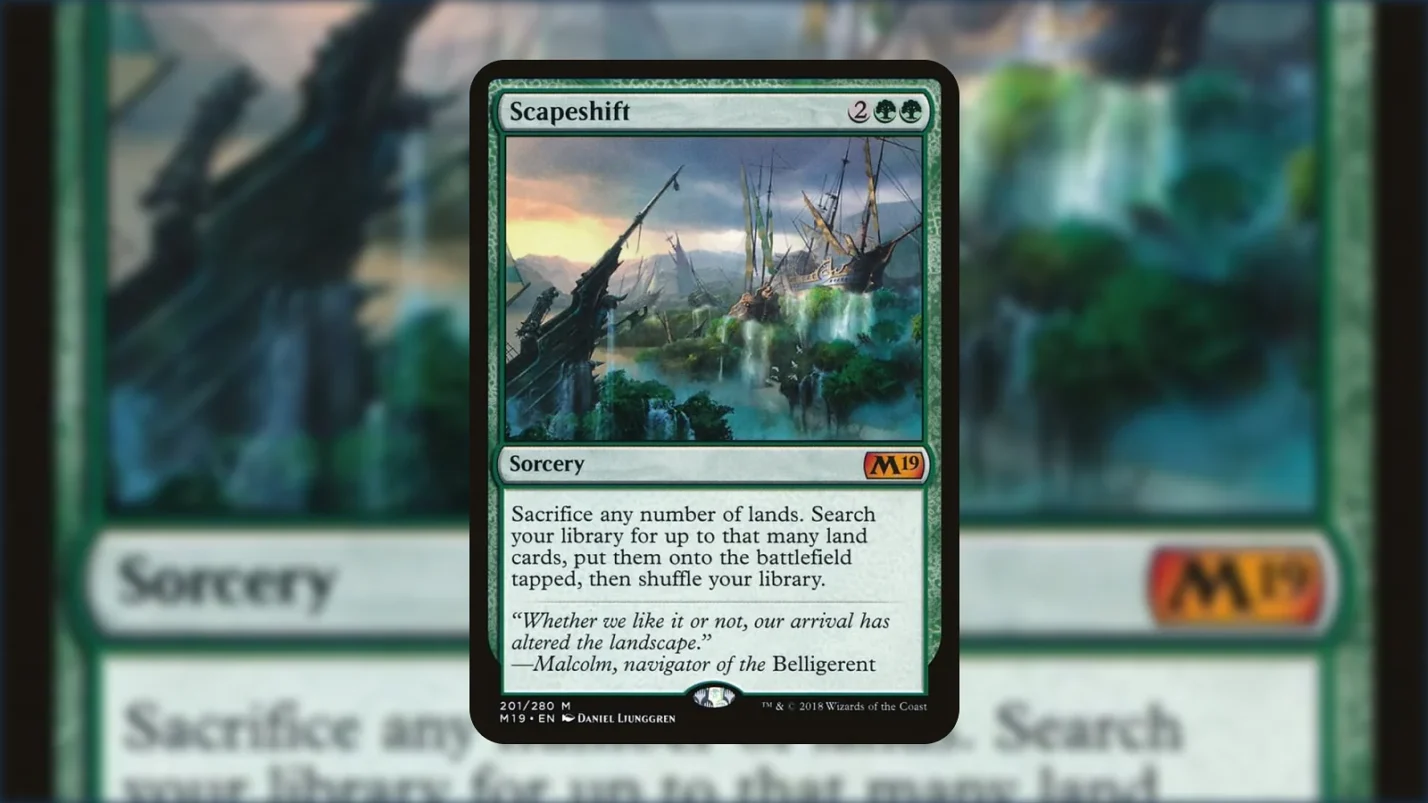
Scapeshift turns a pile of lands into whatever your deck is actually trying to do. It cashes them in for triggers, tokens, or a straight-up win.
| Element | Details |
|---|---|
| Mana Cost | 2GG |
| Card Type | Sorcery |
| Primary Role | Land Combo Assembler |
Scapeshift allows you to sacrifice any number of lands, then search for that many lands and put them onto the battlefield tapped. In landfall decks, this often creates overwhelming value in a single turn. In combo shells, it assembles specific land packages on the spot – Valakut lines, Field of the Dead setups, or whatever you’ve tuned your build around.
Scapeshift makes lands proactive. It can be a mana fixer, a win condition, and a combo assembler.
When your deck is built to exploit it, Scapeshift reads like “assemble win condition.” It’s one of the best green cards in MTG for land-driven strategies.
10. Pick Your Poison [The One-Mana Edict]
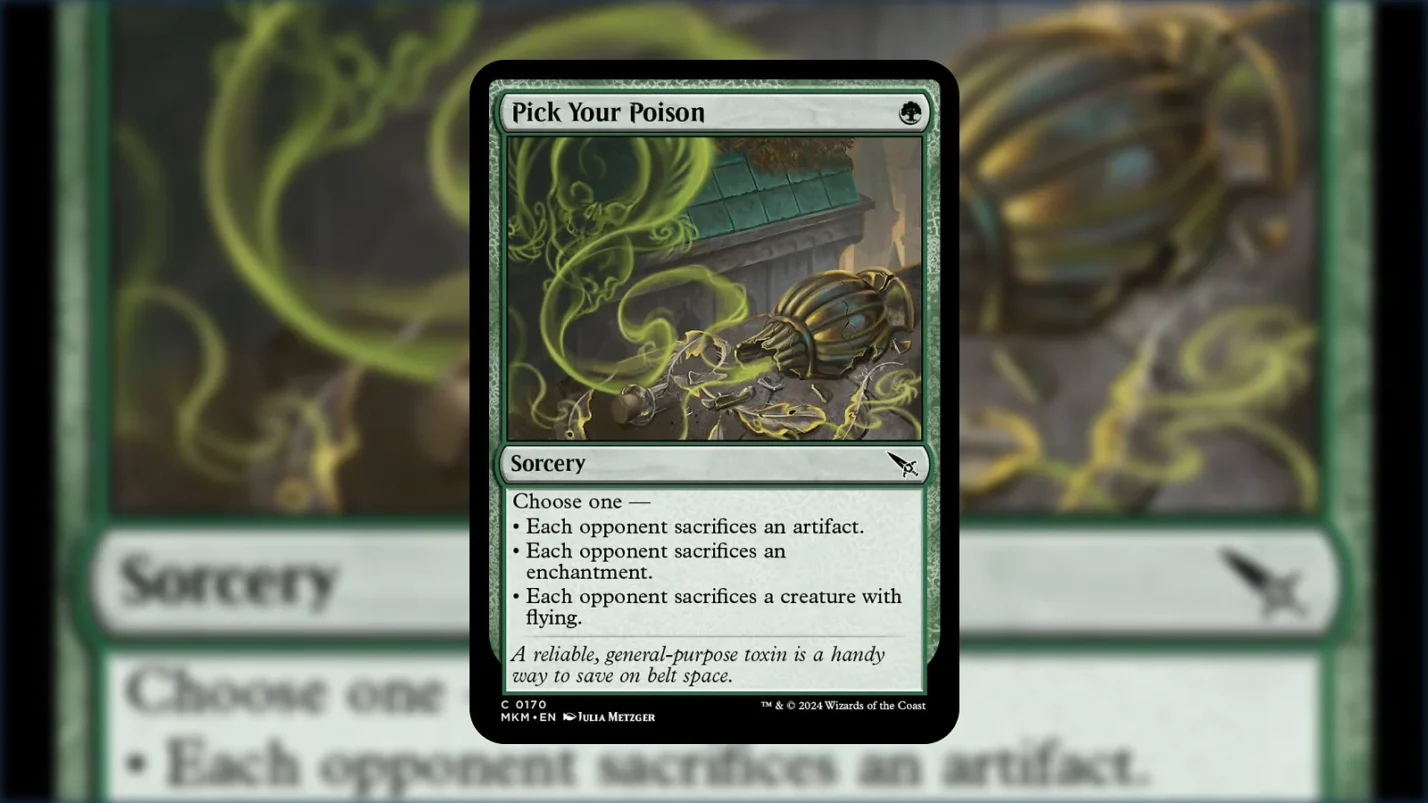
Pick Your Poison gives green a one-mana edict effect at instant speed. In Commander, where the biggest threat isn’t always targetable (or even a creature), that kind of flexible sacrifice pressure is huge.
| Element | Details |
|---|---|
| Mana Cost | G |
| Card Type | Instant |
| Primary Role | Modal Edict Effect |
It forces a sacrifice across different permanent types, depending on mode, which means it can hit creatures, artifacts, or enchantments without targeting. That alone makes it awkward to play around. I’ve used it to make opponents clip their essential mana rocks and break up enchantment engines.
Cheap interaction that scales across different board states keeps green decks responsive. It can remove protected threats that traditional removal couldn’t touch.
I value cards like this because they cover multiple weaknesses with one slot. Green struggles with direct removal, and Pick Your Poison gives meaningful answers without overcommitting.
11. Deconstruct [Artifact Removal With Mana Refund]
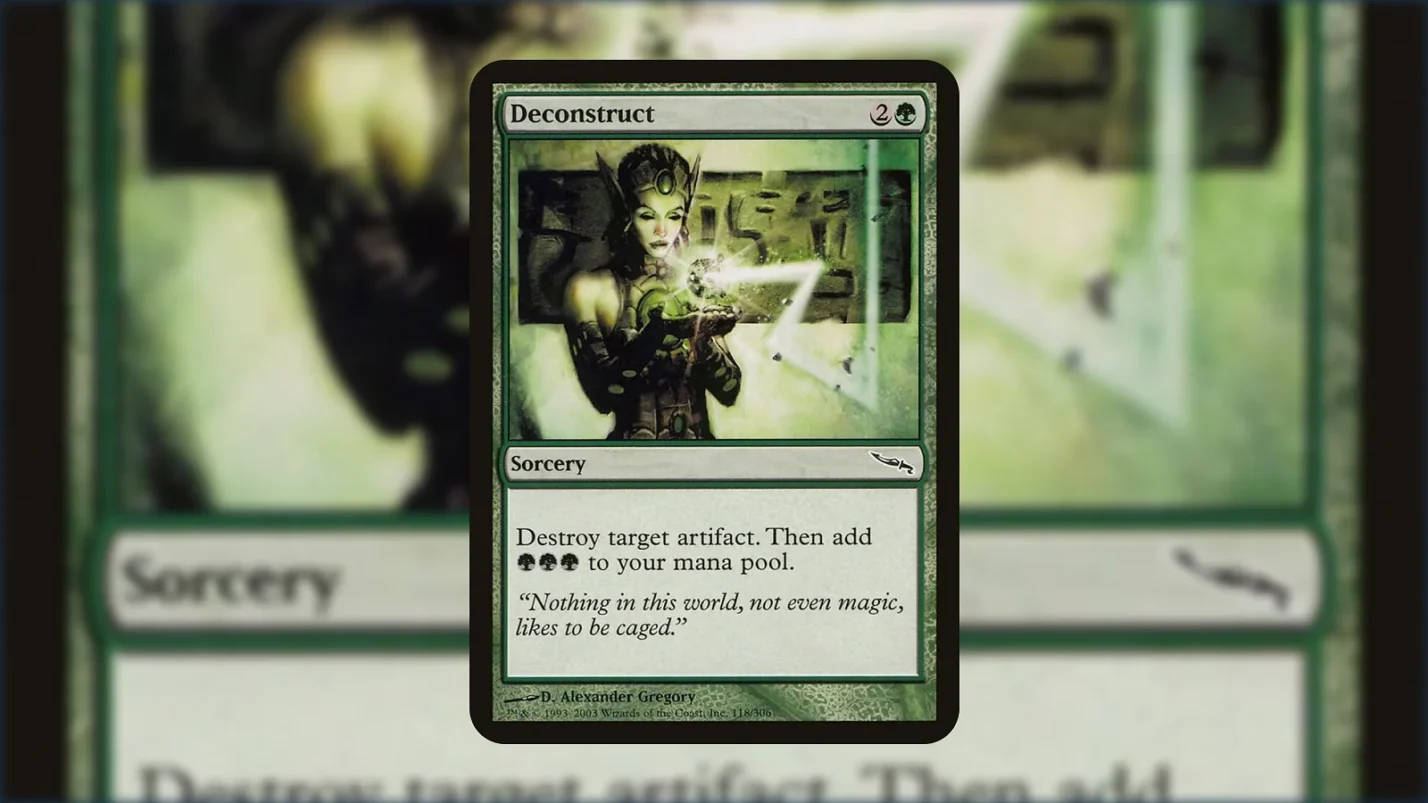
Deconstruct combines removal and mana acceleration in one clean package. It destroys an artifact without costing you tempo.
| Element | Details |
|---|---|
| Mana Cost | 2G |
| Card Type | Sorcery |
| Speed | Sorcery |
| Primary Role | Artifact Removal |
Deconstruct destroys an artifact and adds GGG, which means it buys itself back essentially. In many cases, this refunds the full cost of the spell or more, and against mana rocks, it often generates a tempo swing.
I love hitting mana rocks early with this cause players tend to count on those mana abilities, especially in Commander. Add a bit more disruption, and they’ll always be a few mana short of going off.
Deconstruct removes a threat while effectively paying for itself. It can clip a Sol Ring and still let you curve out the same turn.
This fits neatly into Green’s identity of gaining advantage while interacting. It’s one of those MTG green spells that brings back that Rewind or Palichron vibe.
12. Valgavoth’s Onslaught [Go Wide, Then Go Tall]
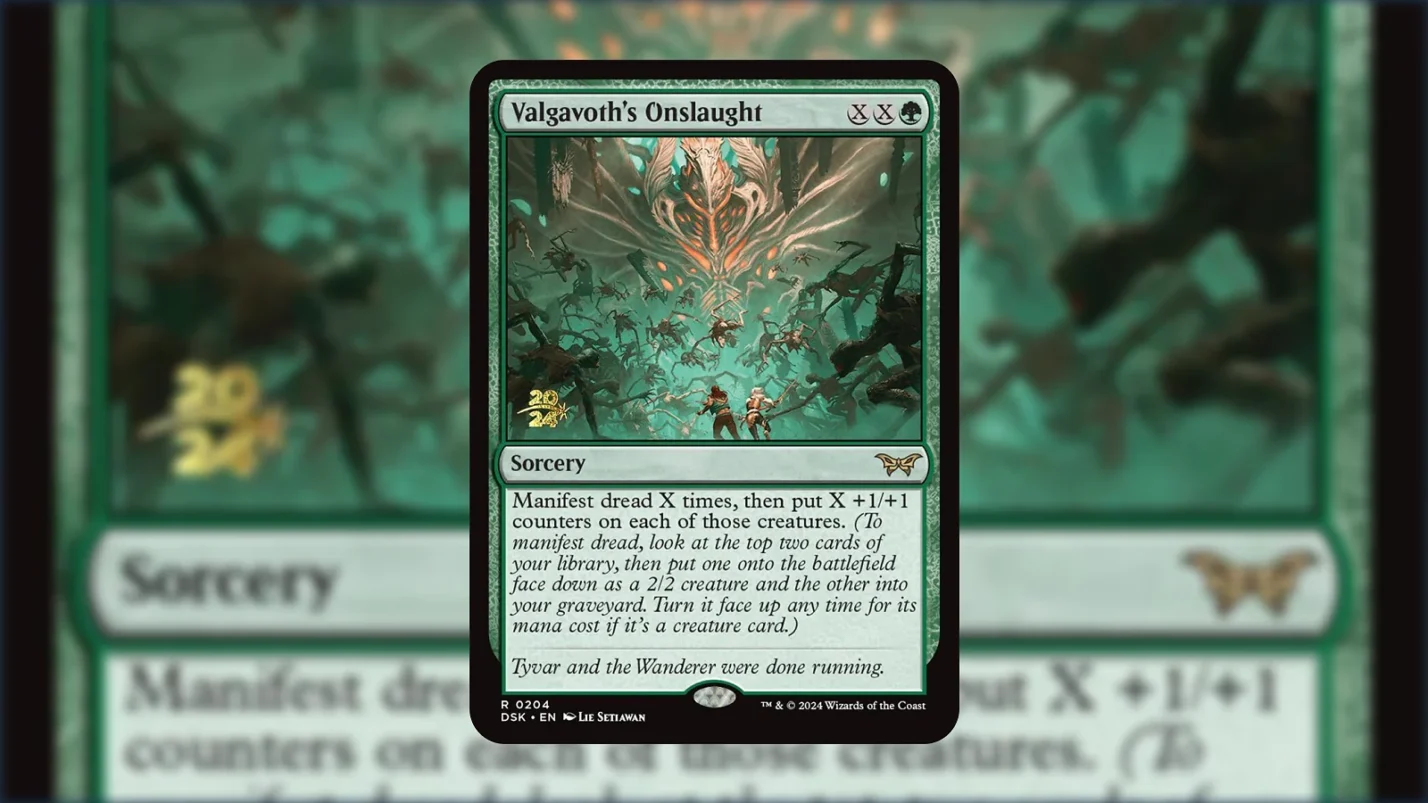
Valgavoth’s Onslaught is what you cast when you’ve got mana and nothing better to do with it. XXG gives you X manifested creatures, then immediately puts X +1/+1 counters on each of them. It scales fast.
| Element | Details |
|---|---|
| Mana Cost | XXG |
| Card Type | Sorcery |
| Primary Role | Scaling Board Multiplier |
The first time you cast this for six or more, it stops looking fair. You get bodies, sure, but also a board that’s suddenly large enough to threaten multiple players.
This is one of the best green cards in MTG to win stalled games. If the table has been building resources for several turns, Valgavoth’s Onslaught converts yours into immediate pressure.
It rewards creature-heavy builds and big-mana shells alike. When X gets high enough, combat math becomes trivial.
13. Fangs of Kalonia [Hardened Scales’ Big Brother]
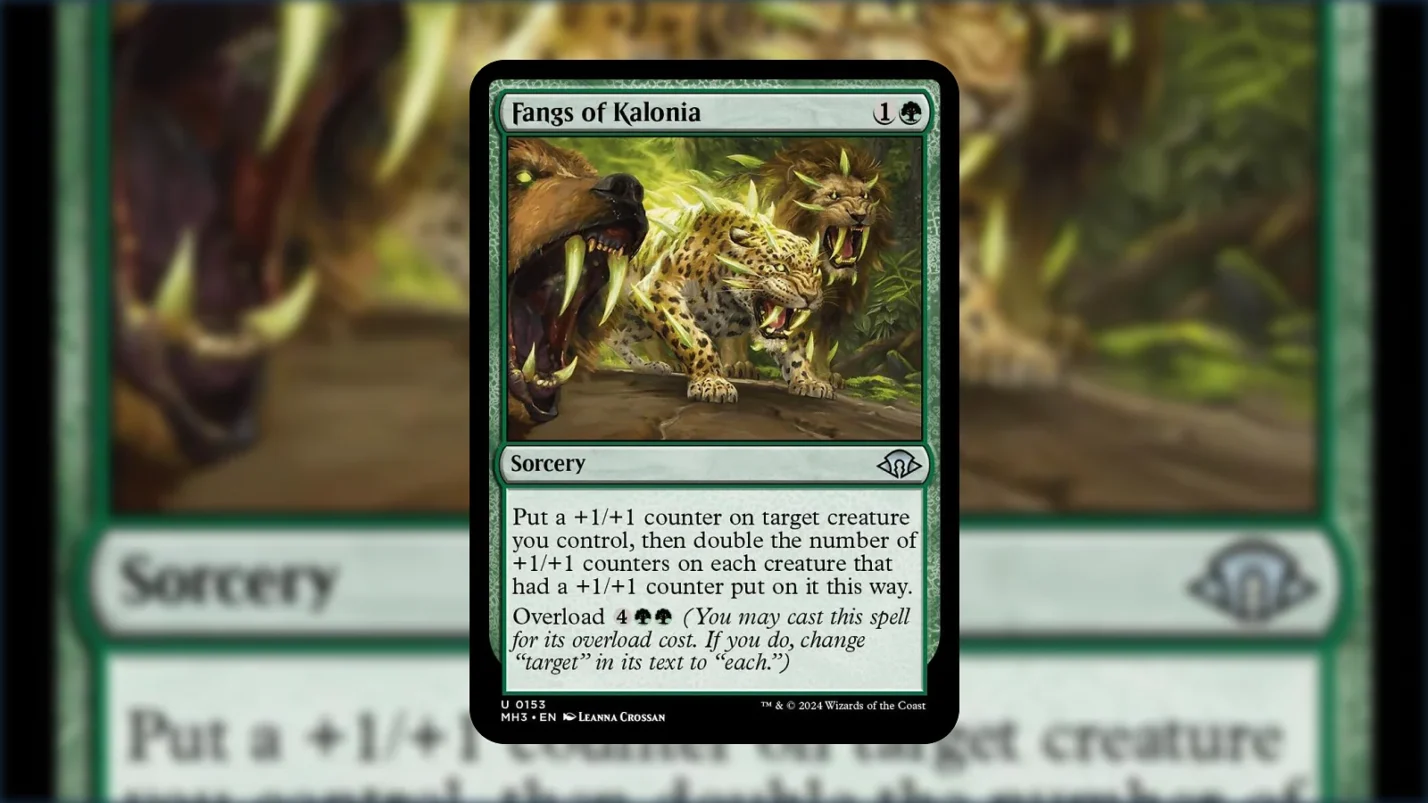
Fangs of Kalonia takes whatever board you’ve been building and pushes it over the edge. In counter-heavy decks, that usually means turning steady growth into a real clock.
| Element | Details |
|---|---|
| Mana Cost | 1G |
| Card Type | Sorcery |
| Primary Role | +1/+1 Counter Amplifier |
This spell doubles existing counters, which makes already large threats impossible to ignore. First, it puts a +1/+1 counter on a creature and then it doubles its counters. If you play it for the Overload cost, it applies this effect to all of your creatures.
If you play Fangs for the Overload cost, it applies the doubling effect to all of your creatures. It’s a powerful finisher any of the top token commanders would gladly include in their decks.
Green decks that lean into counters often struggle to close games efficiently. Fangs is one of the best green cards in MTG to solve that problem. It rewards patience and setup. The longer you build, the harder this hits.
14. Scale Up [G: Hit for Six]
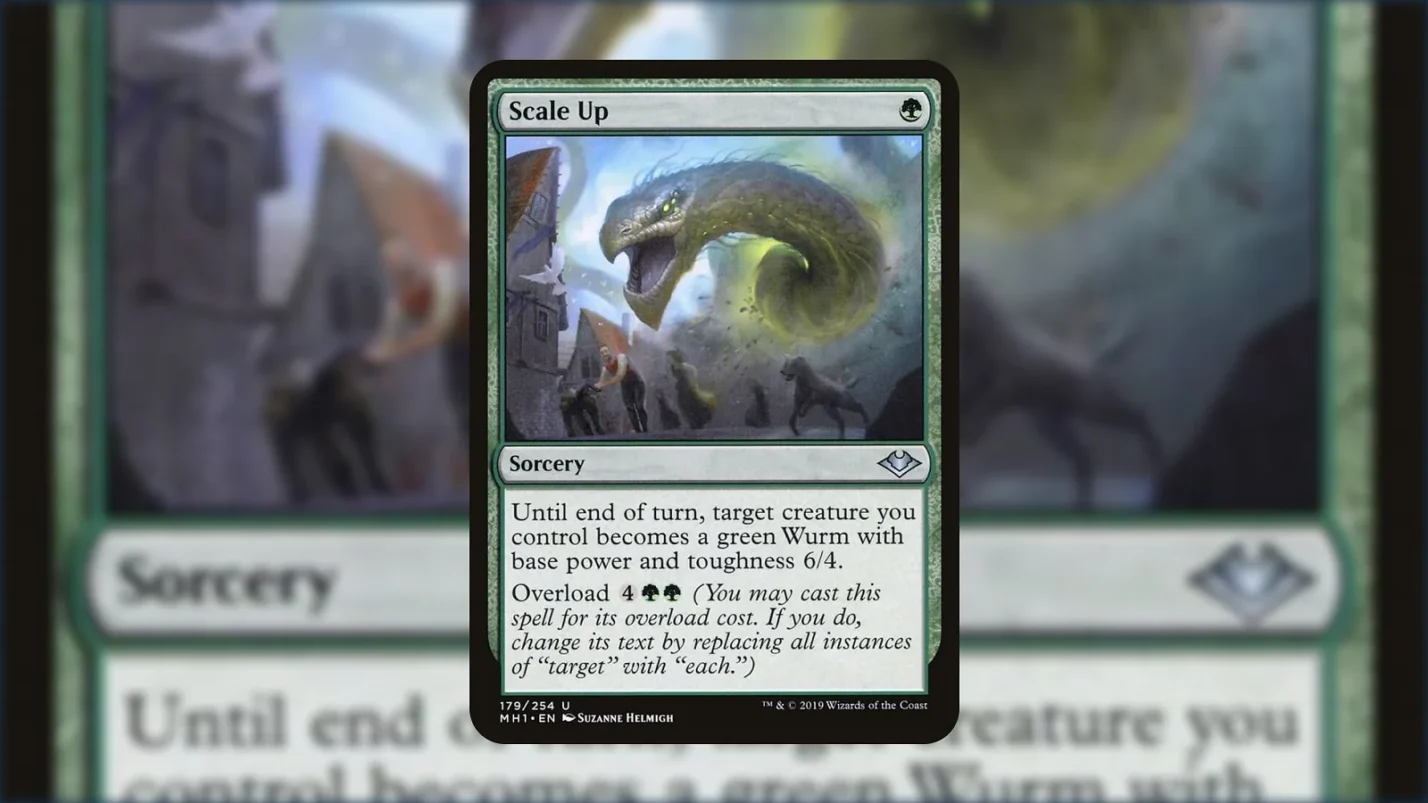
Scale Up is one of the cleanest power spikes green has. For a single green mana, a creature becomes a 6/4 until end of turn. With Overload, your entire board gets the upgrade.
| Element | Details |
|---|---|
| Mana Cost | G |
| Card Type | Sorcery |
| Primary Role | Burst Damage |
In Infect decks, that one mana often represents lethal. Even outside of poison strategies, turning small utility creatures into real threats changes combat math immediately.
This is efficiency at its sharpest. One mana for six power forces blocks, trades up, or just ends the game.
Scale Up can easily end games before opponents stabilize, particularly in aggressive green shells where speed is everything. It’s one of the best green cards in MTG if you want explosive turns instead of slow buildups.
15. Bridgeworks Battle/Tanglespan Bridgeworks [Fight Spell With a Backup Land]
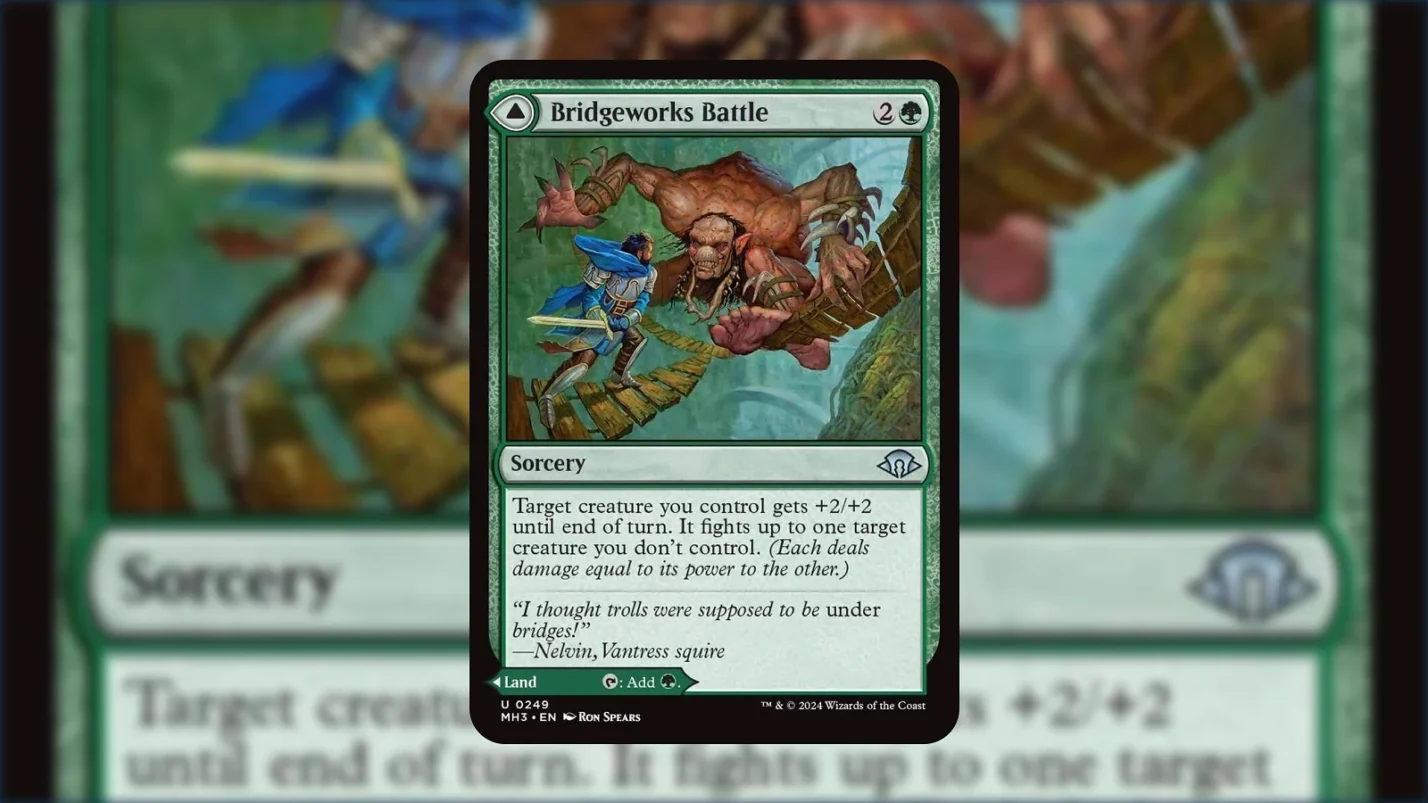
Bridgeworks Battle is straightforward green interaction: +2/+2, then fight. It lets one of your creatures punch up while surviving combat more often than not.
| Element | Details |
|---|---|
| Mana Cost | 2G |
| Card Type | Sorcery |
| Primary Role | Fight Spell/MDFC Land |
The real value is that it doesn’t cost you a slot. If you don’t need the fight effect, you play Tanglespan Bridgeworks as a land instead. Pay 3 life to have it enter untapped, and it taps for G like a basic.
Creature decks want interaction, but they also want to hit land drops. This card lets you do both without compromising either plan.
Although not as flashy as some of the other best green cards in MTG, this one gets the job done and it serves double purpose. I love that flexibility, and more interaction is never wrong in green decks.
How Do Green Cards Work in MTG?
Green wins by doing more than everyone else. More mana, massive creatures, and bigger turns. If you understand that, you stop forcing green into reactive roles and start building around what it actually does best.
At their core, MTG green spells are about resource acceleration and board dominance. Green doesn’t try to control the stack or grind through tiny advantages. It ramps, develops, and snowballs.
Here’s what that looks like in practice:
- Mana acceleration. Green searches for lands, untaps them, and turns early plays into explosive midgames. Extra mana means earlier threats and faster engines.
- Creature efficiency. Best green creatures in MTG are oversized for their cost and scale well with +1/+1 counters. Trample keeps damage relevant, and fight effects let creatures double as removal.
- Land synergy. Green treats lands as engines, not just mana sources. Recursion, landfall triggers, and mana-doubling effects give it strong long-game inevitability.
- Proactive game plan. Green prefers to stay ahead rather than react late. It builds pressure and forces opponents to answer the board.
- Clear weaknesses. Stack interaction is limited. Hard removal is narrower than in other colors. If green falls behind on board, it often needs help to recover.
In Commander, especially, this approach scales well. More mana means bigger plays, and bigger plays usually decide multiplayer games.
FAQs
The best green card in MTG is the Finale of Devastation. It often ranks highest due to its tutoring and recursion. Besides, its finishing power in Commander is second to none.
A green card is any card that has green in its mana cost or a green color indicator. It represents creatures and mana acceleration. Green focuses mainly on lands and large creatures while also maintaining board-based interaction.
Green is considered the strongest color in Commander as it accelerates mana faster than any other color. This enables earlier threats and stronger late-game strategies.
No, green cards are not rare. They appear at all rarities. Many of the strongest green spells are widely printed and accessible.
Yes, green cards have good removal, but it is creature-focused. Green relies on fight effects and artifact or enchantment removal rather than direct kill spells.